JBizNews Desk | Thursday, May 7, 2026
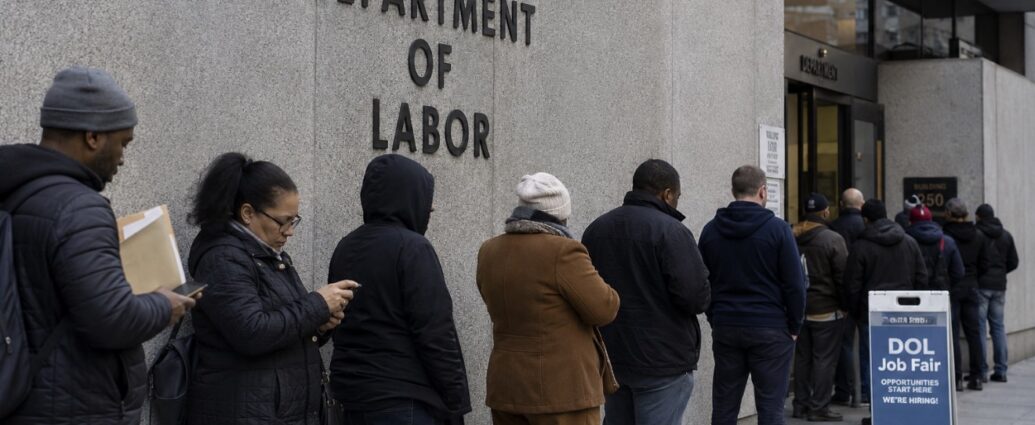
The U.S. labor market delivered another sign of resilience Thursday morning as weekly unemployment claims came in better than economists expected, reinforcing the view that employers are still largely holding onto workers despite growing concerns over slowing economic growth, elevated inflation, and mounting geopolitical uncertainty tied to the ongoing U.S.-Iran conflict.
The U.S. Department of Labor reported that initial jobless claims totaled 200,000 for the week ending May 2, slightly above the prior week’s revised 190,000 reading but below Wall Street forecasts that ranged between 205,000 and 206,000, according to surveys by FactSet and Dow Jones. The previous week’s figure had tied for the lowest level for unemployment claims since 1969, underscoring just how historically tight the labor market remains.
The report also showed continuing claims — which track Americans receiving unemployment benefits for two or more consecutive weeks — fell by 10,000 to 1.766 million for the week ending April 25. That reading came in below expectations near 1.8 million and marked one of the lowest continuing-claims levels seen in more than two years.
The weekly claims report is closely monitored by economists, investors, and Federal Reserve officials because it provides one of the fastest real-time indicators of layoffs across the U.S. economy. While hiring activity has shown signs of slowing in recent months, Thursday’s numbers suggest companies remain reluctant to cut workers after years of labor shortages and elevated wage competition.
The latest labor data arrives during an increasingly complicated economic environment. Businesses across the country continue grappling with higher borrowing costs, persistent inflation pressures, and rising energy prices linked to instability in the Middle East. The war involving Iran has already driven volatility across oil markets and transportation costs, fueling concerns that consumer spending could weaken later this year if inflation remains elevated.
At the same time, many economists believe the labor market has become the primary pillar keeping the broader U.S. economy stable. As long as Americans remain employed, consumer spending — which accounts for roughly two-thirds of U.S. economic activity — is expected to continue supporting growth even as manufacturing activity and some business investment categories cool.
Federal employee claims — closely watched amid ongoing government workforce reductions and restructuring efforts in Washington — fell by 8 to just 438 claims during the week, another sign that public-sector layoffs remain limited despite budget tightening discussions across several federal agencies.
⚠️ STAY TUNED — THE BIG ONE DROPS TOMORROW MORNING
While Thursday’s unemployment claims report provides a useful snapshot of layoffs, Friday morning’s employment report is considered the definitive monthly measure of the health of the American labor market.
At 8:30 a.m. Eastern Time on Friday, May 8, the U.S. Bureau of Labor Statistics will release the April 2026 Employment Situation Report, covering nationwide hiring, unemployment, wage growth, labor-force participation, and sector-by-sector job creation.
Economists are forecasting a sharp slowdown in hiring momentum. Consensus estimates currently project the U.S. economy added between 70,000 and 100,000 jobs in April — significantly below the 178,000 jobs added in March. Analysts will also be watching whether the national unemployment rate begins edging higher after remaining historically low for much of the past year.
The report is expected to play a major role in shaping Federal Reserve policy expectations heading into the summer. Investors are closely watching for signs that the labor market is either cooling enough to justify future interest-rate cuts or remaining strong enough to keep inflation pressures elevated.
Markets are likely to react immediately Friday morning, particularly in Treasury yields, stock-index futures, banking shares, and consumer-related sectors tied directly to employment and wage trends.
For American households, the stakes go beyond Wall Street. A weaker-than-expected report could raise concerns about slowing economic momentum and future layoffs, while a stronger-than-expected report could reinforce confidence that the economy continues to withstand higher rates, inflation, and global instability better than many economists predicted earlier this year.
JBizNews will provide full breaking coverage and analysis the moment the April Jobs Report is released Friday morning.
© JBizNews.com. All rights reserved. This article is original reporting by JBizNews Desk. Unauthorized reproduction or redistribution is strictly prohibited.