JBizNews Desk | Friday, May 8, 2026
SpaceX has moved so far ahead of the global rocket launch industry that competitors and satellite operators are increasingly questioning whether the commercial space market can still be considered fully competitive.
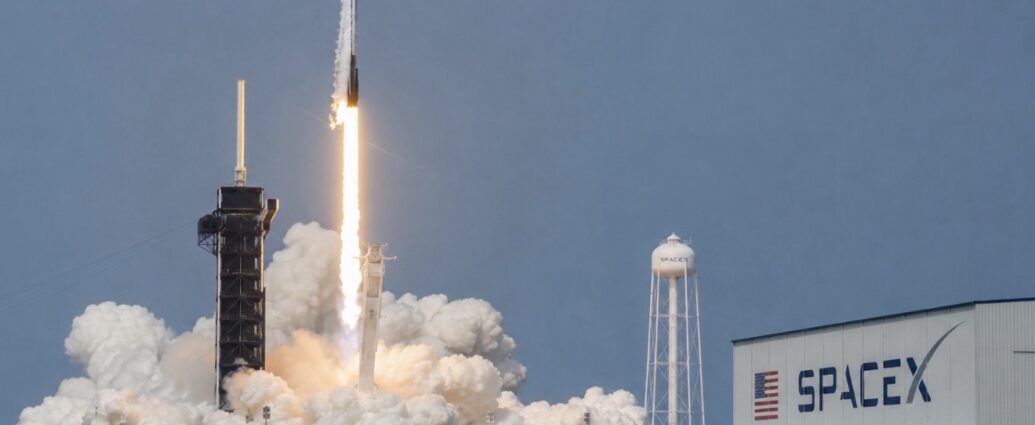
The aerospace company founded by Elon Musk completed its 50th orbital launch of 2026 in late April, putting the company on pace for approximately 160 missions this year — a launch cadence unmatched by any private or government-backed space organization in history. The overwhelming majority of those missions continue to support SpaceX’s rapidly expanding Starlink satellite internet network, creating a business model that analysts say gives the company structural advantages few rivals can realistically challenge.
SpaceX now controls roughly 85% of all U.S. orbital launches, according to industry tracking data, while accumulating more than $24 billion in federal contracts tied to NASA, the Pentagon, intelligence agencies, and broader government launch programs.
The company’s dominance stems largely from the success of its Falcon rocket program. Falcon 9 and Falcon Heavy rockets have now completed a combined 648 launches with one of the strongest reliability records in modern aerospace history. More importantly, SpaceX’s reusable booster system — once viewed as an experimental gamble — has fundamentally rewritten the economics of launching payloads into orbit.
Some Falcon boosters have now flown more than 15 times, dramatically reducing manufacturing costs and allowing SpaceX to lower launch prices while simultaneously increasing flight frequency. Industry analysts say no competitor has yet demonstrated comparable operational scale, launch cadence, or cost efficiency.
Starlink Creates a Self-Funded Launch Machine
A major reason SpaceX continues widening the gap is Starlink itself.
The company’s satellite broadband network now exceeds 10,000 active satellites globally and serves more than 10 million customers worldwide, according to company estimates and industry analysts. Because SpaceX launches the majority of its own satellites internally, the company effectively guarantees continuous demand for its rockets — allowing it to maintain constant launch schedules even when broader commercial demand fluctuates.
That self-contained ecosystem has created what many competitors describe as an almost impossible economic advantage. Launches supporting Starlink help fund rocket development, while reusable rockets lower the cost of deploying additional satellites, creating a cycle rivals struggle to match.
One satellite industry executive recently described the commercial launch market as “approaching monopoly conditions,” noting that launch capacity on SpaceX missions is increasingly controlled by large third-party launch integrators that reserve payload space in bulk before smaller customers can secure access.
Competitors Falling Behind
The widening gap has placed growing pressure on SpaceX competitors including Rocket Lab, Blue Origin, United Launch Alliance, and Europe’s Arianespace.
Rocket Lab remains the second-most active American launch provider but completed only 21 launches during all of 2025 — a fraction of SpaceX’s annual volume. Blue Origin, despite years of investment from Amazon founder Jeff Bezos, continues working toward scaling its New Glenn rocket program, while United Launch Alliance remains heavily dependent on government contracts and lower launch frequency.
European launch providers have also struggled with delays, rising costs, and geopolitical disruptions tied to supply chains and changing defense priorities following years of instability in Eastern Europe and the Middle East.
The result is an industry increasingly centered around a single company controlling not only launch infrastructure but also satellite internet, orbital deployment logistics, and potentially future AI-powered space systems.
SpaceX Expands Beyond Aerospace
The competitive picture shifted even further earlier this year when SpaceX acquired xAI, Elon Musk’s artificial intelligence company, in a massive all-stock transaction valuing the combined entity at approximately $1.25 trillion — the largest acquisition valuation ever recorded in corporate history.
The merger combines SpaceX’s launch systems and satellite infrastructure with xAI’s artificial intelligence capabilities, with early plans reportedly involving space-based AI data centers and orbital computing infrastructure.
In April, SpaceX also agreed to acquire Cursor, an AI-assisted software development startup, for approximately $60 billion, signaling that the company’s ambitions now extend well beyond rockets and telecommunications.
Analysts increasingly view SpaceX as evolving into a vertically integrated technology conglomerate spanning aerospace, artificial intelligence, satellite communications, defense infrastructure, and software development simultaneously.
The IPO Wall Street Is Waiting For
A SpaceX public offering continues to loom over financial markets.
While no official IPO filing has been announced, investment banks and venture analysts widely expect any future SpaceX listing to become the largest public offering in modern financial history, with projected valuations exceeding $1.75 trillion.
Such a listing would give everyday retail investors their first direct opportunity to own shares in the company that transformed commercial spaceflight and helped redefine the economics of the modern aerospace industry.
For now, SpaceX’s momentum shows little sign of slowing. The company that once struggled to survive repeated launch failures now effectively dictates the pace, pricing, and direction of the global launch market — leaving competitors racing not to catch up, but simply to remain relevant.
© JBizNews.com. All rights reserved. This article is original reporting by JBizNews Desk. Unauthorized reproduction or redistribution is strictly prohibited.