JBizNews Desk | May 10 2026
The Federal Reserve is fracturing over the Iran war.
Ten weeks into a conflict that has sent oil prices surging, snarled global supply chains, and pushed inflation back toward levels not seen since 2022, the central bank’s policymakers are no longer speaking with one voice — and the growing division has direct consequences for every American with a mortgage, a car loan, a credit card, or a small business line of credit.
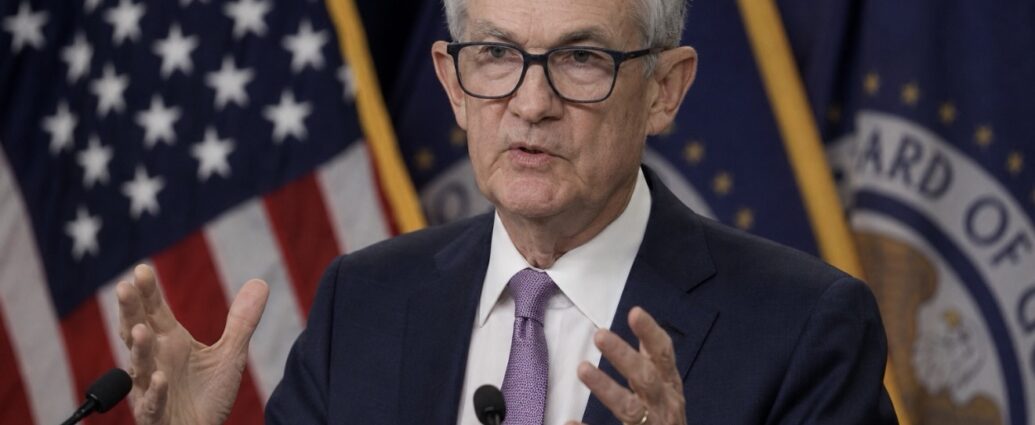
When Fed officials convened on March 17-18, just weeks after the war broke out on February 28, Chair Jerome Powell told the public that any inflationary effects from the conflict would likely be temporary and contained within the energy sector — leaving the door open for at least one interest rate cut in 2026.
That message, delivered at a moment when the full economic impact of the Strait of Hormuz closure was still unclear, has not aged well.
At the Fed’s most recent meeting in late April — ten weeks into the conflict — the cracks became public.
Three Federal Reserve district bank presidents dissented from the policy committee’s official statement, openly objecting to the Fed’s so-called “easing bias” — the suggestion embedded in its language that interest rate cuts remain the most likely next move.
The dissenters were Beth Hammack, president of the Federal Reserve Bank of Cleveland; Lorie Logan, president of the Federal Reserve Bank of Dallas; and Neel Kashkari, president of the Federal Reserve Bank of Minneapolis.
In formal statements detailing their dissents, all three argued the Fed is not being sufficiently transparent about the growing probability that the next move in interest rates could be a hike — not a cut.
“The opposition against the easing bias was likely broader than just those three,” said Derek Tang, an economist at Monetary Policy Analytics. “But the question is, when will the dam break on inflation expectations? Inflation has been above their 2% target for a while now.”
Beyond Oil: A Supply Chain Crisis in Every Direction
The Fed’s anxiety is not limited to gas prices.
The Iran war has disrupted access to a wide range of commodities — fertilizer, helium, aluminum, and others — that flow through the Persian Gulf and the Strait of Hormuz, creating cascading pressure across industries that have nothing to do with energy.
The Institute for Supply Management’s April business survey captures the scramble underway.
One utility company responding to the survey said it is “mitigating risk through early procurement, supplier diversification and strategic inventory positioning” — a description that reflects a growing reality across the American economy:
Companies are spending real money right now to buffer themselves against supply disruptions that may not ease for months.
The Federal Reserve Bank of New York’s Global Supply Chain Pressure Index — a composite measure of supply chain stress across shipping, manufacturing, and logistics — shot up in April to a reading of 1.82, up sharply from March’s reading of 0.68 and the highest level since 2022.
That single number encapsulates what businesses are experiencing on the ground: a supply chain environment that has deteriorated as rapidly over the past ten weeks as it did during the worst months of the pandemic recovery.
“This echoes the severe shortages and supply disruptions that the world economy experienced in 2021 as it emerged from the pandemic,” said New York Fed President John Williams at an event in New York on Tuesday.
Dallas Fed President Logan, one of the three dissenters, echoed the concern directly in her dissent statement:
“The conflict in the Middle East raises the prospect of prolonged or repeated supply disruptions that could create further inflationary pressures.”
The Inflation Expectations Problem
At the heart of the Fed’s internal debate is a question that central bankers watch more closely than almost any other:
What do ordinary people and financial markets expect inflation to do in the future?
The reason this matters so much is that inflation expectations are, to a significant degree, self-fulfilling.
If businesses expect prices to keep rising, they raise their own prices.
If workers expect higher costs of living, they demand higher wages.
If investors expect inflation to stay elevated, they demand higher interest rates on the money they lend — which raises borrowing costs across the economy.
New York Fed President Williams said Tuesday that inflation expectations remain “well anchored” despite the economic shocks from the war.
Kashkari, in his dissent statement, said he is “somewhat comforted” by the fact that both market and survey measures of long-run inflation expectations remain near the Fed’s 2% target.
But a key market-based measure told a different story on Tuesday.
The 10-year inflation breakeven rate — the difference between the 10-year Treasury yield and the 10-year Treasury Inflation-Protected Security yield, widely watched as a real-time gauge of where markets expect inflation to settle — climbed to 2.5%, the highest level since early 2023.
That is a warning signal that financial markets are beginning to price in the possibility that the Iran war’s inflationary effects are not temporary.
Fed Vice Chair Philip Jefferson sounded the alarm on this dynamic back in March, shortly after the war began.
“The longer inflation remains above 2%, the greater the risk that it becomes entrenched in expectations, making it harder to achieve the Fed’s goal,” Jefferson warned.
That warning has only grown more relevant in the weeks since.
What It Means for Borrowers and Businesses
The Fed’s internal fracture has direct real-world consequences.
For the millions of Americans with adjustable-rate mortgages, variable-rate credit cards, and floating-rate business loans, any shift from a rate-cut posture to a rate-hike posture means higher monthly payments.
For small businesses trying to borrow to expand, hire, or manage cash flow, a Fed that is contemplating hikes rather than cuts is a fundamentally different operating environment.
The transition to Kevin Warsh — President Trump’s nominee to succeed Powell as Fed Chair — adds another layer of uncertainty.
Warsh is expected to take the helm at the June 17 meeting.
His approach to a Fed already divided over the war’s inflationary impact will be among the most closely watched moments in financial policy this year.
Markets had initially hoped Warsh would push for rate cuts.
Those hopes have been significantly tempered by the conflict’s persistence and the April dissents.
For businesses, investors, and households trying to plan through the second half of 2026, the Fed’s growing anxiety about the Iran war delivers a clear message:
Do not count on cheaper borrowing costs arriving anytime soon.
The central bank that was quietly signaling cuts in March is now openly debating hikes in May — and the war that forced that shift shows no sign of ending quickly.
© JBizNews.com. All rights reserved. This article is original reporting by JBizNews Desk. Unauthorized reproduction or redistribution is strictly prohibited.