What could be more instantly recognizable than Jewish music, right?
Many of us – of the predominantly Ashkenazi English-speaking community, that is – would probably cite some lilting bittersweet klezmer air or other, or might go so far as to venture into cantorial realms. But if you think either, or both, of those sonic domains cover all traditional Jewish musical bases, attendance of the Days of Jewish Music festival, on May 12-15, will summarily disabuse you of that viewpoint.
The forthcoming edition is the 14th rollout of an intriguing and enlightening and – yes – highly entertaining program that dips into numerous areas of Jewish musical endeavor. The festival was founded by Yuval Rabin, an internationally celebrated organist, who serves as perennial artistic director.
Notwithstanding his sterling and highly appreciated work in classical climes, Rabin maintains broad open parameters when it comes to programming the festival agenda. And, while he says he is not interested in a thrills-and-spills take on sonic cultural output, he has clearly gone for broke this time around.
It all begins with the labeling. “There is something very humble, very modest, in the name [of the festival]. It is Days of Jewish Music,” he says slipping into an almost apologetic sotto voce register. “These are days devoted to Jewish music, that’s all. We are just saying, these are days of…,” leaving us to fill in the elliptical extension.
Rabin prefers to let his musical choices do the talking for him.
While he opts for an underwhelming marketing ethos, the actual content over the four-day schedule is anything but. When it comes down to musical brass tacks, Rabin is hardly restrained, as indicated by the plethora of offerings from all parts of the cultural stylistic spectrum.
“This year, the festival is the most grandiose we have ever had. It is not just that it will take place over four days [up from three]; we have a full 14 concerts. That’s a lot.”
But before we get into the rich musical pickings, there is the encouragingly blatant nature of the 2026 edition’s no-nonsense remedial philosophical intent, indicated by the “Melodies of Hope” banner.
“The title connects with the spirit of the times,” Rabin notes with a rueful chuckle. “That connects with hope, hope for many things,” he adds, before getting into deeper historical cultural waters.
“There is a Yiddish song the title of which translates to ‘Why Does the Cantor Sing?’ It is a humorous song which starts with the words that, when he is happy, he sings because he is happy. And when he’s sad he sings because he’s sad.”
There’s no arguing with that rationale. Ultimately, it appears, it is a basic matter of vocational pragmatism. “Why does he sing?” Rabin expands. “He sings because he’s a cantor. That’s what a cantor does,” he laughs.
‘To connect with ourselves, both in joy and in sadness’
Joking aside, Rabin means business as he unpacks the titular subtext. “Music helps us to connect with ourselves, both in joy and in sadness. I intentionally say ‘to connect with ourselves.’ We can connect with the place where we really are at the time. When we are happy, music distills the joy; and when we are sad it accentuates that emotion.”
Rabin says, life in these parts being what it palpably is, we can all identify with that. “Every Israeli is familiar with that. On the eve of Remembrance Day, people sing remembrance songs at hundreds of locations up and down the country, literally hundreds. Why is that? Because it helps us connect with the core of Remembrance Day.”
But it is not all doom and gloom. There is an upbeat flip side.
“Music helps us connect with joy at weddings, for example.” There is a conundrum in there, too. “There is a prohibition on playing music during periods of mourning because music brings joy.” Hang on a moment, didn’t we just say music helps to distill feelings of sadness? “The answer is that music helps us bond with our different elements, with our different emotional states.”
The festival programming, Rabin says, takes all the above into consideration. “‘Melodies of Hope’ imparts that succinctly. We say we are not sad; we are hopeful. We are hoping for better days. We have no idea what will happen two days from now.” That is all too pertinent. “We don’t really know if the festival will open on May 12, but we hope there is no question mark over that.” God willing.
All the above, and much more, is in there for the taking across the four days, with concerts, lectures, and workshops scheduled at halls and rooms at Bar-Ilan University, with three extramural shows lined up at the Ramat Gan Museum of Israeli Art, a 15-minute drive from the campus.
Rabin has done himself proud in his artistic directorial capacity for the 2026 event.
The program roams far and wide in pure musical terms, with an abundance of academic and other areas of interest addressed in the roster of lectures and workshops. There are concerts and talks that draw on cultural backdrops from Persia, the Balkans, Tunisia, Turkey, Yemen, and the vast dominions of Ladino.
The repertoires encompass liturgical material and texts lifted straight out of the Bible, as well as late Renaissance-early Baroque charts by late 16th- and early 17th-century Jewish Italian composer Salamone Rossi.
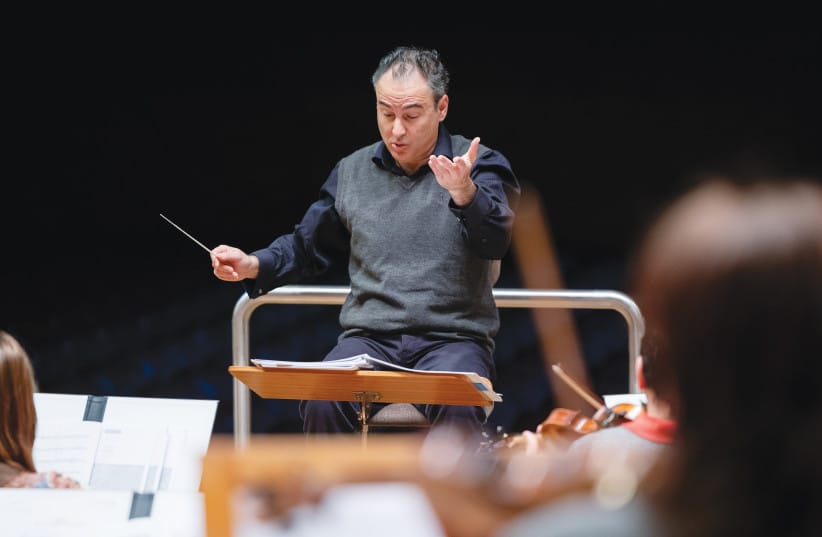
There is a richly deserved tribute to Hungarian-born Israeli composer, educator, and ethnomusicologist Andre Hajdu, marking the first decade since his death. The salute includes a musical slot featuring a leading member of Hajdu’s very many former disciples, conductor-pianist Omer Arieli, who also heads the Jerusalem Opera company, which he established together with his illustrious teacher. Arieli’s instrumental efforts will be supported by several of Hajdu’s singing sons.
That set will be followed by a session with Bar-Ilan University lecturer, composer, conductor, and musician Prof. Gideon Lewensohn expounding on the intriguing theme of musical sustainability according to Hajdu’s line of thought.
The set, which takes place under the aegis of the local arm of the International Council for Traditions of Music and Dance ethnomusicology forum, also includes an address by educator-musician Meir Yaniger, who will enlighten his audience about improvisational and compositional motifs in Hajdu’s approach to instruction. Another of Hajdu’s former students, Noam Peleg, will delve into the Mishnaic aspects of her feted teacher’s layered oeuvre.
Rabin also benefited from Hajdu’s learned teachings, as well as his egalitarian take on music, and works that feed off widely divergent cultural and historical baggage and dynamics.
That accommodating philosophy put me in mind of another giant of the local music scene, Prof. Michael Wolpe, who is universally revered as an educator, composer, musician, and artistic director. His Desert Sounds Festival, which has been taking place way beyond the music consumer beaten track, at his home patch of Kibbutz Sde Boker in the Negev for the past 30 years, perennially features concerts with classical fare by the likes of Beethoven, Mozart, and Schubert, as well as rock music and material of various ethnic ilks.
Rabin happily goes along with the Hajdu and Wolpe flow. It also happens that the apple and tree proximity adage is applicable here. “Michael, who is a dear person, was my first teacher of the principles of music at the academy,” Rabin recalls. “We have interfaced many times over the years, professionally, and there is a lot of mutual love and respect between us.
“I am really a disciple of his. And that is part of what this festival [at Bar-Ilan] is about. We are not interested in judging artists and music, who is better than whom, or who is more respected or artistic, and who is less so. There are no comparisons or grading. The works and artists are just different from each other. That’s all.”
There is hierarchy here. “You can’t say which is tastier, chocolate or, say, a good whiskey. They are just different. You can’t compare them, just like you can’t compare Tunisian or Iraqi music with hassidic music.”
It is very much about getting away from pigeonholing and divides.
“I am repeatedly asked if Eastern music is more [sophisticated] or less sophisticated than Western music. In many ways, the music of the Sephardi communities is far more sophisticated than Western music,” says Rabin. There is an enigmatic element to the equation. “The simplicity of the music allows you to make it far more sophisticated; and complex music is, in many senses, far simpler. It is so sophisticated in itself that there are things in it that have less room to be sophisticated.”
While that drew us into somewhat ethereal technical realms, the message was taken on loud and clear. I recall being told off by late great pioneering modern jazz drummer Max Roach, in no uncertain terms, quite a few years ago now, for getting into labeling styles of jazz, such as bebop, hard bop, avant-garde, etc. “Music is just music,” he barked at me. That lesson has stayed with me, and resonates in the DNA of Rabin’s festival.
Hajdu was a perfect example of that practice. “Andre was music,” Rabin definitively posits. That applied equally to the way he went about his educational business. “He was music in many senses, in his compositional and research work, and also in his teaching.”
Egalitarianism was the name of the game in the latter field, too. “That was part of his teaching on a high level, and also with small children – he wrote charts for children who were just starting out on piano. It was very important for him to be relevant for the younger generation as well, and not just talk to those who had already studied.”
Hajdu also left his polished personal mark on the Days of Jewish Music. “Andre Hajdu performed at the festival just a few months before he died,” says Rabin. “He was very sick at the time. He had a project with [cantor] Asher Hainovitz called Or Haganuz [hidden light]. It was cantorial passages for which Hajdu rewrote the piano accompaniment. There is a recording of that, a studio recording.”
Fourteen long years into the festival’s growing timeline, Rabin is now in a position not only to plan future editions but also to cast a seasoned look back at the performances and academic slots, and at the folk that pop along to the university campus for the festival as well.
“There are people who come back year after year. I meet them at the festival, and I can pick out their faces, and we happily greet each other,” Rabin notes with some satisfaction. “There are people who, for me, realize my vision for the festival. They give themselves to the festival, right through the days and simply dive in.”
That suits the eclectic thinking behind the programming and Rabin’s “ulterior motive” to draw people into musical fare they hadn’t previously encountered. “I see them coming out of concerts smiling from ear to ear, and they tell me they wouldn’t have dreamed of going to hear music of such or such a genre or style. But that is what happens in this framework, and people really enjoy it.”
That is essential to art, all art, regardless of discipline. Art, by definition, has to bring something new to the culture consumer table, and must constantly seek out new ground. It then naturally follows that audiences are likely to have themselves a new listening experience and venture into – for them – uncharted territories.
“I don’t expect them to suddenly prefer that [new] kind of music above all others; but, possibly, if they hear something like that on the radio, they won’t switch to another station,” Rabin suggests.
The man has a salient point. After all, even Mozart was once the new kid on the block – “kid” being the operative word here, as he was writing music by the age of five and performing it in public a year later. And weren’t the Impressionists initially summarily rejected by the Salon, the then power-that-be of the Parisian art world?
There are compelling slots dotted across the program. Tom Fogel, for example, will talk about Diwan song from the Jewish community of southern Yemen, as part of the lecture batch devoted to personalities and musical traditions from the Diaspora; while composer, lecturer, and musician Prof. Alon Schab will take a learned look at the Diaspora and Germanic elements in the oeuvre of veteran pop-rock artist Shlomo Gronich. Later, Erez Nataf will moderate a workshop about Tunisian Jewish vocal music.
One of the more intriguing aspects of, for example, Sephardi music in the broader sense is the number of performers and researchers with Ashkenazi roots who have taken to the field like the proverbial duck to water.
One such is Orit Perlman, a graduate of the University of Minnesota and trained cantor. The second day of the festival sees her front a concert at the Ramat Gan Museum (4:30 p.m.) with her latest album of Ladino material titled Merendjenas (eggplants).
“I am delighted when people like Orit are drawn to music they weren’t necessarily born into. That is perfectly legitimate,” says Rabin.
Ladino is a multifarious spoken and musical language, encompassing numerous idioms from across its vast geographic and cultural domain, which stretched from the Iberian Peninsula eastward to this end of the Mediterranean and southward into North Africa. Perlman’s audience in Ramat Gan will get snapshots of many of those facets that feature on the record.
With such a dizzying, if not downright bewildering slew of material in the festival lineup, how can one possibly say, with any degree of authority, what constitutes Israeli music? Rabin first points me in the direction of educator, composer, conductor, and researcher Avi Bar-Eitan’s berth in the four-day program.
“He wrote his doctorate on Israeli song as an interim form between the artistic song – lied [classical art song in German] – and folk songs. You can find that in the songs of [20th-century Israeli composer-songwriter Mordechai] Zeira, and certainly in the songs of [Zeira contemporaries Sasha] Argov and [Moshe] Wilensky. Many of their works tread the line between the art song and the approach of music that is meant to be more popular.”
Bar-Eitan will expound on the klezmer music of Eastern Europe, New York swing jazz, tango music, and French chanson. His learned words will be interspersed by live performances of the aforesaid by clarinetist Gilad Harel and accordion player Ilya Magalnyk.
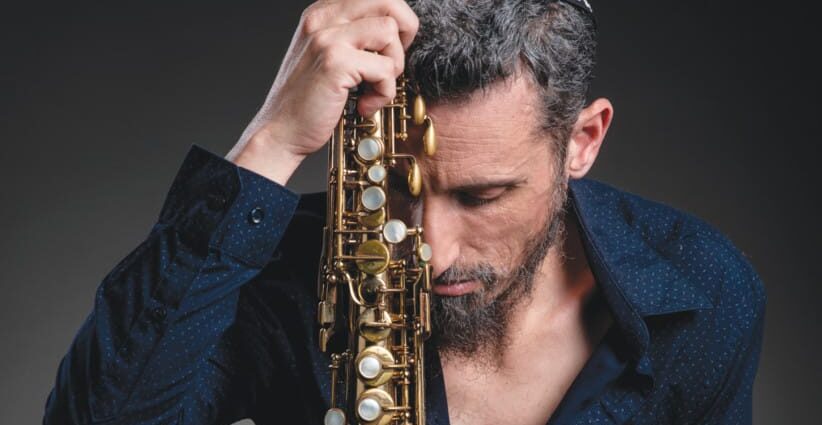
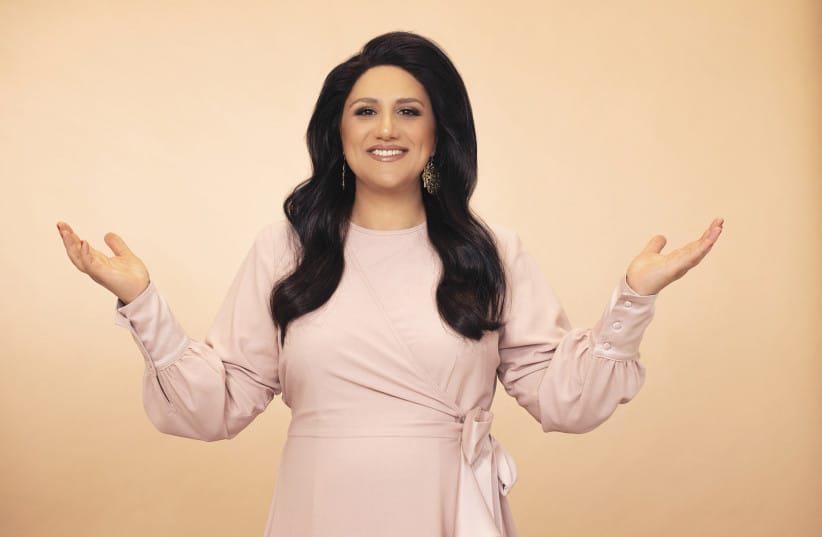
With the likes of seasoned jazz saxophonist Daniel Zamir and Iranian-born singer Maureen Nehedar also in the mix, one could say there is something for almost everyone at the Days of Jewish Music.
And with ticket prices set at NIS 35, besides the free events, it is also an eminently affordable offering for one and all.
For tickets and more information: (03) 731-6561 and www.goshow.co.il/pages/minisite/663