About halfway through Michael, the new blockbuster biopic of Michael Jackson, there is a scene in which Jackson (played by his nephew Jafaar) and his lawyer, John Branca (Miles Teller), are sitting with the president of his record label. It’s early in Jackson’s Thriller album cycle, with “Billie Jean” released as a single and the “Thriller” video filmed, setting the scene sometime in 1983.
Seated in front of several gold records, CBS Records’ head honcho Walter Yetnikoff (played under heavy makeup by Mike Myers) congratulates Jackson on his breakout moment and asks what he can do for him. Jackson and Branca tell Yetnikoff they want just one thing: for Jackson to be featured on MTV, then a brand-new station broadcasting music videos.
Yetnikoff tells them that it’s “not possible” because MTV rarely plays Black artists. Jackson retorts that he is a “proud Black artist” who makes his music for everyone, and that he “won’t be shoved to the back of any bus by MTV or anyone.”
Yetnikoff says he has tried, and Jackson tells him, “Please try harder.” So Yetnikoff asks his secretary to get MTV founder and executive Bob Pittman on the phone.
The executive is then heard on the phone threatening, in colorfully profane terms, to pull all of CBS’s artists from the network unless Pittman agrees to run “Billie Jean” in the next 10 minutes and, subsequently, put the music video in heavy rotation.
In the next scene, it’s clear that the threat worked. Jackson would remain an MTV staple for many years after that.
So who was Walter Yetnikoff? And did things really go down the way Michael says they did?
Walter Yetnikoff’s story
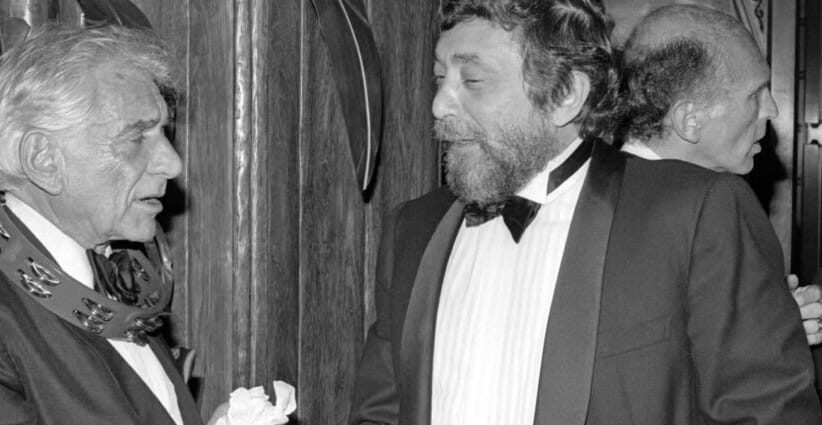
Yetnikoff was one of the music industry’s most colorful figures. Born into a Jewish family in New York in 1933, Yetnikoff became president and CEO of CBS Records in 1975, after spending the first half of the 1970s running CBS’s international division.
Running CBS during a pivotal time for the music business, he shepherded artists such as Billy Joel, Bruce Springsteen and Gloria Estefan, in addition to Jackson, with whom he began working at the start of his solo career in the late 1970s. Yetnikoff wasn’t known for having a great ear for music, but he excelled at the business side of the music industry and at advocating for his artists.
Yetnikoff was the subject of two well-known books: Frederic Dannen’s Hit Men: Power Brokers and Fast Money Inside the Music, published in 1990, and his 2004 memoir, Howling at the Moon: The True Story of the Mad Genius of the Music World, written with David Ritz. Also, a 1980 movie called One Trick Pony, which starred Paul Simon, had actor Rip Torn playing a fictionalized version of Yetnikoff named “Walter Fox.”
The Michael version of Yetnicoff is heard calling the MTV executive “that schmuck” – a Yiddish term in keeping with what both books about Yetnikoff make clear: his Jewish identity was front and center.
“The heart of Yetnikoff’s persona was his Brooklyn Jewishness. An outsized number of label bosses were Jews from Brooklyn, but Walter wore his ethnicity like a gabardine,” Dannen wrote in Hit Men.
Later, Dannen wrote, “He would stay late into the night, banging away at the phone, screaming in Yiddish. He shattered glassware, spewed a mixture of Yiddish and barnyard epithets, and had people physically ejected from the building.”
A profile in New York magazine in 1990, after Yetnikoff had fallen out of favor in the music world and given up the hard drinking that had caused him problems at home and at work, cited an array of Jewish antecedents to paint his picture.
“To cut an appropriate figure in the loud-and-dirty rock world, the shy Brooklyn Jew fashioned an indelible caricature for himself – the Orchard Street discounter as music-biz superman, a little Mel Brooks mixed with a lot of Jackie Mason, and dashes of Meir Kahane and Captain Lou Albano,” said the profile, by Eric Pooley. “He could be a mensch – warm, caring, generous – but he could also be a monster.”
So, did Yetnikoff really bring this famous rage to breaking the race barrier at MTV? And did it happen the way the movie “Michael” depicts?
By Yetnikoff’s own account, the answer is yes.
In Howling at the Moon, he wrote that “I screamed bloody murder when MTV refused to air [Michael Jackson’s] videos. They argued that their format, white rock, excluded Michael’s music. I argued they were racist assholes – and I’d trumpet it to the world if they didn’t relent.”
He goes on to say that, “with added pressure from Quincy Jones, they caved in, and in doing so, the MTV color line came crashing down.”
Elsewhere in the book, Yetnikoff quotes Jacqueline Kennedy Onassis, who was trying to get him to write his book with her at Doubleday, as calling him “the guy who got MTV to break the color barrier and play videos by Black artists.”
“Don’t really know if Walter was bragging or accurate,” David Ritz, his co-author on “Howling at the Moon,” told JTA. “I have a feeling he was being accurate, but I can’t prove it.”
The Jackson family and estate, it’s clear, give Yetnikoff credit for getting Jackson’s music on MTV.
“It is difficult today to imagine the level of cultural apartheid at the music channels in 1983 when MTV refused to play Michael Jackson’s short film Billie Jean. But Yetnikoff was ferocious on Michael’s behalf and didn’t hesitate to play corporate chicken with the powerful music channel,” the Jackson estate said in a media statement after Yetnikoff’s death at age 87 in 2021.
“In short order, Billie Jean was added to MTV in heavy rotation, opening the floodgates for Michael’s extraordinary success and also for a whole generation of black artists. Walter forced that to happen, and with that decision, the wall came tumbling down.”
The family and estate were heavily involved in the movie’s production. But there doesn’t seem to be much evidence for the exact circumstances of the scene in the movie – Yetnikoff making that phone call to MTV, with Jackson and Branca sitting in his office in New York.
Dannen told JTA in an interview that, as told in the movie, “the story sounds fishy to me,” although he did remember an incident – included in Howling at the Moon – when Yetnikoff “had to coerce Jann Wenner into putting Jackson on the cover” of Rolling Stone, another music industry institution that hadn’t always given fair weight to Black artists.
Some on the MTV side have disputed the account. “It never happened,” Les Garland, then an MTV executive, has said, according to The New York Times. “Folklore, man, folklore.”
Garland, in a 2017 letter to Digital Music News, stated that “No, MTV did NOT refuse to air black musicians.” And indeed, the network had played a handful of Black artists, though not prominently, in its early years. But Jackson was not the only artist to push for more racial inclusion on MTV.
“Superfreak” singer Rick James had been pushing for videos by Black artists, declaring in an early-’80s interview, “MTV don’t play Rick James, they don’t play Michael Jackson, they don’t play the Commodores, they don’t play Earth, Wind, and Fire, they don’t play Stevie Wonder,” going on to even use the same “back of the bus” metaphor that Jackson used in the movie.
David Bowie famously called out MTV, live on its air, over the same issue, also in 1983 – yielding an unconvincing response from Mark Goodman, a Jewish VJ, about how the network was trying to “do what we think not only New York or Los Angeles will appreciate, but also Poughkeepsie or some town in the Midwest that would be scared to death by Prince, which we’re playing, or a string of other Black faces and Black music. We have to play the music that we think an entire country is going to like.”
Bob Pittman, the then-MTV executive named in the movie as the recipient of Yetnikoff’s phone call, did not respond to an email from JTA requesting comment.
Arts industries are filled with historical examples of Jewish executives and creators going to bat for Black inclusion. George Gershwin, for example, insisted that the characters in Porgy and Bess be played by Black actors rather than white actors in blackface, while the Jewish sitcom creator Norman Lear was responsible for one of the first shows to focus on a Black family, The Jeffersons. Both men tied their advocacy to their experiences and values as Jews.
If Yetnikoff was motivated by his Jewish identity or a sense of justice to crusade for Jackson, the books about him, including his own, don’t say so. Dannen noted that Yetnikoff strongly pushed for all of his artists, including Jackson.
“At the Grammys, when Jackson won the Grammy for… Album of the Year, he took Yetnikoff up on stage with him, which was a big deal.” Dannen told JTA. Yetnikoff’s Guardian obituary noted that at those Grammys, Jackson had called the label boss “the best president of any record company.”
Jackson went on to work with other Jewish producers and executives throughout his career. He performed in Israel during the Dangerous tour in 1993, visiting an Israeli army base and even donning an IDF uniform.
In 1995, he drew allegations of antisemitism after releasing the song “They Don’t Care About Us,” which included the lyrics “Jew me, sue me, everybody do me, kick me, k*** me, don’t you black or white me.” Under fire, he denied any antisemitism and agreed to change the lyrics. He also partook in the early 2000s fad of non-Jewish celebrities embracing Kabbalah, even sporting a red string during his 2005 criminal trial.
Yetnikoff, too, had a spiritual side. In his biography, he frequently wrote about God, whom he referred to as “Heshie.” Why?
“I’m not exactly sure why. Maybe because Heshie is a familiar Jewish name that I could easily say,” he wrote. ‘‘When a rabbi pointed out to me that perhaps I wanted to say Hashem, I wondered whether my unconscious was playing games with me. Either way, I was trying to connect.’’
The biography was meant as a bit of a mea culpa after a career characterized by the kind of rage shown in that scene in “Michael.” And indeed, Yetnikoff made enemies along the way. But Dannen said the movie’s depiction, which shattered worldwide box-office records for a music biopic during its opening weekend, pointed to a quieter impact as well.
He noted that Jackson’s first solo album, Off the Wall, was nominated for an award in the R&B category, despite not really being an R&B record – a dynamic he said “shows sort of the residual racism of the music business” that assumed any Black artist was making traditionally Black music. But by the time “Thriller” came out, Jackson was being ranked in the pop category.
“I would like to believe that Yetnikoff exerted some influence in that area,” Dannon said. Indeed, in the Michael scene, Yetnikoff says that “Thriller” is dominating the charts – both R&B and pop.