By JBizNews Desk | May 10, 2026
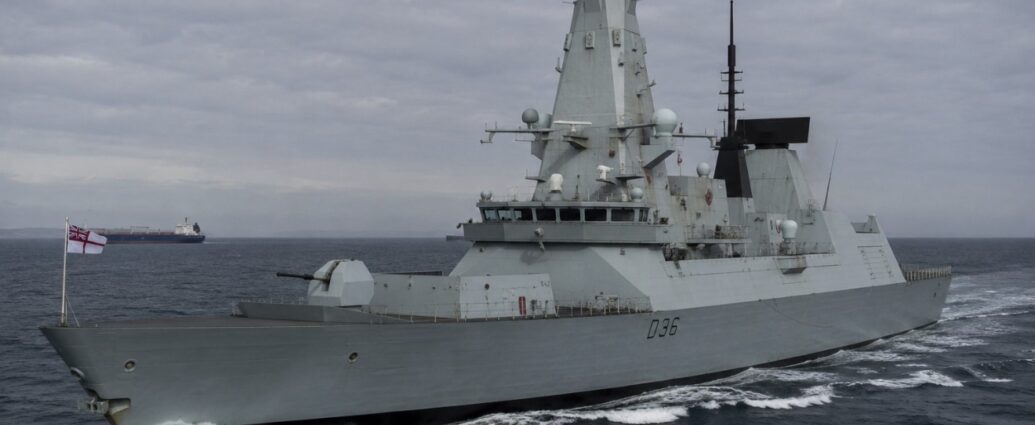
Britain is moving HMS Dragon, one of the Royal Navy’s most advanced air-defense destroyers, toward the Middle East as London prepares for a potential multinational mission aimed at protecting commercial shipping through the Strait of Hormuz, one of the world’s most strategically important energy corridors.
The U.K. Ministry of Defence confirmed Saturday that the Type 45 destroyer is being redeployed from the eastern Mediterranean toward the Gulf as part of what officials described as “prudent planning” tied to a defensive maritime security operation jointly coordinated by Britain and France.
British officials stressed the proposed mission would remain “strictly defensive and independent,” focused on safeguarding civilian shipping traffic rather than participating directly in the broader military conflict involving Iran, Israel, and the United States.
HMS Dragon had been operating near Cyprus, where it helped defend RAF Akrotiri air base against drone threats linked to the regional conflict. The Ministry of Defence said military planners now believe sufficient defensive coverage exists around Cyprus to allow the destroyer to reposition closer to the Gulf.
The decision was approved by Defence Secretary John Healey and Chief of the Defence Staff Air Chief Marshal Sir Richard Knighton, underscoring growing Western concern over the security of maritime trade routes surrounding Hormuz.
The strait remains one of the world’s most critical oil chokepoints, handling a substantial share of global seaborne crude exports flowing from Gulf producers into international markets. Even limited threats to commercial traffic have historically triggered sharp increases in tanker insurance premiums, freight rates, and oil-market volatility.
Military representatives from more than 30 nations met last month at Britain’s Permanent Joint Headquarters in Northwood to discuss the framework for a broader maritime coalition. British defense officials said roughly 40 countries are now participating in aspects of the planning effort.
France separately repositioned the aircraft carrier Charles de Gaulle from the Mediterranean into the Red Sea this week, signaling readiness to support operations if the coalition formally launches.
Britain is also converting the support vessel RFA Lyme Bay into a mothership for mine-hunting drones that could help secure shipping lanes and clear maritime threats near the strait.
For energy traders and shipping executives, the movement of HMS Dragon highlights the continuing vulnerability of the Strait of Hormuz, where drones, anti-ship missiles, and fast-boat attacks can disrupt supply chains and raise transportation costs even without a formal blockade.
The Type 45 destroyer’s deployment carries particular significance because the platform was specifically designed to counter guided-missile and drone threats — the precise risks now dominating Gulf security calculations. HMS Dragon carries the Sea Viper missile-defense system, widely regarded as one of the Royal Navy’s most capable naval air-defense platforms.
The deployment comes as a fragile cease-fire remains in place across parts of the broader Iran conflict. On Friday, U.S. forces struck two Iranian tankers accused of attempting to breach a maritime blockade imposed by President Donald Trump, adding fresh tension to an already volatile regional environment.
Shipping and commodity markets often react to military positioning around Hormuz before any direct disruption to oil flows occurs. Freight rates, war-risk premiums, and crude oil options frequently move in anticipation of prolonged instability rather than actual supply interruptions.
Prime Minister Keir Starmer formally committed Britain to co-leading the proposed Hormuz protection mission alongside French President Emmanuel Macron on April 17, though both governments emphasized operations would begin only “when conditions allow.”
President Emmanuel Macron has framed the initiative as a stabilizing maritime operation intended to restore confidence among commercial carriers and global insurers rather than align directly with any military side in the regional conflict.
For London, the deployment also carries broader political and financial implications as Britain balances alliance obligations, naval readiness, and the growing cost of sustained overseas operations during a period of heightened geopolitical instability.
Britain’s decision to pre-position HMS Dragon reflects a familiar Gulf strategy: visible but limited military deployments intended to deter escalation, reassure commercial shipping operators, and contain energy-market volatility without triggering a broader regional confrontation.
For now, the destroyer’s movement toward the Gulf adds another closely watched military variable to a region that remains central to global oil flows, shipping confidence, and international energy pricing.
JBizNews Desk