By JBizNews Desk
May 10, 2026
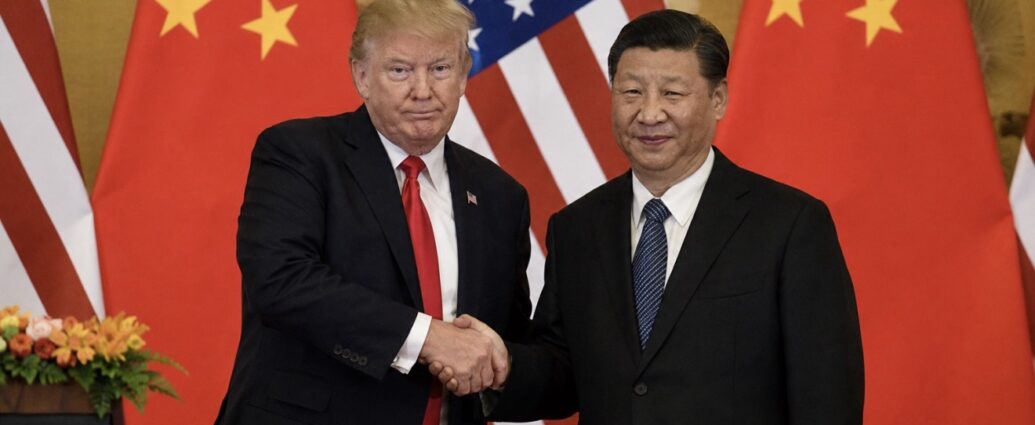
The White House confirmed Sunday that President Donald Trump will travel to Beijing on May 14 and 15 for a summit with Chinese President Xi Jinping, with administration officials also inviting a delegation of America’s most influential corporate leaders — including executives from Nvidia, Apple, Boeing, Qualcomm, ExxonMobil, Citigroup, Blackstone, and Visa — to participate in meetings that could reshape trade flows, semiconductor policy, aircraft orders, energy markets, and supply-chain strategy between the world’s two largest economies.
The trip marks the first presidential visit to China since Trump’s own 2017 state visit, which produced more than $250 billion in announced commercial agreements, including a headline-grabbing $37 billion Boeing aircraft order that ultimately became only partially realized. This time, administration officials are publicly lowering expectations, framing the summit less as a transformational trade reset and more as an effort to preserve the fragile economic truce reached between Trump and Xi during their October 2025 meeting in South Korea.
Still, for global markets and multinational corporations, the stakes surrounding the summit remain enormous.
The administration’s CEO delegation is notably smaller than the group of 29 corporate executives that accompanied Trump to Beijing in 2017, reflecting growing internal debate within the administration over how aggressively to pursue commercial diplomacy with China amid ongoing tensions over tariffs, semiconductor exports, artificial intelligence, rare earth minerals, and industrial policy.
According to administration officials familiar with the planning process, invitations went out unusually late after internal disagreements over the size and visibility of the corporate delegation. U.S. Trade Representative Jamieson Greer had reportedly resisted sending a large business contingent when the summit was initially planned for March, preferring to keep negotiations focused on managed trade and strategic leverage rather than headline commercial deals.
Among the companies invited, Qualcomm confirmed it had received an invitation. Boeing declined to comment. Nvidia, Apple, Citigroup, and Visa did not publicly respond to inquiries regarding participation.
For Boeing, the summit could become one of the company’s most financially consequential geopolitical events in years.
During the company’s most recent earnings call, Boeing CEO Kelly Ortberg told investors that China could soon place what he described as a “big number” aircraft order, potentially ending a nearly decade-long freeze in major Chinese purchases of Boeing jets. Industry analysts and aviation sources say discussions could involve as many as 500 Boeing 737 MAX aircraft alongside roughly 100 widebody jets, with purchases likely distributed across multiple Chinese state-backed airlines consistent with previous Chinese procurement structures.
China has not placed a major Boeing order since 2017, a gap spanning the global grounding of the 737 MAX, the pandemic-era aviation collapse, and escalating trade friction between Washington and Beijing. Even a preliminary framework agreement announced during the summit could materially strengthen Boeing’s production outlook and improve investor confidence surrounding long-term order visibility.
For Nvidia, the summit carries equally significant implications, though centered on artificial intelligence and semiconductor policy rather than industrial exports.
Jensen Huang, founder and CEO of Nvidia, told CNBC this week it would be “a privilege” to join the delegation. His comments came only days after he publicly acknowledged that Nvidia now effectively holds zero market share in China’s AI graphics processing market following years of tightening U.S. export restrictions.
Since 2022, U.S. policy has progressively blocked Nvidia from selling its most advanced AI chips into China. The Trump administration expanded those restrictions further in April 2025 by imposing an indefinite ban on shipments of Nvidia’s H20 accelerator chips to Chinese customers.
Investors immediately interpreted Huang’s invitation as a sign semiconductor export controls could become part of broader negotiations between Washington and Beijing. Nvidia shares rose more than 2% after reports of his invitation emerged, reflecting growing speculation that some form of licensing adjustment, AI cooperation framework, or export-control modification could eventually emerge from the talks.
The two governments are also reported to be weighing formal discussions surrounding artificial intelligence cooperation, adding strategic significance to Nvidia’s participation and potentially elevating AI policy into one of the summit’s most closely watched issues.
Beyond aviation and semiconductors, the summit’s broader agenda centers on preserving the October 2025 trade truce that temporarily stabilized relations between the two economic powers.
That agreement reduced U.S. tariffs on Chinese imports by 10 percentage points to 47%, delayed restrictions preventing Chinese firms partly owned by sanctioned entities from accessing U.S. technology, and secured Chinese commitments to crack down on fentanyl exports and maintain rare earth mineral shipments for one year.
Beijing is now reportedly seeking at least a one-year extension of that truce, while Washington is pushing for a shorter six-month framework that would preserve greater negotiating leverage ahead of the U.S. midterm elections.
China is also pressing the United States to avoid future retaliatory trade actions and ease existing restrictions surrounding advanced semiconductor manufacturing equipment and memory-chip exports.
Beijing’s leverage entering the summit has strengthened significantly since last year.
China expanded export controls on rare earth minerals and critical materials — sectors where the country controls approximately 90% of global processing capacity — and in April formally invoked its anti-sanctions law for the first time, ordering Chinese companies not to comply with U.S. sanctions targeting refiners purchasing Iranian crude oil.
Although Chinese exports to the United States declined roughly 20% last year, shipments to Africa, Latin America, Southeast Asia, and the European Union continued growing, helping China finish 2025 with a record $1.2 trillion trade surplus.
That backdrop leaves Xi Jinping entering the summit from a position of relative economic stability while Trump faces mounting domestic pressure tied to elevated fuel prices, continued Middle East instability, and November midterm elections.
Treasury Secretary Scott Bessent told reporters he expects the summit to produce “great stability” in the relationship, while White House spokeswoman Anna Kelly said Americans should expect the president to deliver “more good deals for the United States.”
The executives accompanying Trump are expected to attend a formal state dinner hosted by Xi Jinping, providing direct access to China’s top leadership at a moment when American corporations face extraordinary uncertainty surrounding tariffs, semiconductor access, supply chains, rare earth availability, artificial intelligence policy, and long-term access to the world’s second-largest economy.
For Wall Street, the summit increasingly represents more than diplomacy. It is rapidly becoming a referendum on the future direction of global trade, AI competition, industrial supply chains, and corporate access between the two dominant economic powers shaping the modern world economy.
JBizNews Desk