By JBizNews Desk
May 11, 2026
The trade war between the United States and China may be temporarily frozen, but American businesses are increasingly preparing for what happens when the ceasefire expires later this year.
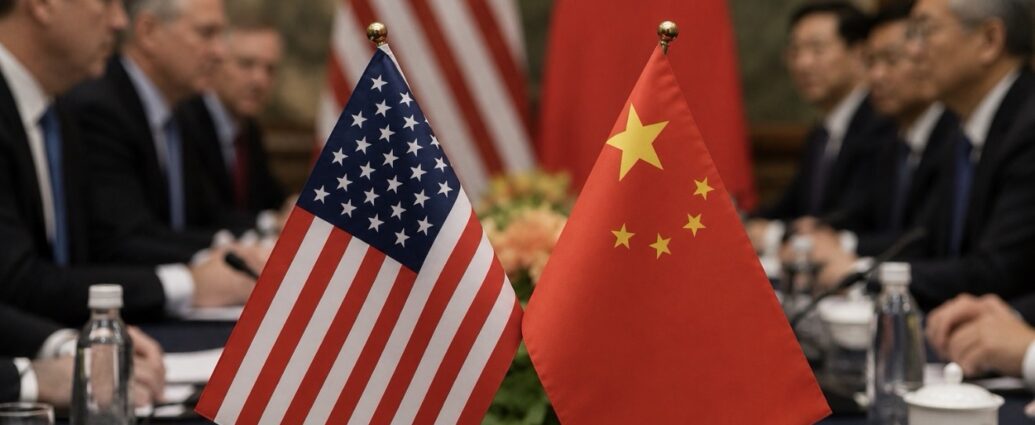
Under agreements confirmed by the White House and China’s Ministry of Commerce, Washington and Beijing extended their tariff truce through November 10, 2026, preserving reduced tariff rates that helped stabilize global supply chains after one of the most economically disruptive trade battles in decades.
The agreement followed a summit between President Donald Trump and Chinese President Xi Jinping in Busan, South Korea, in late October 2025 and marked the most significant de-escalation since tariffs between the world’s two largest economies spiraled to historic levels last year.
At the height of the confrontation following Trump’s “Liberation Day” tariff actions in April 2025, U.S. tariffs on many Chinese imports surged as high as 145%, while China retaliated with duties reaching 125% on American goods.
The economic shock rattled financial markets, disrupted global manufacturing networks, triggered inflation fears, and forced multinational corporations to rethink supply chains that had been built around decades of low-cost Chinese production.
The first breakthrough came in Geneva in May 2025, when negotiators agreed to temporarily reduce reciprocal tariff rates to 10% for an initial 90-day period. Additional extensions followed during the summer before the Busan summit produced the current year-long arrangement now set to expire in November.
As part of the broader agreement, the United States reduced fentanyl-related tariffs on Chinese imports from 20% to 10%, while China suspended several retaliatory non-tariff measures and committed to significantly expanding purchases of American agricultural products.
The agreement included commitments from Beijing to purchase at least 25 million metric tons of U.S. soybeans annually through 2028, while also suspending planned export controls on certain rare earth materials critical to electronics, electric vehicles, defense systems, and advanced manufacturing technologies.
China additionally removed several American-linked firms from restrictive entity-list measures that had complicated trade and investment flows during the height of the conflict.
The temporary détente delivered meaningful relief to American companies heavily dependent on Chinese manufacturing and supply chains.
Shipping costs stabilized, inventory shortages eased, and businesses that spent much of 2025 scrambling to reroute sourcing operations gained breathing room to reassess long-term manufacturing strategies.
Retailers, electronics manufacturers, auto suppliers, and industrial companies particularly benefited as logistics bottlenecks that plagued global trade during the tariff escalation gradually improved.
But major fault lines remain unresolved.
Analysts at French trade credit insurer Coface warned this year that the arrangement “remains fragile,” particularly as tensions continue surrounding semiconductors, advanced technology exports, industrial subsidies, cybersecurity restrictions, and shipbuilding policy.
Both governments still retain substantial economic leverage capable of reigniting trade hostilities once negotiations reopen later this year.
The legal landscape surrounding tariffs also shifted dramatically in February after the U.S. Supreme Court ruled that Trump could not rely on the International Emergency Economic Powers Act to impose broad tariffs.
Following the ruling, the administration moved quickly to impose a temporary 10% global tariff under Section 122 of the Trade Act of 1974, which allows limited short-term tariff authority pending congressional approval for any extension beyond 150 days.
Despite the truce, tariff levels remain historically elevated.
Accounting for Section 301 duties, fentanyl-related levies, and additional sector-specific restrictions, the effective tariff rate on many Chinese imports entering the United States still sits near approximately 31% — far below the extreme 2025 peaks but dramatically higher than pre-trade-war levels.
For consumers, the temporary stabilization has helped prevent the sharpest price increases economists feared during the height of the tariff escalation.
Supply chains that became severely disrupted throughout 2025 have partially normalized, though businesses continue reporting costly administrative burdens tied to tariff compliance, customs documentation, origin verification requirements, and shifting regulatory rules.
Many companies have also accelerated efforts to diversify manufacturing beyond China even as trade tensions temporarily ease.
Executives across industries ranging from consumer electronics to apparel and industrial manufacturing continue expanding operations in Mexico, Vietnam, India, and Southeast Asia in an effort to reduce dependence on any single geopolitical relationship.
The central issue now confronting multinational corporations is uncertainty.
With the current agreement expiring November 10 and both governments signaling tariff provisions will likely be renegotiated annually, businesses effectively have less than six months of visibility into the future cost structure of trade between the world’s two largest economies.
Wall Street analysts warn that uncertainty itself may become one of the biggest economic risks.
Companies reluctant to commit to major capital investments amid unresolved trade policy questions could slow manufacturing expansion, inventory growth, and hiring plans heading into 2027.
At the same time, investors remain highly sensitive to any indication that negotiations between Washington and Beijing could deteriorate again, particularly given how aggressively markets reacted during previous tariff escalations.
Executives increasingly view the current truce not as a permanent resolution, but as a temporary pause inside a much larger economic restructuring effort reshaping global manufacturing, trade flows, and geopolitical alliances.
Whether the next phase brings another escalation or a deeper long-term agreement may ultimately determine the trajectory of inflation, supply chains, manufacturing investment, and global economic growth well beyond 2026.
— JBizNews Desk
© JBizNews.com. All rights reserved. This article is original reporting by JBizNews Desk. Unauthorized reproduction or redistribution is strictly prohibited.