By JBizNews Desk
May 10, 2026
American consumers are now reporting the bleakest economic outlook ever recorded in nearly eight decades of modern survey data, as soaring gasoline prices, tariff-related cost increases, and fears surrounding the Iran conflict continue hammering household confidence across the country.
The latest University of Michigan Survey of Consumers, released Friday, showed the preliminary May 2026 consumer sentiment index falling to 48.2 — the lowest reading in the survey’s history dating back to 1952.
The result marked a further decline from April’s prior record low of 49.8 and came in below the Dow Jones economist consensus forecast of 49.7.
The reading now sits below levels recorded during the 2008 global financial crisis, beneath the lows reached during the COVID-19 pandemic, and lower than sentiment readings seen during the post-pandemic inflation surge that reshaped the U.S. economy earlier this decade.
Survey director Joanne Hsu said consumers continue facing intense pressure from rising living costs driven primarily by gasoline prices and tariffs.
“Consumers continue to feel buffeted by cost pressures, led by soaring prices at the pump,” Hsu said alongside the report.
“Middle East developments are unlikely to meaningfully boost sentiment until supply disruptions have been fully resolved and energy prices fall,” she added.
The economic pain is increasingly becoming visible in daily household spending patterns.
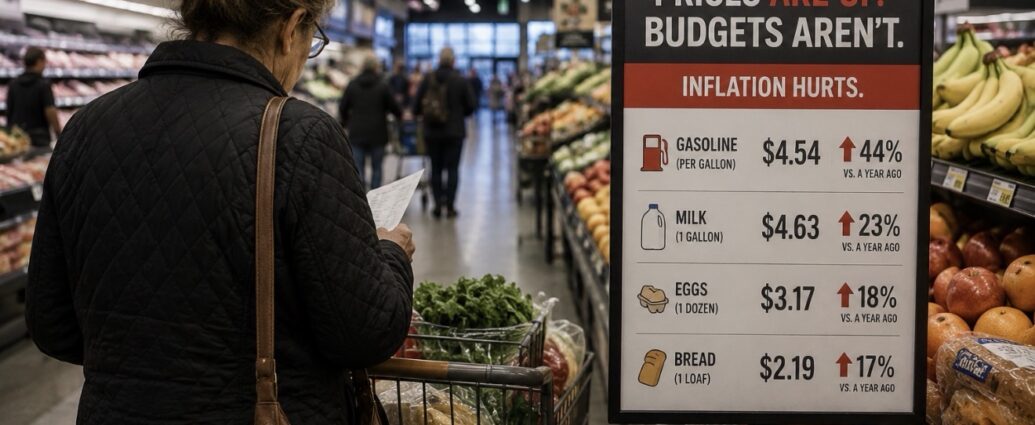
The national average gasoline price reached approximately $4.54 per gallon as of May 8, according to the American Automobile Association, representing an increase of roughly 44% compared with a year earlier.
The surge traces directly to the ongoing disruption in the Strait of Hormuz, where the Iran conflict has significantly restricted global oil flows since late February.
Roughly 20% of the world’s seaborne oil supply normally passes through the corridor.
Consumers themselves increasingly identify energy costs as the primary driver behind deteriorating economic conditions.
According to the survey, roughly one-third of respondents spontaneously mentioned gasoline prices when discussing financial concerns, while approximately 30% cited tariffs and rising prices on imported goods.
The survey’s measure of current economic conditions fell another 9% to 47.8, reflecting worsening household anxiety surrounding affordability, discretionary spending, and major purchases including vehicles, appliances, and homes.
Consumers also reported deteriorating expectations for future real income growth.
Inflation expectations remained elevated across both short- and long-term horizons.
Year-ahead inflation expectations held at approximately 4.5%, sharply higher than the 3.4% level recorded before the Iran conflict escalated earlier this year.
Long-run inflation expectations eased slightly to 3.4% from 3.5%, suggesting consumers expect near-term inflation pressure to persist even if they do not yet anticipate a permanent inflation spiral.
Perhaps most striking, the collapse in confidence extended across virtually every demographic category measured in the survey.
The University of Michigan reported declining sentiment across all income groups, political affiliations, educational backgrounds, and age brackets — signaling broad-based economic stress rather than weakness concentrated within one portion of the population.
Corporate earnings are increasingly reflecting the same pressures consumers describe in surveys.
Whirlpool Corporation, the Michigan-based appliance manufacturer behind brands including Maytag and KitchenAid, reported first-quarter revenue of approximately $3.27 billion, down 9.6% from the same period a year earlier and below analyst expectations compiled by Bloomberg.
The company posted a GAAP net loss of $85 million, compared with net earnings of approximately $71 million during the first quarter of 2025.
Whirlpool shares fell roughly 20% following the results.
Chief Financial Officer Roxanne Warner told Yahoo Finance that major appliance demand across the United States and Canada had fallen to “recession-level lows” during the quarter.
“The industry contracted about 7.4%,” Warner said. “These are levels that last time you’ve seen was in the great financial crisis.”
Chief Executive Officer Marc Bitzer described conditions as “an almost perfect storm” driven by collapsing consumer sentiment, weakening demand, and worsening pricing pressure across the appliance industry.
Whirlpool responded by suspending its quarterly dividend and implementing its largest pricing increase in roughly a decade, including a 10% increase in April followed by another planned increase of 4% this summer.
The worsening consumer outlook now places additional pressure on policymakers ahead of a critical inflation report due this week.
The Bureau of Labor Statistics is scheduled to release the April Consumer Price Index report, which economists expect will show annual inflation accelerating back toward roughly 4%.
A hotter-than-expected reading could further complicate the Federal Reserve’s position as policymakers balance slowing consumer demand against still-elevated inflation expectations tied heavily to energy markets.
If the inflation data confirms what consumers are already signaling — that household purchasing power continues eroding while prices remain elevated — economists warn confidence could deteriorate even further during the summer months.
For now, the latest University of Michigan survey offers one of the clearest warnings yet that the economic consequences of the Iran conflict, rising fuel prices, and tariff pressures are no longer abstract macroeconomic concerns.
They are increasingly shaping how Americans feel every time they fill their gas tanks, pay household bills, or walk into a store.
— JBizNews Desk
© JBizNews.com. All rights reserved. This article is original reporting by JBizNews Desk. Unauthorized reproduction or redistribution is strictly prohibited.