NEW YORK — Mortgage rates are starting the week relatively stable, but the calm may not last long.
American homebuyers, lenders, and financial markets are now focused almost entirely on Tuesday’s Consumer Price Index report — a key inflation reading that could determine whether borrowing costs move meaningfully higher again or finally begin easing after months of pressure tied to war-driven energy inflation and elevated Treasury yields.
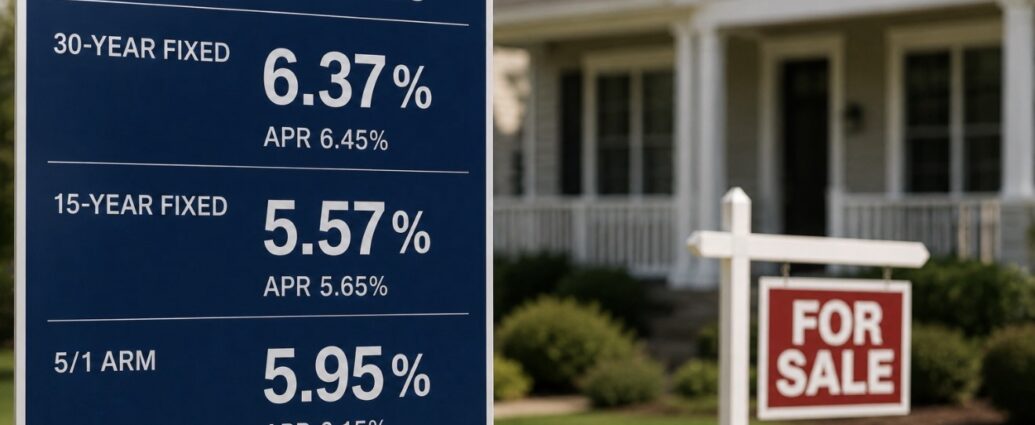
According to the latest weekly survey from Freddie Mac, the average 30-year fixed mortgage rate stood at 6.37% as of May 7, essentially unchanged from the previous week. Daily lender surveys from platforms including Zillow showed purchase mortgage rates Monday ranging between roughly 6.25% and 6.43%, depending on lender type and borrower profile.
Refinance rates remain slightly higher, with 30-year refinance averages hovering between 6.45% and 6.51%.
Meanwhile, the 15-year fixed mortgage — often favored by borrowers seeking lower long-term interest costs — is averaging between approximately 5.57% and 5.67%.
The market’s attention now shifts squarely to inflation.
If Tuesday’s CPI reading comes in hotter than expected, Treasury yields are likely to rise further, placing additional upward pressure on mortgage rates, which closely track movements in the benchmark 10-year Treasury note.
The 10-year Treasury yield edged up Monday to approximately 4.386%, reflecting cautious positioning ahead of the report.
The inflation backdrop has become increasingly complicated since late February, when the Trump administration launched military operations tied to the Iran conflict and the Strait of Hormuz crisis.
Oil prices surged in the aftermath, pushing up transportation, manufacturing, and energy-related costs across the broader economy. Those pressures have made it more difficult for the Federal Reserve to continue the interest rate cutting cycle it began in late 2025.
The Fed held rates steady at its April meeting, and most economists no longer expect another cut until at least the fall — if inflation conditions improve enough to justify it.
For the housing market, the consequences are significant.
Housing economists at both Fannie Mae and the Mortgage Bankers Association now project mortgage rates will likely remain above 6% throughout most or all of 2026, prolonging one of the most difficult affordability environments American homebuyers have faced in decades.
Most analysts also believe rates are unlikely to return to the 5% range anytime soon — a threshold many real estate professionals view as necessary to meaningfully revive housing demand and unlock inventory currently frozen by high financing costs.
Sam Khater, chief economist at Freddie Mac, said recent housing data suggests some modest improvement in inventory conditions, including stronger new-home sales activity and declining median new-home prices compared with recent peaks.
But affordability remains the market’s defining challenge.
For many families, even small rate changes carry major financial implications.
At a 6.37% rate on a standard $300,000 30-year mortgage, monthly principal and interest payments total roughly $1,873 per month. Even a half-point decline in rates would lower monthly payments by only about $90, providing some relief but not fundamentally changing affordability for many middle-class buyers already stretched by high home prices, insurance costs, taxes, and broader inflation.
Khater encouraged borrowers to aggressively compare lender offers, pointing to Freddie Mac research showing consumers who obtain multiple mortgage quotes can often save between $600 and $1,200 annually.
The broader concern for markets is that housing remains one of the most interest-rate-sensitive sectors of the U.S. economy.
Persistently elevated borrowing costs have slowed existing home sales, weakened refinancing activity, reduced housing turnover, and increased financial pressure on younger buyers attempting to enter the market for the first time.
Now, much of the near-term direction for both mortgage rates and housing activity may hinge on a single inflation report.
If Tuesday’s CPI data shows inflation cooling meaningfully, markets could begin pricing in earlier Federal Reserve easing, potentially pulling mortgage rates modestly lower.
But if inflation remains stubbornly high — particularly with oil prices still elevated due to Middle East tensions — borrowing costs could climb again just as the critical summer homebuying season approaches.
For millions of Americans waiting for meaningful relief, the next 24 hours may help determine whether the housing market moves closer to recovery — or remains stuck in another year of financial gridlock.
JBizNews Desk
© JBizNews.com. All rights reserved. This article is original reporting by JBizNews Desk. Unauthorized reproduction or redistribution is strictly prohibited.