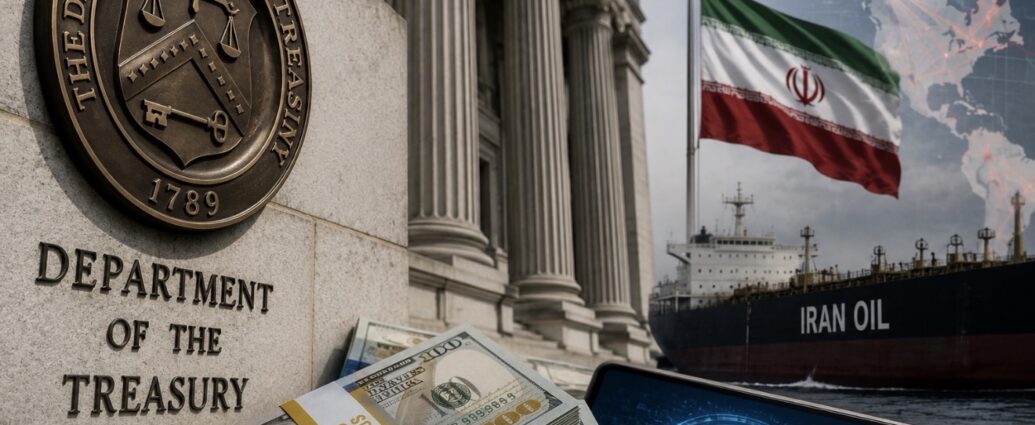
The U.S. Treasury Department issued a sweeping directive Monday ordering American banks and financial institutions to intensify monitoring for suspected Iranian money-laundering activity, dramatically escalating Washington’s financial crackdown on Tehran as ceasefire negotiations between the United States and Iran continue to deteriorate.
The directive, issued through the Treasury’s sanctions enforcement and anti-money-laundering channels, effectively turns major U.S. banks into frontline enforcement partners in the administration’s broader economic war against Iran.
According to details first reported by the Associated Press, Treasury instructed financial institutions to closely scrutinize transactions linked to suspected Iranian oil revenues, shell companies, layered intermediary payments, and cryptocurrency networks believed to be helping Tehran bypass sanctions.
Particular attention is being directed toward:
- newly formed companies moving unusually large sums,
- firms routing transactions through multiple jurisdictions,
- shipping-related payments tied to oil cargoes,
- and crypto transactions involving entities connected to Iranian financial networks.
The timing is significant.
The directive arrived just hours after President Donald Trump declared that the fragile Iran ceasefire was “on life support” following the collapse of another round of indirect negotiations.
Trump publicly rejected Tehran’s latest proposal for ending the conflict, calling it “TOTALLY UNACCEPTABLE,” signaling that the administration may now intensify both military and economic pressure simultaneously.
The Treasury action reflects growing concern inside Washington that Iran has continued generating substantial oil revenue despite years of sanctions.
Investigations tied to international shipping and financial flows found that dozens of companies linked to transporting Iranian oil processed approximately $707 million through U.S.-connected accounts during 2024 alone, according to enforcement findings cited by Treasury officials and international financial investigators.
Many of the companies involved were reportedly based in Iraq, the United Arab Emirates, Hong Kong, and other jurisdictions frequently used as intermediary financial hubs.
The findings underscore how deeply Iran’s sanctions-evasion infrastructure has penetrated the global financial system — including institutions with indirect or direct exposure to U.S. banking networks.
The administration had already begun escalating pressure earlier this year.
In April, the Treasury Department sent formal warnings to financial institutions in China, Hong Kong, the UAE, and Oman, threatening secondary sanctions against banks and companies found facilitating Iranian transactions or allowing illicit Iranian financial flows to move through their systems.
Monday’s directive extends that campaign directly into the American banking sector itself.
The cryptocurrency component of the order represents one of the most aggressive U.S. government moves yet targeting Iran’s use of digital assets.
Treasury officials increasingly believe Iran has expanded its reliance on cryptocurrency channels to bypass traditional banking restrictions, settle international transactions, and move oil-related revenues outside conventional financial systems.
The directive reportedly instructs banks to flag suspicious crypto-related transfers involving entities tied to Iran or jurisdictions frequently associated with sanctions evasion.
That move could have broader implications for crypto exchanges, stablecoin operators, and digital payment intermediaries globally.
For major U.S. financial institutions, the directive creates immediate operational and compliance consequences.
Banks now face heightened expectations to identify suspicious Iran-linked activity proactively, strengthen due-diligence procedures, and report potentially illicit transactions quickly to federal authorities.
Failure to identify or report suspicious activity tied to Iranian sanctions networks could expose institutions to regulatory penalties, enforcement actions, or reputational risk.
At the same time, compliance experts warn that aggressive over-reporting may create friction for legitimate businesses operating across the Middle East and Gulf regions, particularly companies involved in shipping, commodities, energy trading, and cross-border finance.
Industry compliance teams are expected to spend the coming days analyzing Treasury’s guidance and adjusting internal risk-monitoring systems accordingly.
The broader strategy reflects the Trump administration’s increasingly aggressive dual-track pressure campaign against Tehran:
military pressure through ongoing regional operations and economic pressure aimed at cutting off Iran’s access to global oil revenues and foreign currency flows.
Iran’s oil exports remain the central financial lifeline supporting its government, military operations, and regional proxy networks.
By targeting the financial plumbing behind those exports — rather than solely the shipments themselves — the administration appears to be attempting to make sanctions enforcement far more difficult for intermediaries to evade.
For global banks, energy traders, shipping firms, and cryptocurrency platforms, the directive also reinforces a growing reality:
geopolitical conflicts are now increasingly fought through financial systems as much as through conventional military operations.
And as the confrontation between Washington and Tehran deepens, the global banking sector is being drawn ever more directly into the center of the conflict.
JBizNews Desk
© JBizNews.com. All rights reserved. This article is original reporting by JBizNews Desk. Unauthorized reproduction or redistribution is strictly prohibited.