The Morris Katz Foundation and the Orthodox Jewish Chamber of Commerce have formally nominated President Donald Trump for the Morris Katz Legacy Award — the Foundation’s highest honor — during Jewish American Heritage Month, recognizing what organizers describe as his historic support for the Jewish people, the State of Israel, religious freedom, and the enduring values embodied by Holocaust survivor and world-renowned artist Morris Katz.
The nomination has drawn praise and support from a broad coalition of Jewish leaders, advocates, media voices, and communal organizations, including the Orthodox Jewish Chamber of Commerce, Professor Alan Dershowitz, Elan Carr, Malcolm Hoenlein, Pastor Mark Burns, Bobby Kennedy, nationally syndicated radio host and author Mark Levin, and Mayor Izzy Spitzer of New Square — a group whose combined standing across American Jewish public life gives the nomination unusual significance.
Foundation officials stressed that the Morris Katz Legacy Award award is not about politics, but about the deeper meaning behind Morris Katz’s life story and the values he devoted his life to preserving: faith, freedom, gratitude to America, and pride in Jewish identity.
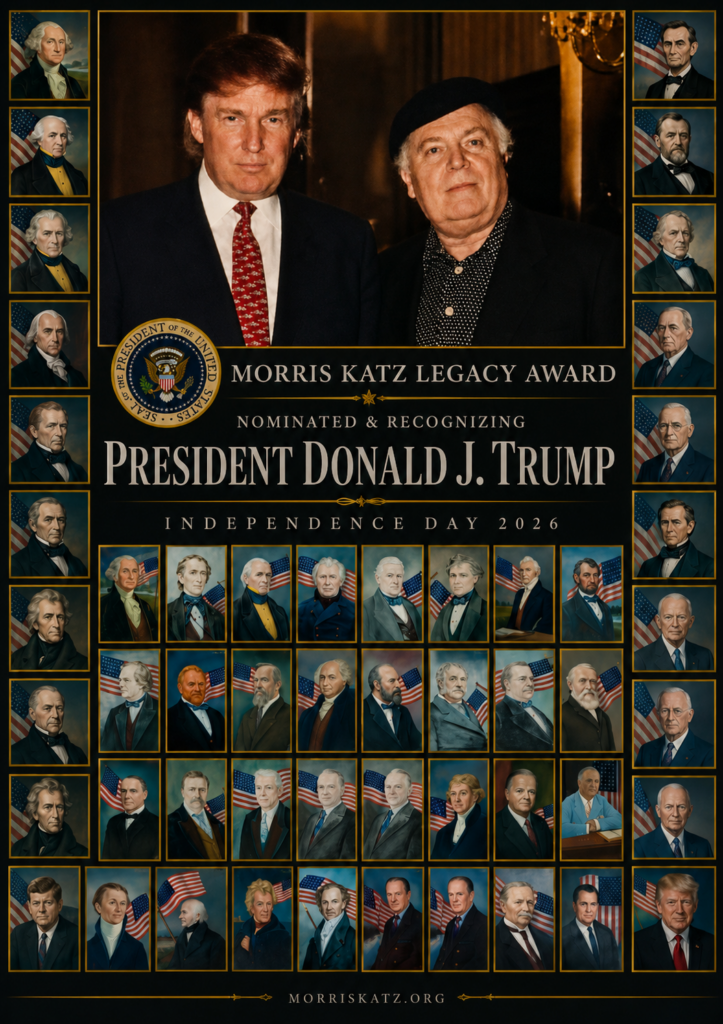
Unlike symbolic international peace prizes often viewed through a political lens, supporters of the Morris Katz Legacy Award say this recognition reflects something far more personal and enduring — the freedom to openly live as a Jew in America, the survival of Jewish faith after the Holocaust, and appreciation for leaders whose actions strengthened those ideals.
Katz devoted much of his life to expressing gratitude toward the United States through his Presidential Collection, with each portrait requiring more than 200 hours each to complete. He viewed the collection as a patriotic expression of appreciation to a nation that gave a Holocaust survivor not only safety, but dignity and freedom.
On May 4, 2026, President Trump signed a proclamation recognizing May as Jewish American Heritage Month, but organizers say the document included something unprecedented in modern American presidential history — a direct national call for Shabbat observance.
The initiative, called “Shabbat 250” in honor of America’s upcoming 250th anniversary, encouraged Americans to observe the Sabbath from sundown Friday, May 15 through nightfall Saturday, May 16.
Jewish organizations across the country including Chabad, Agudath Israel of America, Aish, the Coalition for Jewish Values, and leaders within the Orthodox Jewish Chamber of Commerce praised the proclamation as a rare and highly visible affirmation of Jewish faith and religious freedom in America.
For the Foundation, the significance goes directly to the heart of Morris Katz’s story.
Katz — the Holocaust survivor, inventor, entrepreneur, and artist known around the world as “the Albert Einstein of Art” — arrived in America in 1949 with virtually nothing after surviving Nazi persecution in Eastern Europe.
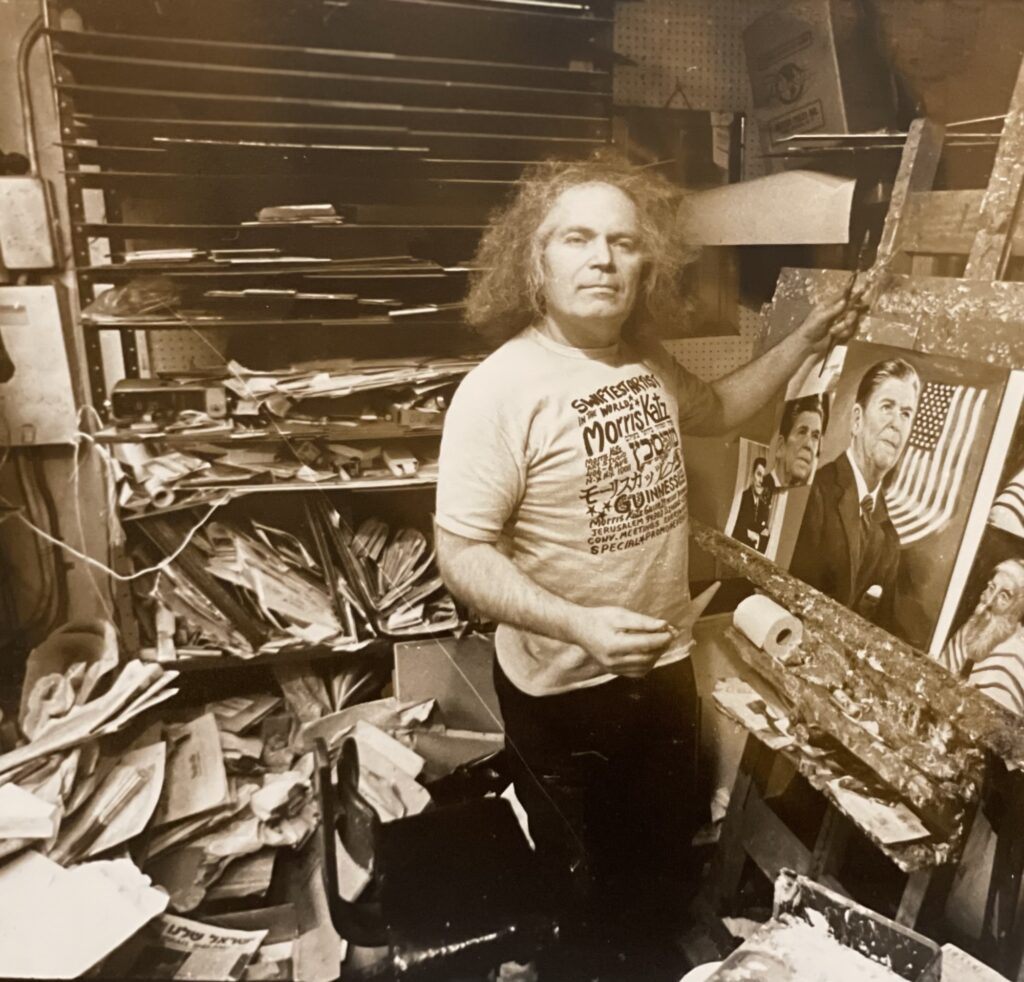
His first job in America was as a carpenter. When his employer demanded he report to work on Saturdays, Katz refused.
“I didn’t survive the Holocaust to work on Shabbat,” Katz famously said before walking away from the job and dedicating himself fully to painting.
That moment became the turning point that launched one of the most extraordinary artistic careers in American history.
Foundation leaders say President Trump’s public recognition of Shabbat carries exceptional meaning because it honors the very freedom that allowed Morris Katz to rebuild his life in America — the freedom to openly practice one’s faith without fear.
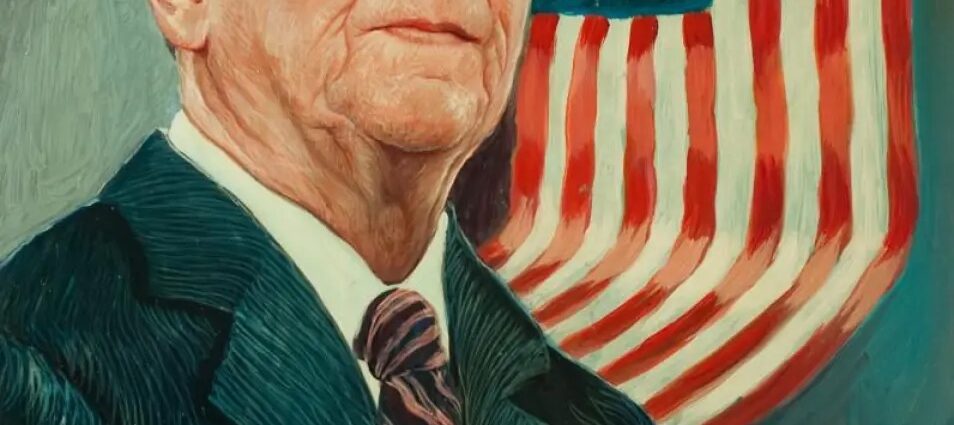
Katz eventually became deeply inspired by the country that gave him refuge and freedom after the Holocaust, leading him to begin what would become his legendary Presidential Collection — an ambitious artistic tribute featuring portraits of every American president from George Washington through George H.W. Bush.
The deeper purpose that inspired the collection became especially clear following the assassination of President John F. Kennedy in 1963. Shocked by the tragedy that gripped the nation, Katz painted Kennedy’s portrait within minutes of hearing the news. According to a 1965 feature in The Post Card Traveler, Katz was later offered $50,000 for the painting — an extraordinary sum at the time — but refused to sell it.
“It is not something commercial to be sold,” Katz said. “This picture contains far more than anyone may realize. It is a picture of everything this great man and American means to me and my people — how can you sell that?”
Witnessing how the portrait and the national mourning surrounding Kennedy briefly united Americans during a deeply painful moment in history, Katz was inspired to begin what became a six-year mission to paint every President of the United States. His vision extended far beyond art itself. He hoped the collection would serve as a lasting message of unity, patriotism, gratitude, and American history that could be carried forward to future generations.
To Katz, America’s presidents represented far more than politics. They symbolized the nation that gave a Holocaust survivor dignity, opportunity, religious freedom, and the chance to rebuild a life destroyed in Europe. His Presidential Collection was never intended as a commercial project, but as a lifelong expression of gratitude to America and the freedoms it protected.
A world-famous artist, Katz earned international recognition for his historical portrait work. In one of the defining honors of his career, he was chosen by the Vatican out of more than 500 artists to paint the Pope’s famous Portrait during his visit to the United States — a distinction that reflected the global respect and acclaim his artistry had achieved.
The historic collection is uniquely distinguished by Katz’s inclusion of the American flag in every presidential portrait, with the number of stars carefully matched to the number of states in the Union during each president’s time in office — a level of historical detail and symbolism that made the collection unlike any other presidential art series ever created.
Over the years, millions of postcards featuring the portraits from the collection were sold worldwide, eventually becoming sought-after collector’s items that helped bring his message of patriotism, resilience, and appreciation for America into homes across generations.
Foundation leaders say that vision aligns with the president’s broader support for religious identity and Israel. Katz painted America’s presidents out of gratitude for a nation that defended freedom of faith, while President Trump’s actions — reflect that same recognition of the importance of religious liberty in America.
The Foundation’s leadership said they hope President Trump accepts the nomination, noting that the connection between the Trump family and Morris Katz dates back decades.
According to members of the founding committee of the Morris Katz Foundation, President Trump’s father, Fred Trump, personally commissioned Morris Katz to create a large custom painting for his home during the height of the artist’s prominence in New York. Foundation officials said Katz admired the Trump family and viewed them as representative of the American success story he deeply respected after arriving in the United States as a Holocaust survivor with nothing.
Katz twice listed in the Guinness World Records — first as the world’s fastest painter and later as the world’s most prolific artist dethroning Picasso in the Guinness World Records.
Foundation officials specifically pointed to David Baums admiration for Morris Katz, the entrepreneur credited with bringing the Guinness World Records from England to the United States, who later authored a book on Morris Katz and helped bring national attention to the artist’s extraordinary achievements.
Supporters backing the nomination represent several generations of Jewish leadership and advocacy.
Professor Alan Dershowitz, the renowned Harvard Law professor emeritus and constitutional scholar, has consistently defended President Trump’s record on Israel and combating anti-Semitism.
Elan Carr, former U.S. Special Envoy to Monitor and Combat Anti-Semitism, previously credited the Trump administration with elevating the fight against anti-Semitism into a major international diplomatic priority.
Malcolm Hoenlein, Vice Chair and Chief Executive Emeritus of the Conference of Presidents of Major American Jewish Organizations, remains one of the most influential figures in American Jewish communal life and previously participated in Morris Katz Legacy Award initiatives.
Mark Levin, one of America’s most prominent conservative Jewish media voices and a longtime advocate for Israel and constitutional liberties, also joined in praising the nomination, according to organizers.
And Mayor Izzy Spitzer of New Square, representing one of America’s most observant Jewish communities, brought what organizers described as the voice of a community for whom Shabbat is not symbolic, but central to daily life and identity.
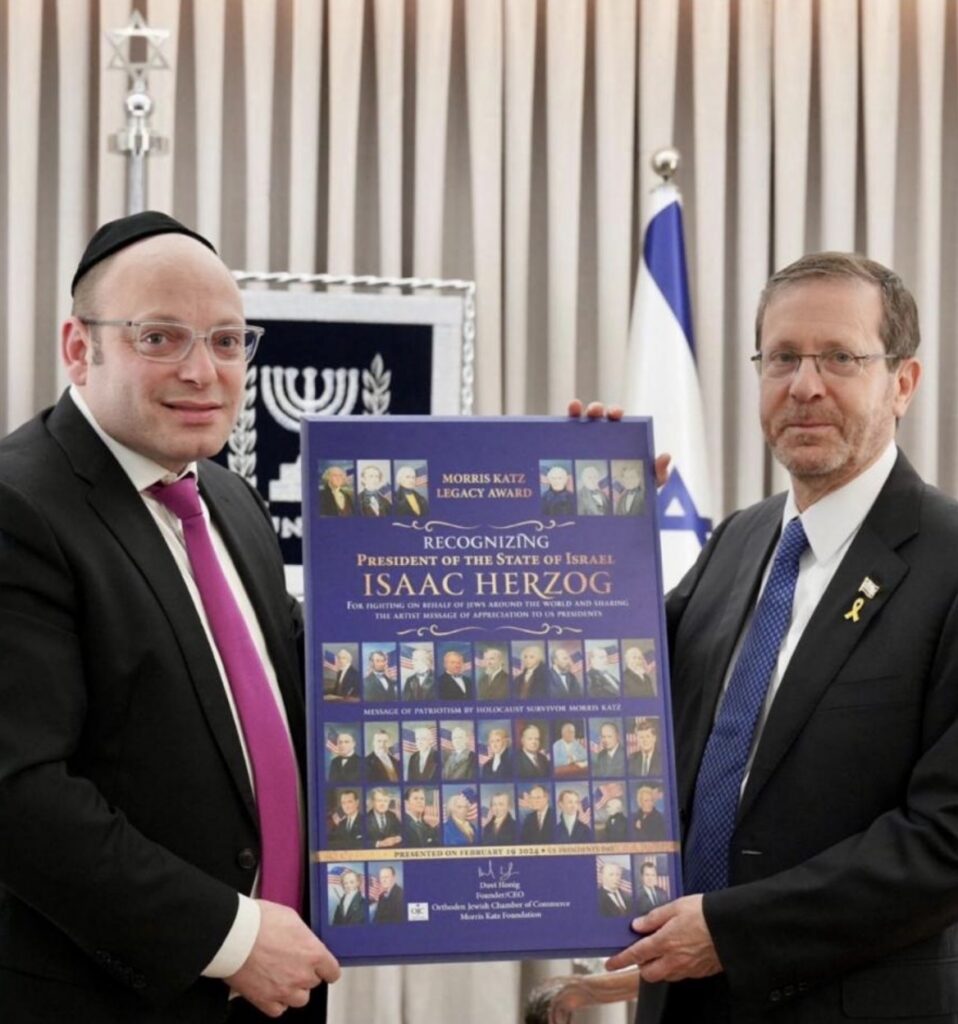
The Morris Katz Legacy Award is presented jointly by the Foundation and the Orthodox Jewish Chamber of Commerce to individuals recognized for advancing education, combating anti-Semitism, strengthening religious liberty, and promoting gratitude toward the United States and its democratic freedoms.
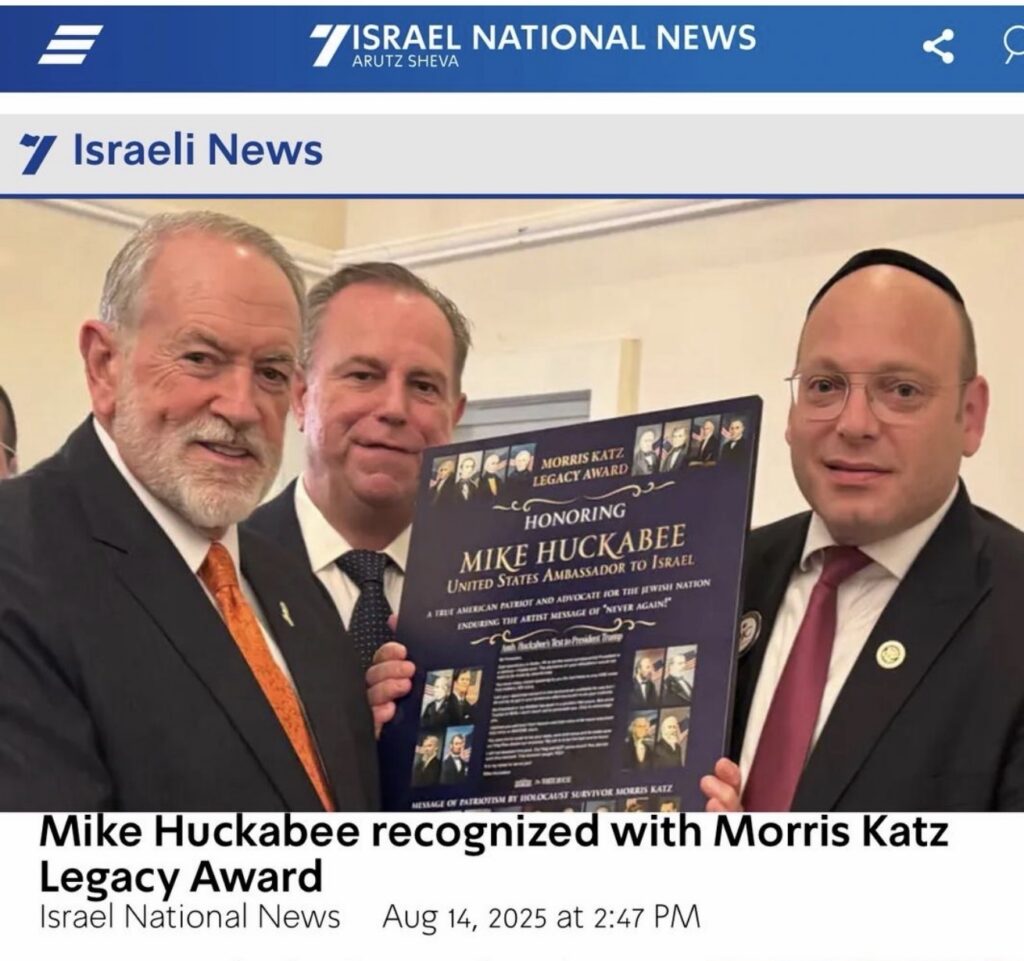
Previous recipients include Israeli President Isaac Herzog, U.S. Ambassador Mike Huckabee, Congressman Chris Smith, and Congressman Josh Gottheimer.
Foundation leaders said President Trump’s nomination reflects what they view as one of the most consequential pro-Israel presidential records in modern American history.
During President Trump’s first presidency, the United States formally recognized Jerusalem as Israel’s capital and relocated the American embassy there — fulfilling a promise several previous administrations had declined to implement. President Trump also brokered the Abraham Accords, establishing normalization agreements between Israel and multiple Arab nations in one of the Middle East’s most significant diplomatic breakthroughs in decades.
During President Trump’s second presidency, the United States carried out military strikes against Iranian nuclear facilities as part of efforts to prevent Iran from advancing its nuclear capabilities and to address growing regional and global security threats. President Trump also led diplomatic and military efforts focused on securing the release of Israeli hostages and helping bring an end to the Israel–Hamas war, actions supporters viewed as critical to protecting freedom, security, democratic allies, and regional stability.
Katz devoted much of his life to expressing gratitude toward the United States through his Presidential Collection, with his Presidential portraits requiring more than 200 hours each to complete. He viewed the collection as a clear patriotic expression of appreciation to a nation that gave a Holocaust survivor not only safety, but dignity, opportunity, and freedom.
Katz also pioneered what became known as “instant art” at a time when original artwork was considered a luxury far beyond the reach of most families. Having endured the suffering of the Holocaust and the concentration camps, he believed art should not exist only for the wealthy or elite. His mission was simple: to bring smiles into ordinary homes and make art affordable and accessible to everyone. Those close to him often said Katz never created art for fame or wealth, but to bring joy to others after witnessing so much human suffering himself. His innovative live-painting performances helped pioneer a form of artistic entertainment that later evolved into a global commercial industry.
His talent and message brought him to some of the world’s most prominent stages, including performances at the White House and Buckingham Palace, as well as appearances on many of the most watched television programs of the era, where his unique artistic performances helped drive major audience interest and viewership. His television appearances included CBS’s 60 Minutes, The David Letterman Show, Ripley’s Believe It or Not, The Mike Douglas Show, Thicke of the Night hosted by Alan Thicke, The Joe Franklin Show, ABC’s Prime Time Live, NBC’s Today Show, PM Magazine, The Best of Real People, Hour Magazine, and The Bobby Heenan Show on WWE Prime Time Wrestling in 1989, along with numerous international television appearances across Japan, Italy, Australia, and Germany.
Despite the collection’s historical significance and immense financial value, Katz never sold the Presidential Collection, viewing it instead as a patriotic tribute to the nation that gave him refuge and protected his freedom.
“He took enormous pride in both being a Jew and an American patriot,” said Duvi Honig, Founder and Chief Executive Officer of the Orthodox Jewish Chamber of Commerce. “There is real meaning behind this award because it reflects the very freedoms Morris lived for after surviving the Holocaust. This is not about politics. It is about faith, gratitude, religious liberty, and honoring leaders whose actions strengthened those values for the Jewish people and for America itself.”
The full Morris Katz Presidential Collection is available for public viewing at MorrisKatz.org.
JBizNews Desk
© JBizNews.com. All rights reserved.