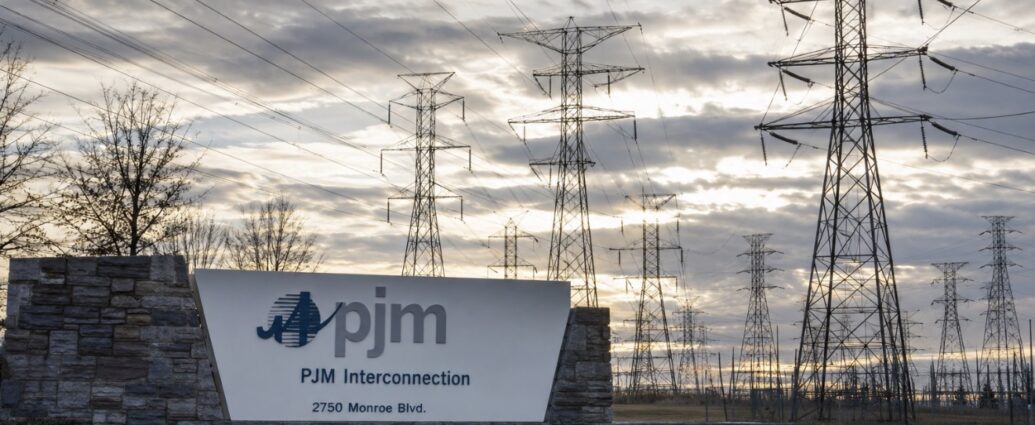
The operator of the nation’s largest electricity grid warned this week that the U.S. power system serving 67 million Americans is entering a dangerous period of structural strain driven by exploding artificial-intelligence data-center demand, aging infrastructure, rising energy costs, and the rapid retirement of traditional power plants.
In a stark 70-page white paper released from its headquarters in Valley Forge, Pennsylvania, PJM Interconnection said the grid now faces “years, not decades” to fundamentally redesign how electricity markets, reliability, and power generation are managed across much of the eastern United States.
“The current situation is not tenable,” PJM Chief Executive David Mills wrote in the report’s opening warning.
The paper marks one of the most serious public alarms yet issued by a major U.S. grid operator as electricity demand surges at a pace not seen in decades — largely fueled by the rapid expansion of AI infrastructure, hyperscale cloud computing, electrification trends, and industrial reshoring.
PJM oversees the electric grid across 13 states and Washington, D.C., including major population and economic centers stretching from Illinois to New Jersey and from Pennsylvania to Virginia.
The operator manages:
- roughly 182 gigawatts of generation capacity,
- more than 88,000 miles of transmission lines,
- and over 1,400 power-generating facilities.
The grid now finds itself confronting a historic shift from excess electricity supply toward potential scarcity.
According to the report, three major forces are colliding simultaneously:
- surging electricity demand from AI data centers and electrification,
- accelerated retirement of dispatchable fossil-fuel generation,
- and severe delays tied to permitting, supply chains, and new power-project interconnections.
The economic consequences are already becoming enormous.
PJM’s latest capacity auction for the 2027 delivery year procured approximately 6,625 megawatts less power than the operator’s targeted reserve margin requires.
At the same time, auction clearing prices soared to record highs for a third consecutive year.
Total capacity costs jumped to roughly $16 billion, compared with just $2.2 billion in the prior auction cycle.
Independent market monitor Joe Bowring estimated that data-center growth alone added approximately $9.4 billion to consumer electricity costs across the PJM region last summer and could ultimately contribute more than $100 billion in additional costs through 2033 if current trends continue.
Federal regulators are increasingly alarmed.
Federal Energy Regulatory Commission (FERC) Chair Laura Swett described the auction results as “very concerning,” warning that electricity supply additions are not arriving fast enough to meet surging demand growth.
Former FERC Chair Mark Christie went even further, warning that PJM’s power procurement results fell “dangerously short” of reliability requirements.
The crisis has now escalated to the point where one of PJM’s largest utility members is openly threatening to leave the system entirely.
American Electric Power (AEP) Chief Executive Bill Fehrman said Tuesday that the utility is actively considering withdrawing from PJM because of frustration with the grid operator’s governance and inability to resolve mounting reliability and pricing problems.
An AEP withdrawal would represent one of the most significant fractures ever inside a modern U.S. regional power grid.
Meanwhile, political pressure from governors and local governments continues intensifying.
Pennsylvania Governor Josh Shapiro previously forced PJM to cap certain auction prices amid fears of soaring electricity bills.
Other states are now openly discussing whether to intervene directly in energy pricing or even consider leaving PJM’s market structure altogether.
Some municipalities are beginning to resist the source of the demand growth itself.
In New Jersey, Monroe Township is moving toward blocking new AI data-center construction entirely, citing concerns over electricity reliability, land use, and long-term utility costs.
At the center of the debate is artificial intelligence.
Massive AI data centers operated by companies including Amazon, Microsoft, Google, Meta, and OpenAI partners require enormous amounts of electricity to power advanced chips, cooling systems, networking infrastructure, and cloud-computing operations.
Industry analysts estimate a single large AI-focused hyperscale data center can consume as much electricity as a mid-sized city.
Northern Virginia — already home to the world’s largest concentration of data centers — sits directly inside PJM territory and has become one of the fastest-growing electricity-demand regions in the developed world.
PJM’s report outlines three potential paths forward, all politically difficult:
- locking utilities into longer-term supply commitments,
- creating a two-tier reliability system where some customers face curtailments before others,
- or shifting toward more volatile real-time electricity pricing similar to Texas’ ERCOT system.
Each option carries major economic and political tradeoffs.
The grid operator also admitted its current interconnection system has become a major bottleneck.
More than 800 new power-project applications representing roughly 220 gigawatts of potential generation are now waiting in PJM’s queue — far more than current processes can rapidly approve.
Many developers have already abandoned projects because of delays.
The broader concern extends far beyond PJM itself.
The U.S. Energy Information Administration now projects national electricity demand growth accelerating sharply over the next several years as AI infrastructure construction spreads across the country.
That demand boom is colliding directly with a grid system originally designed for slower, more predictable industrial growth patterns.
The result is becoming one of the most consequential infrastructure and economic challenges facing the United States:
whether the nation’s electrical system can evolve quickly enough to power the AI era without triggering reliability crises, soaring consumer electricity bills, or major economic disruption.
And increasingly, even the operators of the grid themselves appear uncertain about the answer.
JBizNews Desk
© JBizNews.com. All rights reserved.