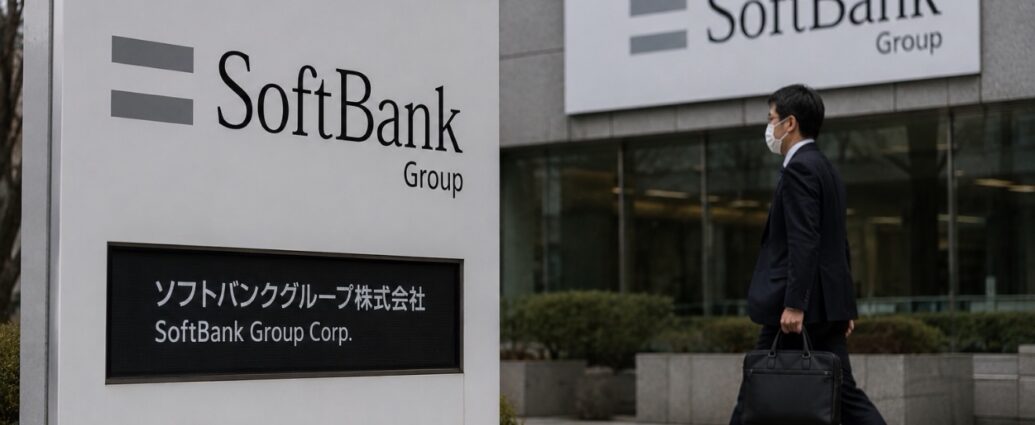
Masayoshi Son’s willingness to place massive, concentrated bets on emerging technologies has produced one of the largest paper gains modern venture investing has ever recorded, transforming SoftBank Group’s balance sheet and reestablishing the Japanese billionaire at the center of the global AI boom.
SoftBank said Wednesday that its Vision Fund booked roughly $46 billion in gains for the fiscal year ended in March, with the overwhelming majority tied to the conglomerate’s investment in OpenAI, the developer of ChatGPT.
The figures, disclosed in SoftBank’s full-year earnings release in Tokyo, underscore how dramatically artificial intelligence has reshaped global private-capital markets in less than two years.
SoftBank reported a record annual net profit of approximately 5 trillion yen, or $31.6 billion, more than quadrupling from the prior year. Cumulative gains tied to the company’s OpenAI investment alone reached roughly $45 billion against investments exceeding $30 billion.
During the fiscal fourth quarter alone, the Vision Fund generated approximately $20 billion in gains, with OpenAI accounting for nearly all of the upside while holdings including Coupang, DiDi Global and Klarna weighed negatively on results. Quarterly net profit reached approximately 1.83 trillion yen, or $11.6 billion, handily surpassing analyst expectations.
The catalyst was OpenAI’s latest funding round earlier this year, co-led by SoftBank, which valued the AI company at approximately $852 billion, up sharply from roughly $157 billion just months earlier.
By the end of March, SoftBank carried its OpenAI stake on the books at approximately $79.6 billion, representing a paper return of roughly 129% compared with earlier valuation benchmarks near $260 billion.
SoftBank has committed an additional $30 billion to OpenAI through 2026, which would bring its total investment exposure to approximately $64.6 billion and potentially lift its ownership stake to roughly 13%.
For Son, the turnaround is deeply personal.
The Vision Fund became synonymous with late-cycle venture-capital excess following the collapse of WeWork and uneven outcomes across investments in Uber, DoorDash and multiple consumer startups across Latin America and India. For years, critics treated the fund as a symbol of speculative overreach inside Silicon Valley and global private markets.
The OpenAI mark-up, layered on top of gains from Arm Holdings and a profitable position tied to Intel under former SoftBank director Lip-Bu Tan, has radically altered that narrative.
But the gains come with mounting financial concentration risk.
To finance its growing OpenAI commitment, SoftBank has sold stakes in T-Mobile US and Nvidia, issued debt and arranged a roughly $40 billion bridge loan earlier this year. The company also booked approximately 218.1 billion yen, or $1.4 billion, in gains tied to those asset sales.
Last month, SoftBank secured an additional $10 billion loan backed by its OpenAI holdings themselves, underscoring how central the investment has become to the company’s financing structure.
In March, S&P Global Ratings revised SoftBank’s outlook to negative from stable, warning that the company’s liquidity profile and portfolio quality could deteriorate because of its expanding OpenAI exposure.
For shareholders, the concentration is now impossible to ignore.
Approximately 98% of the Vision Fund’s annual gains stemmed from a single private company operating in one of the most competitive sectors in global technology.
OpenAI now faces escalating pressure from rivals including Alphabet’s Gemini, Anthropic’s Claude, Meta’s Llama and Elon Musk’s xAI platform Grok, even as the cost of training and operating frontier AI systems continues rising aggressively.
Microsoft, which invested roughly $13 billion into OpenAI earlier in the cycle, has already captured significant downstream value through surging Azure cloud demand generated by the partnership.
Meanwhile, Son is already positioning SoftBank for the next stage of the AI infrastructure race.
The company is reportedly preparing Roze AI, a robotics-focused venture, for a possible public listing in the second half of 2026 at valuations that could approach $100 billion. Son has also committed approximately $16 billion toward Stargate, the massive AI data-center initiative backed by OpenAI and Oracle.
The message Wall Street increasingly draws from SoftBank’s latest results is straightforward: in the current AI cycle, concentrated bets on category-defining companies are producing returns diversified venture portfolios are struggling to match.
The unanswered question is whether those extraordinary paper gains can ultimately be converted into durable long-term capital before competitive pressure, regulation or valuation resets begin reshaping the AI landscape.
JBizNews Desk
© JBizNews.com. All rights reserved. This article is original reporting by JBizNews Desk. Unauthorized reproduction or redistribution is strictly prohibited.