NEW YORK — A newly formed coalition bringing together ethnic chambers of commerce and multicultural business organizations is rapidly emerging as a new political and economic force in New York after attracting senior elected officials, corporate executives and community leaders only days after its launch.
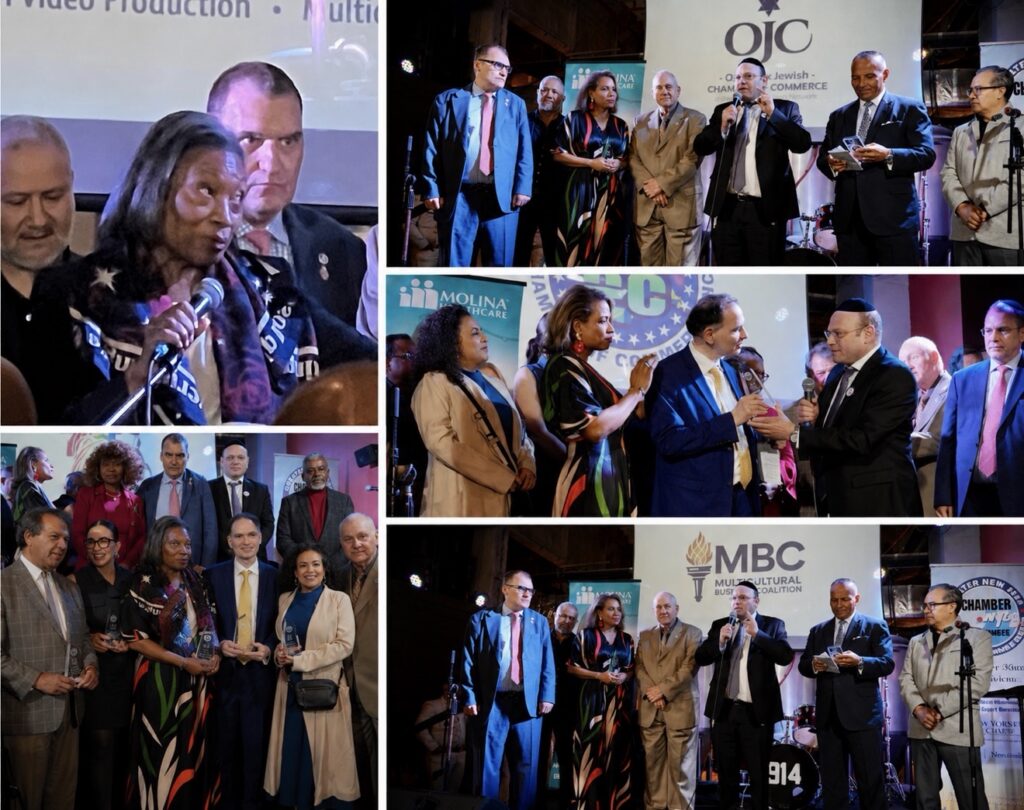
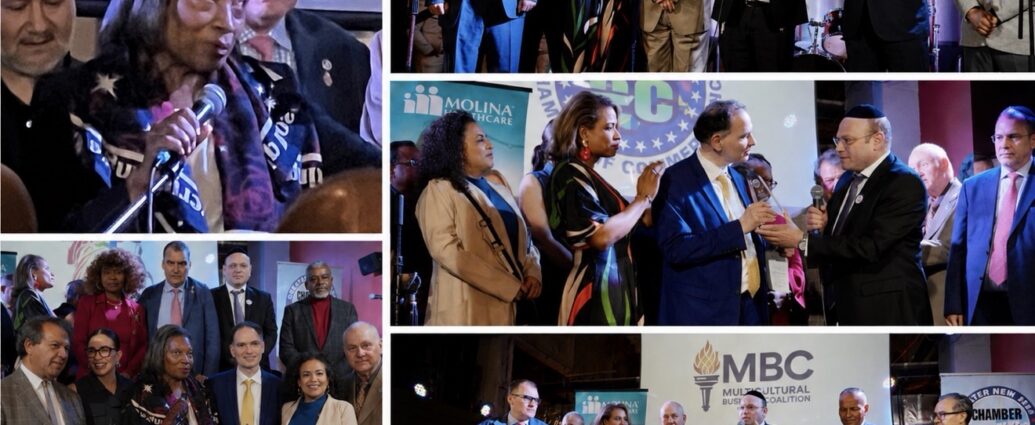
The organization, known as the Multicultural Business Coalition (MBC), held a high-profile gathering Thursday night at Yonkers Brewing Company, drawing New York State Senate Majority Leader Andrea Stewart-Cousins, Congressman George Latimer, senior New York City officials, chamber presidents and business leaders representing a broad cross-section of the state’s multicultural communities.
The unusually strong turnout for a newly created coalition immediately drew attention in political and business circles, where new advocacy groups rarely attract such senior participation so quickly after forming.
The coalition also generated media attention beyond the event itself, with the New York Post highlighting the organization’s rapid rise and focusing on its effort to build a unified political and economic voice for historically fragmented multicultural business communities.
Organizers said the coalition was formed to coordinate advocacy efforts among ethnic chambers, immigrant business organizations and multicultural groups that have often operated independently despite sharing many of the same economic and policy concerns.
Its stated priorities include small-business protection, procurement access, economic development, public safety, workforce issues and civic representation.
Several attendees privately described the gathering as less of a ceremonial networking event and more of an early demonstration of political organization and influence.
“This is the beginning of a serious political and economic coalition,” one attendee said during the event.
The coalition’s early momentum was reinforced by the attendance of Stewart-Cousins, the highest-ranking elected official in the New York State Senate. Organizers viewed her appearance as an important signal that state leadership is paying attention to the coalition’s emergence.
Also attending was Congressman George Latimer, who represents parts of Westchester and the Bronx, alongside senior city officials and representatives from Hispanic, Jewish, African-American, Latino, Caribbean, Nepali and immigrant business communities.
Opening remarks were delivered by Kenneth Roldan, president of the coalition, and Frank Garcia, chairman of the organization, both of whom argued that multicultural business communities have historically lacked unified representation during major policy and economic debates.
“Years of our Secretary Duvi Honig’s relationship-building and coalition work is paying off by bringing all these communities and leaders together under one united voice,” Garcia said during the gathering.
During her remarks, Stewart-Cousins praised the coalition’s broader mission and recognized the organization as a platform capable of representing “hundreds of thousands of New York business voices.”
Latimer similarly emphasized economic opportunity and civic engagement across New York’s diverse communities.
Additional attendees included Miguelina Camilo, chief of staff to New York City Council Speaker Julie Menin, and Mayra Linares-Garcia, vice president of public affairs for Coca-Cola, reflecting growing corporate interest in the coalition’s development.
The event was co-hosted by Jairo Guzman, president of the Mexican Coalition, and Mark Jaffe, president of the Greater New York Chamber of Commerce, who described the coalition as a long-overdue effort to consolidate multicultural business influence.
“When business communities stand divided, their voices are weakened,” Jaffe said. “When they stand together, they become impossible to ignore.”
Also in attendance were Assemblywoman Nathalia Fernandez, Assemblyman Nader Sayegh, Alan Ruesga, Albert Rodriguez, Wilson Torres, Rick Ramos, Alphonso Alvarez and Marcos Boccio, alongside additional civic and business leadership from across the region.
As the evening progressed, coalition members repeatedly emphasized that the organization intends to become active in public policy discussions affecting small businesses and working-class communities throughout New York.
One issue discussed extensively was New York City mayoral candidate Zohran Mamdani’s proposal to establish municipally owned grocery stores across New York City.
Coalition participants said they are reviewing the proposal’s potential economic impact, including concerns that publicly backed supermarkets could place additional pressure on neighborhood supermarkets, bodegas and family-owned retailers already struggling with inflation, theft, labor expenses and rising commercial rents.
Leaders involved with the coalition noted that many participating organizations directly represent independent supermarket owners and local retailers throughout New York City, making the issue an early area of focus for the alliance.
Among those recognized later in the evening were Dilip Chauhan, deputy commissioner of New York City’s MWBE Office, and Roxanne Nielsen of the U.S. Minority Business Development Agency (MBDA), both of whom have worked closely with Duvi Honig and the Orthodox Jewish Chamber of Commerce on minority business initiatives at the city and federal levels.
That work included a previous MBDA Memorandum of Understanding signed between the federal government and the Orthodox Jewish Chamber of Commerce aimed at expanding economic opportunities nationally.
Later in the evening, Duvi Honig, secretary and co-founder of the coalition and president and CEO of the Orthodox Jewish Chamber of Commerce, described the coalition as part of a broader movement to create a more unified advocacy structure for multicultural business communities.
“Having the Senate Majority Leader personally come support this coalition sends a powerful message about what is being built here,” Honig said. “For decades many multicultural business communities lacked a unified seat at the table. That changes now.”
Coalition organizers said they expect the organization to continue expanding across New York and potentially evolve into a significant multicultural business advocacy bloc in future economic and political debates.