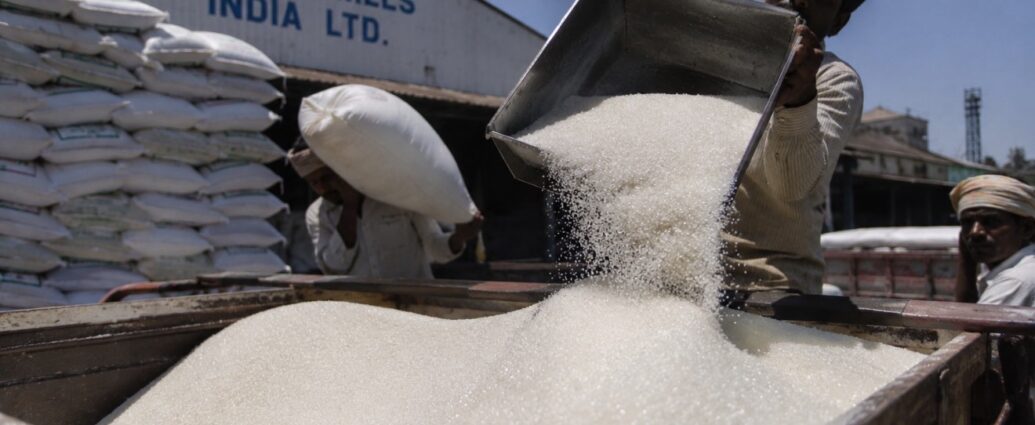
India banned all sugar exports with immediate effect on Wednesday and will keep the prohibition in place through September 30, 2026, according to a notification from the country’s Directorate General of Foreign Trade. The move by the world’s second-largest sugar producer is intended to rein in domestic prices as cane yields weaken and consumption outpaces production for a second consecutive year, sending global sugar futures sharply higher within hours of the announcement.
New York raw sugar futures climbed more than 2% on the news, while London white sugar futures jumped 3%, according to Reuters. The reaction reflected expectations that supplies from rival producers Brazil and Thailand will now need to fill a sudden hole in shipments to importers across Asia and Africa, tightening an already strained global market and adding fresh upward pressure to grocery prices worldwide.
India had previously authorized mills to export 1.59 million metric tons this season, a quota based on expectations that production would comfortably exceed domestic demand. But according to a Mumbai-based dealer with a global trade house cited by Reuters, traders had signed contracts for roughly 800,000 tons of that allotment, with more than 600,000 tons already shipped before the ban took effect. The remaining balance now sits in uncertainty, leaving exporters scrambling to renegotiate or potentially default on commitments.
The immediate trigger is a worsening production outlook. According to Bloomberg, citing the Indian Sugar & Bio-Energy Manufacturers Association, India’s gross sugar production for the season ending September 30 is now expected to total 32 million tons, down from an earlier estimate of 32.4 million. Weakening cane yields across major growing regions including Maharashtra and Uttar Pradesh have pressured output, while forecasters increasingly warn that a developing El Niño weather pattern could disrupt monsoon rainfall and further reduce next year’s harvest.
The move follows a familiar policy playbook from Prime Minister Narendra Modi’s government, which has repeatedly restricted agricultural exports when rising food prices threaten domestic inflation and political stability. India imposed similar sugar-export curbs during the 2022 and 2023 seasons as officials prioritized local affordability ahead of major elections and state-level voting cycles.
For American consumers, the timing adds to a growing inflation problem already rippling through food markets. The U.S. Bureau of Labor Statistics reported Wednesday that the Producer Price Index rose 6% year over year in April, marking the fastest wholesale inflation pace since 2022. Meanwhile, the U.S. Department of Agriculture’s Economic Research Service projects retail prices for sugar and sweets to rise 8.1% across 2026 — well above long-term historical averages. Sugar and confectionery prices in the United States were already up 8.1% year over year in March.
The pass-through effects for food and beverage companies may arrive even faster. Major global manufacturers including Hershey, Mondelez International, Mars, Nestlé, and Coca-Cola rely heavily on global sugar markets for key input costs affecting products ranging from chocolate and candy to soft drinks, cereals, baked goods, and ice cream. Several consumer brands have already warned investors that elevated cocoa, sugar, and commodity prices could continue compressing profit margins throughout 2026 even as companies push through additional price increases to consumers.
Smaller confectioners, specialty candy brands, bakeries, and independent food producers face even greater pressure because they lack the pricing power and supply-chain flexibility of multinational corporations. Many are already struggling with record cocoa prices and rising transportation costs tied to global energy volatility.
The export halt could also reshape global trade flows. Brazil, the world’s largest sugar exporter, now stands positioned to capture much of the redirected demand, although a growing share of Brazilian cane production is being diverted toward ethanol as elevated oil prices tied to the Iran conflict make biofuel production more profitable. Consulting firm Green Pool Commodity Specialists recently revised its projected global sugar deficit for the 2026–27 crop year to 4.3 million tons from 1.66 million tons previously, citing increased ethanol diversion and tightening supply conditions.
Citigroup separately projected Brazil’s 2026–27 sugar production at 39.5 million tons, well below the Brazilian National Supply Company’s estimate of 43.95 million tons, underscoring how uncertain the global supply outlook has become.
Thailand, the world’s fourth-largest sugar producer, is expected to emerge as another major beneficiary. The U.S. Department of Agriculture forecasts Thai exports to reach roughly 7 million tons in the coming season, with mills across the country likely to benefit from tighter global supply and stronger international pricing. Australian and Central American exporters may also gain market share as importers seek alternative suppliers previously dominated by Indian shipments.
For global markets, India’s decision reinforces a broader trend already emerging across agriculture and commodities: countries increasingly prioritizing domestic food security over global trade commitments as inflation, climate risk, and geopolitical instability intensify pressure on supply chains.
And for consumers already facing higher grocery bills, sugar may now become the latest staple commodity adding fuel to the global inflation cycle.
JBizNews Desk
© JBizNews.com. All rights reserved. This article is original reporting by JBizNews Desk. Unauthorized reproduction or redistribution is strictly prohibited.