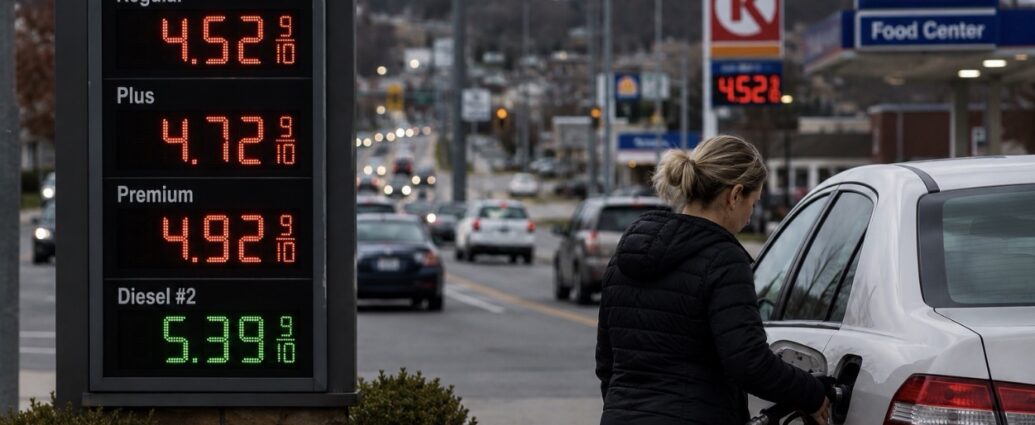
The national average price of gasoline is moving closer to $5 a gallon ahead of what the American Automobile Association projects will be the busiest Memorial Day travel weekend on record, raising transportation costs for tens of millions of Americans as the summer driving season begins under growing energy-market strain.
AAA estimates that roughly 45 million Americans will travel at least 50 miles from home between May 21 and May 25, including a record 39.1 million traveling by car and another 3.66 million by air. The surge in demand comes as the national average gasoline price hovers near $4.52 per gallon — up sharply from approximately $2.98 before the Iran conflict disrupted global oil markets roughly two and a half months ago.
Wall Street energy analysts increasingly warn that even higher prices may still lie ahead. In a client note last Friday, Natasha Kaneva, head of global commodities research at JPMorgan Chase, wrote that “the risk of $5 gasoline can no longer be dismissed” if disruptions continue through the Strait of Hormuz, the world’s most critical oil-shipping chokepoint.
The strait has now faced significant disruption for roughly 10 weeks, tightening global oil supplies and contributing to the steepest sustained increase in U.S. gasoline prices since 2022. JPMorgan analysts warned that global oil inventories are approaching “operational stress levels” if shipments through the region do not normalize by early June.
The financial impact is already becoming visible for consumers. Filling a typical 14-gallon tank cost roughly $44.50 during Memorial Day weekend last year when gasoline averaged about $3.18 per gallon nationally. At current prices near $4.52, that same fill-up costs approximately $63. If national averages reach $5 per gallon, drivers would pay roughly $70 per tank.
Lower-income households appear to be feeling the pressure most acutely. The Federal Reserve Bank of New York reported earlier this year that households earning below $40,000 annually increased gasoline spending by 12% year over year even as actual fuel consumption declined 7%, suggesting many families are already reducing discretionary driving, delaying trips, or consolidating errands to absorb higher prices.
Diesel prices are also nearing historic highs, creating broader inflationary risks across the economy. According to AAA, national diesel prices now sit within 18 cents of the all-time records reached in 2022.
Independent oil analyst Tom Kloza, an adviser to Gulf Oil, told CNN that diesel could surpass those records within weeks or even days. Because diesel powers freight transportation, rail systems, agricultural equipment, construction machinery, and delivery fleets, sustained increases typically ripple into grocery prices and consumer goods costs within several weeks.
The supply situation remains unusually tight. JPMorgan analysts estimate U.S. gasoline production is down roughly 340,000 barrels per day compared with a year ago. National gasoline inventories are hovering near their lowest seasonal levels since 2014, while Midwest inventories have fallen to among the weakest levels ever recorded for this time of year.
Morgan Stanley has projected that, at the current pace of drawdowns, U.S. gasoline inventories could reach the lowest seasonal levels on record by late August.
Global oil prices continue climbing alongside the tightening supply picture. Brent crude, the international benchmark, has risen from roughly $70 per barrel in February to approximately $104 today. Some analysts argue gasoline prices still may not fully reflect the broader severity of the supply disruption.
Despite the rising costs, travel demand has remained remarkably resilient. “Memorial Day marks the unofficial start of summer, and for most Americans, it’s a three-day weekend,” AAA Vice President of Travel Stacey Barber said in the organization’s Monday release. “Travel demand remains strong, and despite higher fuel prices, many people are prioritizing leisure travel during holiday breaks.”
Patrick De Haan, head of petroleum analysis at GasBuddy, summarized the situation more bluntly: “Even if gas is $6 a gallon, it’s the holidays where people are still going to travel.”
The political response is beginning to intensify alongside the economic pressure. President Donald Trump said publicly this week that he supports suspending the federal gasoline tax — currently about 18.4 cents per gallon — to provide short-term relief for consumers. The proposal would require congressional approval, and no formal legislation has yet been introduced.
JPMorgan analysts separately argued that continued strain on global energy markets will eventually create overwhelming international pressure to reopen the Strait of Hormuz, although no diplomatic breakthrough currently appears imminent.
Meanwhile, AAA booking data shows the most popular Memorial Day destinations this year include Orlando, Seattle, New York City, Las Vegas, and Miami. Round-trip domestic flights remain approximately 6% cheaper than last year for travelers who booked early, partially offsetting the higher cost of driving.
Transportation analysts expect the heaviest highway congestion during the afternoons of Thursday, May 21, Friday, May 22, and Monday, May 25, while Sunday, May 24 is projected to experience the lightest traffic volume.
For American households, however, the broader takeaway remains increasingly clear: this year’s Memorial Day weekend will likely be among the most expensive in years, with elevated fuel prices threatening to define not just the holiday itself, but the entire summer travel season ahead.
JBizNews Desk
© JBizNews.com. All rights reserved. This article is original reporting by JBizNews Desk. Unauthorized reproduction or redistribution is strictly prohibited.