New York State lawmakers are advancing a proposal to impose a new 1% tax on all-cash home purchases of $1 million or more in New York City, a measure expected to generate roughly $160 million annually as Albany works to help Mayor Zohran Mamdani close the city’s widening budget deficit.
According to officials in New York Assembly Speaker Carl Heastie’s office, the proposal is expected to be included in the final negotiations surrounding Governor Kathy Hochul’s $268 billion fiscal 2027 state budget, with legislative votes anticipated next week.
The tax would apply to buyers paying entirely in cash and would function alongside New York City’s existing mortgage-recording tax, which currently captures financed purchases but largely bypasses all-cash transactions.
The proposal comes as cash purchases increasingly dominate New York’s luxury real-estate market.
According to data compiled by the nonprofit Center for New York City Neighborhoods, more than 60% of roughly 18,000 residential transactions recorded in New York City during the first half of 2025 were completed entirely in cash.
In Manhattan’s luxury market, the numbers are even more dramatic. Roughly 90% of transactions above $3 million were reportedly closed without financing, reflecting the growing influence of hedge fund executives, foreign investors, private-equity partners, and ultra-high-net-worth buyers.
A spokesperson for Heastie confirmed lawmakers are also debating whether to eventually expand the tax statewide to include suburban and upstate markets.
Albany Also Advances Pied-à-Terre Tax
The proposed cash-purchase levy is one of two major real-estate tax measures currently moving through Albany.
Governor Hochul on Thursday also submitted detailed legislative language for a separate pied-à-terre tax targeting second homes in New York City valued above $5 million that are not used as primary residences.
According to estimates from Hochul’s office, the second-home surcharge could generate approximately $500 million annually for New York City.
The proposal would apply to one-to-three-family homes assessed at $5 million or more and would impose additional taxes ranging from roughly 4% to 6.5% above existing property-tax obligations.
The surcharge would initially remain in place for five years before requiring legislative renewal.
Together, the two measures reflect the increasingly difficult fiscal environment confronting City Hall.
Mamdani Faces Massive Budget Deficit
Mayor Mamdani recently unveiled a $124.7 billion city budget for the fiscal year beginning July 1 while warning that New York faced a historic budget shortfall exceeding $12 billion when his administration took office.
City officials said the administration reduced the deficit to approximately $5.4 billion through agency spending cuts and savings initiatives led by newly appointed “chief savings officers” across city government.
Albany ultimately agreed to provide approximately $4 billion in additional state aid to help stabilize the city’s finances.
The new tax proposals are intended to create recurring revenue streams capable of supporting that state assistance without broader increases to income or corporate taxes — tax hikes Hochul has consistently resisted.
Real Estate Industry Pushes Back
The proposals have triggered immediate backlash from New York’s real-estate industry and several high-profile business leaders.
James Whelan, president of the Real Estate Board of New York, warned that additional transaction taxes could weaken housing activity and ultimately damage the property-tax base supporting both city and state finances.
“New York residents are already among the most heavily taxed in the country,” Whelan said in a statement.
Billionaire hedge fund founder Ken Griffin, whom Mamdani has publicly criticized during speeches targeting wealthy New Yorkers, also warned that additional taxes could accelerate the migration of high-income residents and businesses to lower-tax states.
President Donald Trump separately criticized Mamdani’s broader tax-the-rich approach earlier this year, arguing New York should encourage wealthy residents and investors to remain in the city rather than risk driving them elsewhere.
Housing Market Faces Potential ‘Cliff Effect’
Economists and brokers say the biggest near-term concern is the so-called “cliff effect” that could emerge if the new levy takes effect.
New York City already imposes an existing mansion tax beginning at 1% on purchases above $1 million and scaling up to 3.9% for properties above $25 million.
Under the proposed framework, a buyer paying cash for a $1.5 million Manhattan apartment could face roughly $30,000 in combined transaction taxes at closing.
Industry professionals interviewed by Bloomberg said they expect a rush of transactions to close before any new taxes officially take effect, followed by a likely slowdown afterward.
While ultra-luxury buyers may absorb the costs more easily, brokers warn the greatest impact could fall on middle- and upper-middle-class buyers using inheritance proceeds, retirement funds, or profits from prior home sales to make all-cash purchases in the $1 million to $2 million range.
Albany Budget Negotiations Continue
The state budget is now more than six weeks overdue past its April 1 deadline.
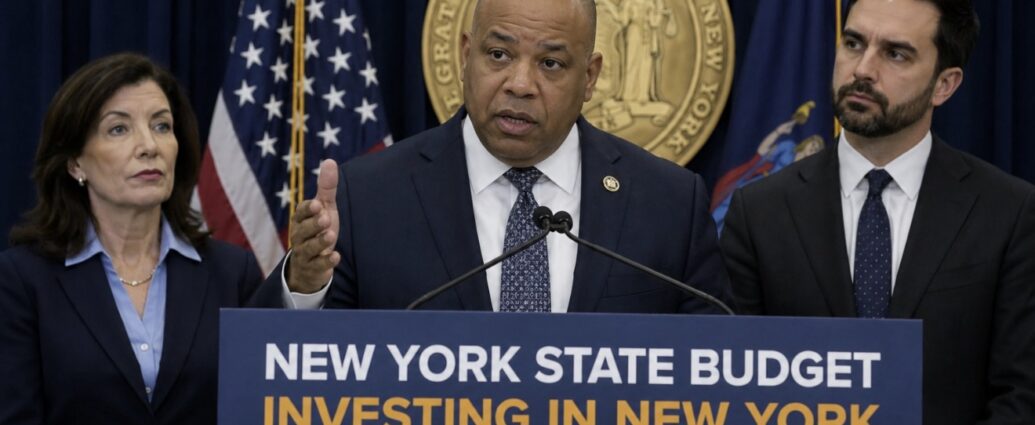
Speaker Heastie told reporters Thursday he expects lawmakers to begin voting on portions of the budget package by the end of next week, with final legislation expected to provide detailed tax language and implementation timelines.
Until then, New York’s real-estate industry, investors, brokers, and homebuyers remain closely focused on Albany negotiations that could significantly reshape the economics of buying property in the nation’s largest housing market.
— JBizNews Desk
© JBizNews.com. All rights reserved. This article is original reporting by JBizNews Desk. Unauthorized reproduction or redistribution is strictly prohibited.