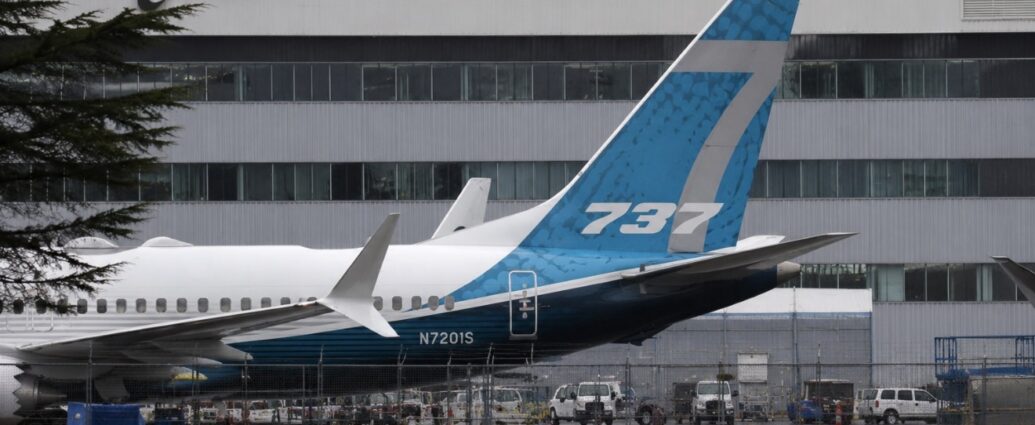
NEW YORK — May 14, 2026 — Shares of Boeing Co. dropped as much as 5.4% on Thursday and finished the session down roughly 4% at $227.50 after President Donald Trump told Fox News host Sean Hannity from Beijing that China had agreed to order 200 commercial jets from the company — a deal that would mark China’s first major purchase of U.S.-made commercial aircraft in nearly a decade but that came in at less than half of what Wall Street analysts and industry sources had been expecting heading into the summit. The disappointment erased every gain Boeing had accumulated since the company’s chief executive, Kelly Ortberg, joined the Trump delegation to Beijing earlier this week.
According to reporting by Bloomberg News in March and people familiar with the negotiations cited by Reuters, the package under discussion ahead of the Trump-Xi summit had been roughly 500 737 MAX narrow-body jets, with the potential for dozens more wide-body aircraft in follow-on orders. Jefferies had publicly forecast up to 500 to 600 aircraft from the visit. Trump said on Hannity that the figure was 200 “big” Boeing jets and characterized the outcome as a win for the planemaker, saying Boeing had wanted 150 but had gotten 200. Neither the White House nor Boeing specified the mix of narrow-body and wide-body aircraft included in the order, the delivery timeline, or the airlines that would take the planes — a degree of opacity that analysts said compounded the disappointment.
George Ferguson, senior aerospace analyst at Bloomberg Intelligence, summarized the Street reaction directly, telling clients that 200 jets “is a disappointment for a market looking for 300 or more and details around type.” Wall Street still maintains a Strong Buy consensus on Boeing shares with an average 12-month price target of $273.86, but the gap between Thursday’s announced figure and the 500-jet base case forced a sharp repricing of the China upside that had been built into the stock over the past month. Boeing shares had risen 8.84% in the four weeks leading into the summit on summit-deal anticipation. The stock is up roughly 7% for the year.
The strategic context underneath the headline matters as much as the headline. The 200-jet order is Boeing’s first major commercial sale to China since Trump’s 2017 visit to Beijing and represents roughly 3% of the company’s existing 6,807-aircraft backlog, according to the company’s most recent disclosures. Boeing delivered 47 commercial aircraft in April, including 34 of its 737 MAX narrow-body jets and six 787 Dreamliner wide-body aircraft, and the broader manufacturer continues to grapple with production bottlenecks that have left airlines globally waiting years for deliveries. Adding 200 Chinese aircraft to that pipeline at a slow drip is materially different from the step-change a 500-jet order would have represented.
Geopolitics has been the dominant overhang. In April 2025, China ordered its state-owned carriers to stop accepting Boeing deliveries and to halt purchases of U.S.-made aviation equipment after the Trump administration imposed a 145% tariff on Chinese imports. Trump suspended the triple-digit tariffs last October in a fragile trade truce, and Xi Jinping backed away from threats to choke off rare-earth supplies as part of the same deal — clearing the runway for fresh commercial conversations. In January 2020, China had committed to purchasing $77 billion in U.S.-made goods including aircraft as part of the so-called Phase One trade deal, but the Covid-19 pandemic collapsed air travel and the commitment was never fulfilled. Boeing lost its longstanding market lead in China to Airbus SE over the same period, in part because of trade friction and in part because the extended global grounding of the 737 MAX in the wake of two fatal crashes drove Chinese airlines toward the European competitor.
Airbus has been in parallel discussions for a similarly sized deal with Chinese carriers, according to industry sources, and is widely expected to land a portion of the broader Chinese fleet refresh that Boeing missed Thursday. China’s aviation market is the second-largest in the world after the United States, and both manufacturers project the country will require at least 9,000 new jetliners by 2045 — meaning the strategic prize remains enormous regardless of the size of the Trump-era announcement. Boeing’s ability to recapture its historic share of that pipeline now turns on whether the 200-jet figure represents a first installment with more orders to follow or a one-off summit deliverable designed to give both sides a headline.
Treasury Secretary Scott Bessent said earlier Thursday on CNBC from Beijing that he expected an announcement on a “large” Chinese Boeing order during the visit. Ortberg had told Reuters last month that he was counting on the Trump administration’s support to seal a major deal with China. The White House did not immediately respond to requests for comment on Wall Street’s reaction. Boeing also did not immediately comment.
For investors, Thursday’s reaction underscores the persistent investing principle that expectations dominate news on event-driven trades. The order itself is unambiguously good for Boeing — it reopens the Chinese channel after nearly a decade of trade-war damage, adds backlog at a moment when global wide-body demand is outstripping supply, and validates Ortberg’s decision to join the Beijing delegation. But with the buy-side positioned for a number two to three times larger, the gap punished the stock regardless. The next signal will come if and when the Civil Aviation Administration of China or specific Chinese carriers — Air China Ltd., China Eastern Airlines Corp., and China Southern Airlines Co. — disclose airline-level allocations and aircraft types.
— JBizNews Desk
© JBizNews.com. All rights reserved. This article is original reporting by JBizNews Desk. Unauthorized reproduction or redistribution is strictly prohibited.