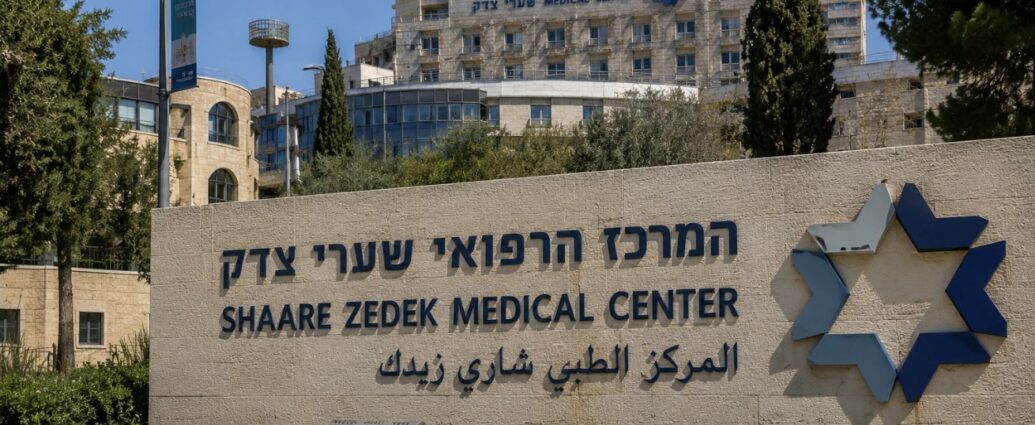
JERUSALEM — WhatsApp co-founder Jan Koum has donated $200 million to Shaare Zedek Medical Center in Jerusalem through The Koum Family Foundation, the largest single gift in the history of Israel’s healthcare system and a sum that will triple the physical footprint of one of Israel’s largest hospitals, according to the hospital’s announcement and reporting confirmed across The Jerusalem Post, Times of Israel, eJewishPhilanthropy, and Globes. The institution will be officially renamed Koum Shaare Zedek Medical Center in honor of the gift, marking the first time in the hospital’s 124-year history that the Shaare Zedek name will be combined with a donor’s name.
The donation will fund the construction of a 24-story medical tower spanning more than 1.5 million square feet at the hospital’s existing Bayit Vegan campus in west Jerusalem. According to architectural plans developed by Mochly-Eldar Architects with construction management by Margolin Bros., the new tower will house significantly expanded surgical and emergency-care facilities, large underground protected spaces engineered for “developing regional threats,” on-site housing for medical staff, and a rooftop helipad for direct helicopter access. The project has already received approvals from the Israeli government and the Jerusalem Municipality and is reported to be advancing rapidly through the city’s planning institutions. Shaare Zedek currently operates approximately 1,000 beds; the expansion is expected to roughly triple total capacity.
Koum, 50, was born in Kyiv and immigrated to the United States as a teenager. He co-founded WhatsApp in 2009 with Brian Acton and sold the messaging platform to Meta Platforms Inc. — then Facebook Inc. — in 2014 for approximately $19 billion. The acquisition remains one of the largest private-technology deals in history and made Koum one of the wealthiest individuals in the San Francisco Bay Area. He has since divided his time between California and Europe and has become one of the most active major donors in American Jewish philanthropy, supporting Bay Area community institutions, Russian-speaking Jewish community programs, Stanford University’s Israel studies program, AIPAC, Friends of the Israel Defense Forces, the Israel on Campus Coalition, the Maccabee Task Force, Friends of Ir David, and the Central Fund of Israel. The new gift to Shaare Zedek follows a $50 million Koum Family Foundation donation last year to Soroka Medical Center in Beersheba after the complex sustained a direct hit from an Iranian ballistic missile in June 2025 that caused heavy damage to the hospital’s surgical wing and laboratories.
“We are proud to partner with Shaare Zedek Medical Center, an institution that defines medical excellence in Jerusalem and beyond. This gift reflects our confidence in a future of medical innovation and research that will benefit patients in Israel and around the world,” Koum said in a statement issued by the hospital. Shaare Zedek President Prof. Jonathan Halevy called the gift “truly a special moment in Shaare Zedek Medical Center’s 124-year-old history” and said the donation reflected “remarkable confidence in our hospital, our staff, the city of Jerusalem, the nation of Israel, and a heartfelt embrace of Zionism.” Shaare Zedek Director-General Prof. Ofer Merin described the gift as “a mark of honor for every employee of our hospital” and said the partnership “will allow us to forge ahead with the construction of our new medical tower, which will set a new standard for Israeli healthcare.” The deal was structured over months of strategic negotiations led by Halevy and Merin alongside Akiva Holzer, the hospital’s director of special projects, and Yana Kalika, president of The Koum Family Foundation.
The $200 million figure surpasses the previous record set in August 2025 by Anat and Shmuel Harlap, who donated $180 million to Rabin Medical Center’s Beilinson Hospital outside Tel Aviv to fund the “Tower of Hope,” scheduled to open in early 2027. Beilinson is part of Clalit Health Services, Israel’s largest health-maintenance organization, which has substantially greater access to state budget allocation than independent hospitals like Shaare Zedek. The back-to-back nine-figure gifts represent a pattern that Israeli healthcare executives and government budget officials are watching carefully. According to reporting by Globes, Ynetnews, and Ctech, private capital — most of it American-Jewish — is now funding hospital infrastructure expansions at a scale that the Israeli state is not financing on a comparable timeline. The trend highlights a widening structural gap between institutions capable of attracting transformational private philanthropy and those dependent primarily on state budget allocations.
The healthcare-economics implications are substantial. Shaare Zedek operates as a financially independent hospital not affiliated with any of Israel’s four health funds — Clalit, Maccabi, Meuhedet, and Leumit — and consequently depends on philanthropic support more heavily than peer institutions to grow. The economics of attracting and retaining medical professionals in Jerusalem are also a meaningful factor in the project. Israel’s nationwide nursing shortage and the chronic shortfall of senior physicians in Jerusalem specifically — where housing costs are substantially higher than in peripheral cities and competing offers from Tel Aviv-area hospitals are common — have made on-campus staff housing one of the most important recruiting tools an Israeli hospital can offer. The new tower’s integrated staff housing component, funded through the Koum gift, is designed in part to address that recruiting problem and to support clinical staffing for a hospital that is about to triple its bed count.
For Israel’s healthcare system, the Koum donation is a marquee proof point that diaspora philanthropy can move on a scale and timeline that the state budget cannot match — particularly during a wartime year in which the Iran conflict has consumed substantial fiscal capacity. For the Koum Family Foundation, the gift consolidates a position as the largest single private donor to Israeli healthcare in the country’s history. And for Jerusalem, the new tower — when complete — will be the largest and most advanced single hospital facility in the city, set to anchor the medical district at the western edge of Israel’s capital for the next generation of patients.
— JBizNews Desk
© JBizNews.com. All rights reserved. This article is original reporting by JBizNews Desk. Unauthorized reproduction or redistribution is strictly prohibited.