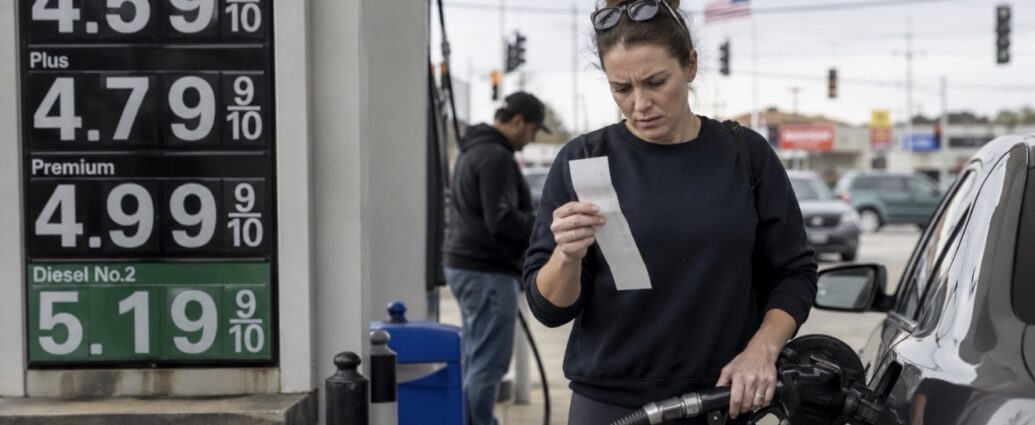
American consumer confidence fell to the lowest reading in the nearly 75-year history of the University of Michigan’s Surveys of Consumers, according to preliminary May figures released Friday morning, as soaring gasoline prices and persistent tariff anxiety continued squeezing household sentiment amid a renewed surge in global oil prices.
The preliminary index dropped to 48.2 in May from April’s upwardly revised 49.8, missing the 49.5 consensus estimate and falling below the prior low reached in June 2022 during the peak of post-pandemic inflation. The University of Michigan survey has been published continuously since November 1952.
Joanne Hsu, director of the Surveys of Consumers, said in a statement accompanying the report that consumers remain deeply concerned about rising prices and weakening purchasing conditions for major items. The current conditions component, which measures households’ assessment of current finances, plunged roughly 9% to 47.8, well below economist expectations of 52.0.
The expectations index edged slightly higher to 48.5 from 48.1, though consumers’ expectations for real income continued deteriorating for a third consecutive month. Roughly one-third of respondents spontaneously mentioned gasoline prices during interviews, while nearly 30% cited tariffs as a growing concern for household budgets and purchasing power.
Year-ahead inflation expectations eased modestly to 4.5% from April’s 4.7%, though they remain substantially above the 3.4% level recorded in February before the outbreak of the U.S.-Iran war. Long-run inflation expectations slipped slightly to 3.4% from 3.5%, but both measures remain elevated compared with the range prevailing during the two years immediately preceding the pandemic.
“Taken together, consumers continue to feel buffeted by cost pressures, led by soaring prices at the pump,” Hsu said. “Middle East developments are unlikely to meaningfully boost sentiment until supply disruptions have been fully resolved and energy prices fall.”
Those concerns intensified further Friday after another sharp move higher in oil prices following the conclusion of President Donald Trump’s summit with Chinese President Xi Jinping in Beijing.
With the Strait of Hormuz effectively closed since late February and Trump telling reporters after the summit that the United States does not need the waterway open “at all,” West Texas Intermediate crude rose another 2% Friday morning to roughly $104 a barrel while Brent crude climbed to approximately $108.
The Strait of Hormuz normally carries about one-fifth of global oil shipments, making the disruption one of the largest energy-market shocks in years. Wael Sawan, chief executive of Shell, warned last week in Houston that prolonged blockades would continue tightening global supplies of diesel, jet fuel and gasoline.
The pressure from higher fuel costs is increasingly visible across corporate America and consumer spending trends.
Walmart recently flagged heightened price sensitivity among lower-income shoppers and noted slowing momentum in discretionary purchases. Target said inflation in food, beverage and household essentials is “absorbing a much bigger portion” of customer budgets, while Home Depot cut its full-year outlook after softer demand for home-improvement projects.
Crocs has reduced second-half inventory orders amid concerns about weaker consumer demand, and Hims & Hers Health shares fell sharply earlier this week after disappointing guidance added to concerns that consumers are becoming more selective about spending.
The divergence between the University of Michigan survey and the Conference Board’s Consumer Confidence Index has also drawn increasing attention on Wall Street. Economists note that the Michigan survey places heavier emphasis on household finances and inflation expectations, while the Conference Board index tends to track labor-market conditions more closely.
Recent inflation data has reinforced those pressures.
The Bureau of Labor Statistics reported earlier this week that consumer prices rose 0.6% in April and 3.8% from a year earlier, marking the fastest annual inflation pace since May 2023. On Wednesday, the Producer Price Index showed wholesale prices jumping 1.4% during April, the largest monthly increase in nearly four years.
The combination of elevated inflation expectations and historically weak consumer sentiment complicates the Federal Reserve’s policy outlook at a sensitive moment for U.S. monetary policy.
Markets entered 2026 expecting multiple interest-rate cuts this year. But stronger inflation readings, higher oil prices and resilient economic growth have pushed traders to scale back those expectations significantly as Senate confirmation proceedings continue for Federal Reserve chair nominee Kevin Warsh while outgoing Chair Jerome Powell prepares to relinquish the chairmanship but remain on the Federal Reserve Board.
“The good news is that the economy looks resilient to this price shock so far,” said James McCann, senior economist for investment strategy at Edward Jones, following the April CPI release. Tax refunds, improving hiring trends and continued corporate profit growth have helped cushion the economic blow, McCann said, “but there are limits to these buffers.”
Consumers, by their own account, are increasingly beginning to feel those limits.
The final University of Michigan consumer sentiment reading for May is scheduled for release later this month.
JBizNews Desk
© JBizNews.com. All rights reserved. This article is original reporting by JBizNews Desk. Unauthorized reproduction or redistribution is strictly prohibited