At sundown Friday, the United States will begin the first nationally proclaimed Sabbath observance in its 250-year history, a White House-backed initiative arriving at the same moment federal courts and regulators are rapidly expanding legal protections for Americans seeking religious accommodations in the workplace.
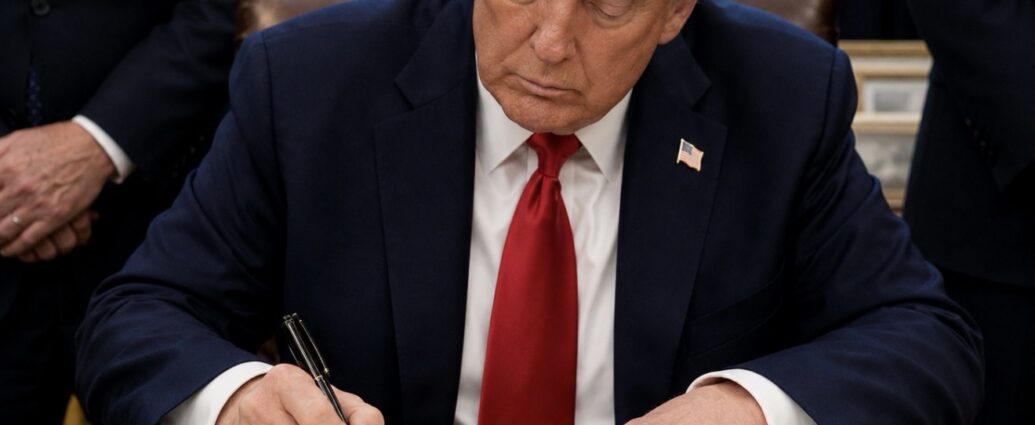
President Donald Trump’s Jewish American Heritage Month proclamation, signed May 4, calls on Jewish Americans to observe a national Shabbat from sundown Friday through nightfall Saturday — following the traditional halakhic definition of the Sabbath under Jewish law — in what the administration has branded “Shabbat 250.”
The initiative places the Jewish Sabbath at the center of the country’s semiquincentennial programming under the broader Freedom 250 framework and arrives as workplace religious-liberty disputes increasingly move from the margins of employment law into the center of national politics, corporate policy and federal enforcement.
“Jewish Americans are encouraged to observe a national Sabbath,” Trump wrote in the proclamation. “This day will recognize the sacred Jewish tradition of setting aside time for rest, reflection, and gratitude to the Almighty.”
Participation has spread across synagogues, outreach organizations and Jewish communal institutions nationwide. Shabbat-250.com, a pledge platform tied to the initiative, showed more than 18,500 Americans registered as of Friday afternoon.
Rabbi Levi Shemtov, executive vice president of American Friends of Lubavitch (Chabad), described the Trump administration as “one of the most openly and obviously religious White Houses in many years,” telling Jewish Insider he had observed “an unprecedented and extraordinary effort to ensure a particular comfort level for Jewish Americans” at the White House.
At the local level, synagogues and organizations from Brooklyn to Houston and Pensacola scheduled Friday-night dinners, prayer services and community events tied to the observance. NJOP, the National Jewish Outreach Program founded by Rabbi Ephraim Z. Buchwald, folded the initiative into its longstanding “Shabbat Across America” network, which organizers say has reached more than 1.1 million participants over three decades. Rabbi Chesky Tenenbaum, director of the Jewish Uniformed Service Association of Maryland, organized a Baltimore Shabbat dinner with the Jewish War Veterans of the United States of America for veterans and active-duty military personnel ahead of Armed Forces Day.
The national observance also arrives at a pivotal moment in the legal fight over workplace Sabbath accommodations.
The Orthodox Jewish Chamber of Commerce has been active for years in advocating stronger workplace protections for Sabbath-observant employees and other religious workers, efforts that helped contribute to major Supreme Court victories expanding religious-accommodation rights under federal law. The Chamber joined coalition amicus briefs before the U.S. Supreme Court alongside the National Jewish Commission on Law and Public Affairs (COLPA) and other Jewish organizations in cases centered on Sabbath observance and workplace religious liberty, including the unanimous Groff v. DeJoy ruling in 2023. The filings, authored by constitutional attorney Nathan Lewin of Lewin & Lewin, argued that the long-standing legal framework established under TWA v. Hardison left many observant Americans vulnerable to workplace discrimination and economic pressure because of religious practice, forcing some workers to choose between employment and faith.
In Groff v. DeJoy, the Supreme Court unanimously ruled that employers seeking to deny religious accommodations must show “substantial increased costs,” replacing the long-standing “de minimis” standard established under TWA v. Hardison (1977) that for decades made it easier for employers to reject requests from Sabbath-observant workers.
“This is a historic moment for the American Jewish community,” said Duvi Honig, Founder and CEO of the Orthodox Jewish Chamber of Commerce. “For generations, many observant Jews in America lived with the understanding that keeping Shabbos could cost them their livelihoods. My grandparents came to America as Holocaust survivors who had already lost everything for being Jewish, and like many others from that generation, they experienced firsthand the pressure observant Jews faced in the workforce.”
Hours before the national Sabbath observance was set to begin Friday evening, the U.S. Equal Employment Opportunity Commission filed a federal religious-discrimination lawsuit against a Texas Chick-fil-A franchise operator accused of firing a worker who sought Saturdays off to observe her Christian sabbath.
The Orthodox Jewish Chamber of Commerce said the timing of the lawsuit underscored why the fight over workplace religious accommodations remains far from over, even as legal protections have expanded significantly in recent years.
“The fact that, hours before America’s first nationally proclaimed Sabbath, the federal government is still suing employers accused of firing workers for requesting Sabbath accommodations shows how much work remains,” said Duvi Honig, Founder and CEO of the Orthodox Jewish Chamber of Commerce. “The legal victories have been historic, but protecting religious workers in the real world remains an ongoing fight.”
The case is one of a growing number of religious-accommodation actions pursued under EEOC Chair Andrea R. Lucas, who has made workplace religious-liberty enforcement a larger priority during the Trump administration. The agency said earlier this year it had filed 16 religious-discrimination lawsuits and recovered more than $63 million on behalf of religious workers since January 2025.
Not every segment of American Jewish life has embraced the initiative. Amy Spitalnick, chief executive of the Jewish Council for Public Affairs, told eJewishPhilanthropy that maintaining clear church-state boundaries has historically helped protect minority religious communities in the United States, even while acknowledging the symbolic significance of the proclamation.
Still, by Friday evening, synagogues, homes, campuses, military bases and community centers across the country were preparing to welcome what organizers describe as the first coordinated national Sabbath observance ever formally encouraged by an American president — one arriving at a moment when Sabbath protections in American labor law are simultaneously being strengthened in the courts and tested in the workplace.
JBizNews Desk
© JBizNews.com. All rights reserved. This article is original reporting by JBizNews Desk. Unauthorized reproduction or redistribution is strictly prohibited.