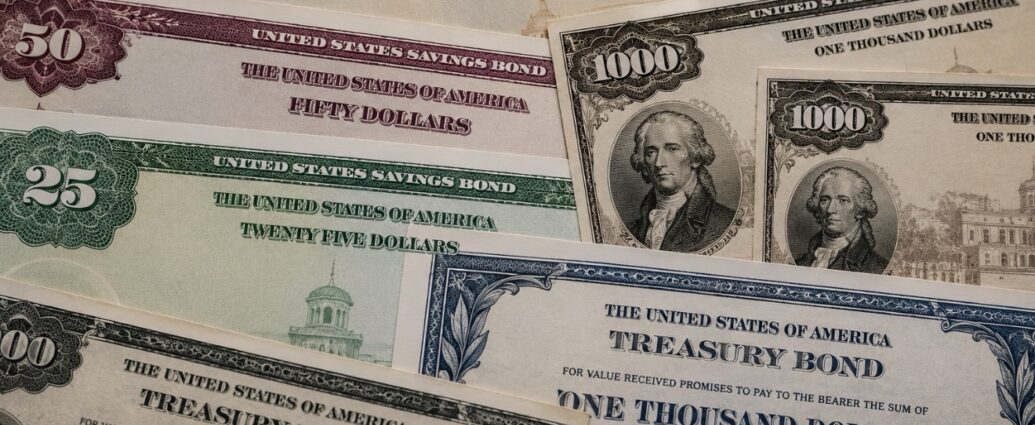
A global rout in government bonds intensified Friday as Brent crude climbed past $106 a barrel and back-to-back inflation reports from the Bureau of Labor Statistics raised the specter that the war-driven energy shock will force the Federal Reserve and other major central banks to abandon any near-term rate cuts and pivot to tightening.
The yield on the 10-year U.S. Treasury note rose nearly 10 basis points to about 4.58%, its highest level in a year, while the 30-year bond pushed above 5% — a threshold that Ian Lyngen, head of U.S. rates strategy at BMO Capital Markets, called “particularly concerning” given its implications for mortgage rates, corporate borrowing costs and equity valuations.
The selloff was global in scope and unusually broad in maturity.
U.S. 2-year yields climbed to 4.06%, a level not seen since March 2025, capping the largest weekly jump in long-end Treasuries since President Donald Trump’s tariff salvo first jolted markets in April 2025.
In Tokyo, the 30-year Japanese Government Bond yield hit 4% for the first time since the security was introduced in 1999, while the 20-year JGB rate reached its highest since 1996 and the 40-year touched a record going back to its 2007 debut.
U.K. 10-year gilt yields jumped as high as 5.17%, the most since 2008, with 30-year gilts at a 28-year peak.
Yields in Germany, Spain, Australia and New Zealand all moved in lockstep.
The trigger is the same energy shock that produced the worst inflation readings in three years.
The Bureau of Labor Statistics reported Tuesday that the Consumer Price Index rose 0.6% in April and 3.8% from a year earlier — the highest annual pace since May 2023 — driven by a 28.4% surge in gasoline prices and a 17.9% jump in the broader energy index.
One day later, the Producer Price Index showed wholesale prices rose 1.4% on the month and 6% over twelve months, the largest annual gain since December 2022.
Core PPI rose 1% in April, more than double the consensus forecast.
Fed Governor Michael Barr told an audience Thursday that inflation is now the overwhelming risk facing the economy, a marked shift in tone from a central bank that had signaled patience for most of the spring.
Markets responded accordingly.
According to data compiled by Bloomberg, traders are now pricing in nearly a two-thirds probability that the Fed will raise interest rates in December — an outcome that would mark the central bank’s first hike under incoming Chair Kevin Warsh, whom President Trump tapped to succeed Jerome Powell and whom the U.S. Senate confirmed on Wednesday.
The current federal funds target range stands at 3.50% to 3.75%.
John Briggs, head of U.S. rates strategy at Natixis North America, said in a client note that 10-year Treasury yields may continue to push higher as the global inflation impulse from the energy shock works through producer and consumer pipelines.
“Bond yields definitely feel like they are getting unhinged,” Subadra Rajappa, head of U.S. rates research at Société Générale Americas, told Bloomberg Television.
Stephen Spratt, a rates strategist at Société Générale in Hong Kong, said the move suggests investors are aggressively unwinding carry positions and short-yield bets that had been built up in expectation of a more dovish Fed.
The Japanese leg of the rout carries unusual significance.
Rinto Maruyama, senior FX and rates strategist at SMBC Nikko Securities, said the 30-year JGB at 4% is a historic break for an economy that has battled deflation for most of three decades.
Wage gains, sticky producer prices and a fresh supplementary budget being weighed by the government in Tokyo are all feeding bets that the Bank of Japan will continue to tighten.
In London, the bond selloff was compounded by a political crisis threatening Prime Minister Sir Keir Starmer.
Manchester Mayor Andy Burnham signaled he will seek a return to Parliament, raising the prospect of a Labour leadership challenge that could unwind Starmer’s effort to restrain government spending.
Gilts sold off sharply on the news.
Equities absorbed the bond move with notable weakness.
The Dow Jones Industrial Average fell 494.48 points, or 0.99%, to 49,568.98.
The S&P 500 dropped 76.15 points, or 1.02%, to 7,425.09.
The Nasdaq Composite slid 339.74 points, or 1.28%, to 26,295.48, dragged lower by losses in Intel, AMD, Micron Technology and Nvidia.
Microsoft bucked the trend after Bill Ackman’s Pershing Square Capital Management disclosed a new position in the stock.
Prashant Newnaha, senior Asia-Pacific rates strategist at TD Securities in Singapore, summed up the mood: “The move higher in global bond yields is a little unsettling.”
With the Strait of Hormuz still effectively closed, the Trump-Xi summit having ended without a breakthrough, and U.S. inflation data running hot, investors are bracing for a long summer of repricing.
— JBizNews Desk
© JBizNews.com. All rights reserved. This article is original reporting by JBizNews Desk. Unauthorized reproduction or redistribution is strictly prohibited.