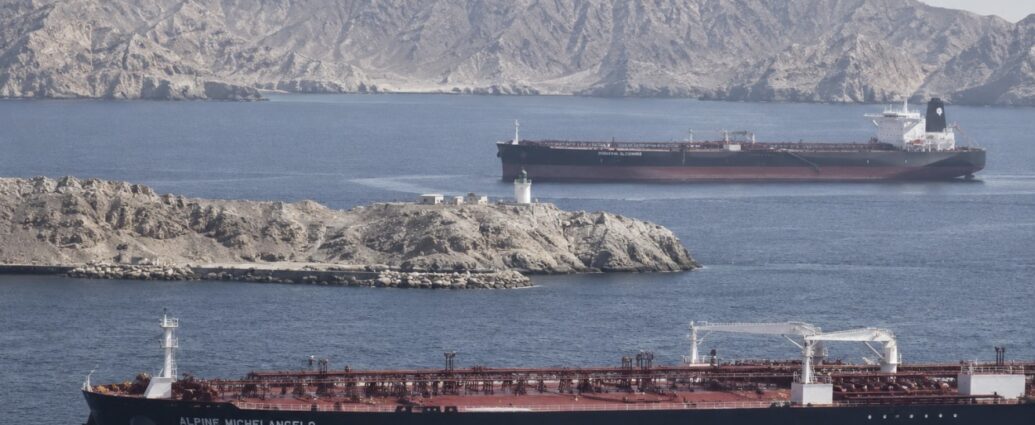
The Trump administration allowed its temporary sanctions waiver on Russian seaborne oil to expire at 12:01 a.m. Eastern time Saturday, restoring a tougher sanctions posture against Moscow at one of the most fragile moments for global energy markets in years.
The expiration was confirmed after the U.S. Treasury Department’s Office of Foreign Assets Control (OFAC) failed to publish a renewal notice for General License 134B, the authorization issued on April 17 that temporarily permitted transactions involving Russian crude already loaded onto tankers. Treasury Secretary Scott Bessent had signaled in recent days that the administration did not intend to extend the waiver.
The move lands as the global oil market is already under severe strain from the ongoing U.S.-Iran conflict and the effective closure of the Strait of Hormuz, one of the world’s most critical energy chokepoints.
Brent crude settled near $108 a barrel Friday, while West Texas Intermediate traded above $103, with both benchmarks posting weekly gains estimated between 8% and 10%. Traders increasingly warn that the market is no longer pricing temporary volatility but rather a sustained period of constrained global supply.
The International Energy Agency (IEA) said crude and refined fuel flows through Hormuz fell by roughly 4 million barrels per day during March and April and warned this week that the market could remain materially undersupplied through at least October even if the Iran conflict eases next month.
The waiver itself had a short and politically contentious life. The Trump administration initially eased restrictions in March, allowed them to lapse on April 11, then abruptly reversed course on April 17 after Bessent said more than 10 energy-vulnerable countries requested relief from soaring crude prices.
India, currently the world’s largest buyer of Russian seaborne crude, reportedly pushed hardest for the extension as its imports from Russia climbed near record levels during April and May. Indonesia also lobbied Washington to preserve access to Russian oil supplies amid mounting energy costs.
European allies strongly opposed both rounds of sanctions relief, arguing that easing pressure on Russian energy exports undermines Western efforts to restrict Moscow’s wartime revenues tied to the conflict in Ukraine.
For financial markets and commodity traders, the expiration immediately tightens legal and operational risks surrounding Russian oil transactions.
Banks, insurers, commodity trading houses, and shipping firms had temporarily relied on the OFAC waiver to process certain transactions involving previously loaded cargoes. With the waiver gone, compliance departments across the global energy sector are now reverting to stricter pre-waiver sanctions protocols involving vessel ownership verification, payment routing scrutiny, ship-to-ship transfer monitoring, and counterparty risk reviews.
The broader G7-European Union-Australia price cap system technically remains in place, still allowing certain maritime services involving Russian oil traded below specified price thresholds. But the added flexibility created by General License 134B has now disappeared.
The timing comes as some of the world’s largest energy companies warn that the supply picture is becoming increasingly dangerous.
Saudi Aramco CEO Amin Nasser told reporters this week that the oil market may not fully normalize until 2027 if the Strait of Hormuz remains closed beyond mid-June. Chevron CEO Mike Wirth, speaking earlier this month at the Milken Institute Global Conference, warned that fuel shortages were becoming a realistic concern in some regions, telling CNBC that “it’s not just a question of price.”
Investment banks are also growing more concerned about inventory depletion. Goldman Sachs warned in a research note Monday that while global crude inventories are not yet critically low, supplies of refined products — including jet fuel, naphtha, and liquefied petroleum gas — are tightening rapidly.
The political implications for the White House are becoming increasingly delicate.
President Donald Trump returned this week from meetings in Beijing with Chinese President Xi Jinping facing mounting domestic concern over energy-driven inflation. According to U.S. Energy Information Administration data, crude oil costs remain the largest component of retail gasoline pricing, meaning sustained increases in Brent and WTI prices quickly feed into higher gasoline, diesel, shipping, airline, and freight costs across the economy.
Federal Reserve officials have repeatedly warned that prolonged energy inflation can reshape consumer expectations and complicate monetary policy decisions. Analysts increasingly believe another sustained oil rally could delay interest-rate cuts or even reopen discussions around additional tightening if inflation pressures broaden further.
The deeper question now facing global markets is whether the international sanctions system can maintain pressure on Russian exports without triggering a broader energy supply shock.
Despite years of Western restrictions, Russia remains a critical supplier to global oil balances. Buyers continue navigating discounted cargoes, intermediary payment systems, opaque shipping routes, and so-called “shadow fleet” tanker operations to keep Russian crude flowing into global markets.
Allowing the waiver to expire signals that the Trump administration is prioritizing sanctions discipline over short-term energy relief. But traders say the real test will be whether enforcement intensifies against intermediary banks, covert shipping networks, and ship-to-ship transfer systems that continue facilitating Russian exports outside traditional Western oversight.
For now, markets remain trapped between three destabilizing realities: a closed Strait of Hormuz, tighter restrictions on Russian oil flows, and shrinking global inventory buffers.
Many traders increasingly describe current oil prices not as a temporary spike, but as a new floor for global energy markets unless geopolitical conditions improve significantly in the months ahead.
JBizNews Desk
© JBizNews.com. All rights reserved. This article is original reporting by JBizNews Desk. Unauthorized reproduction or redistribution is strictly prohibited.