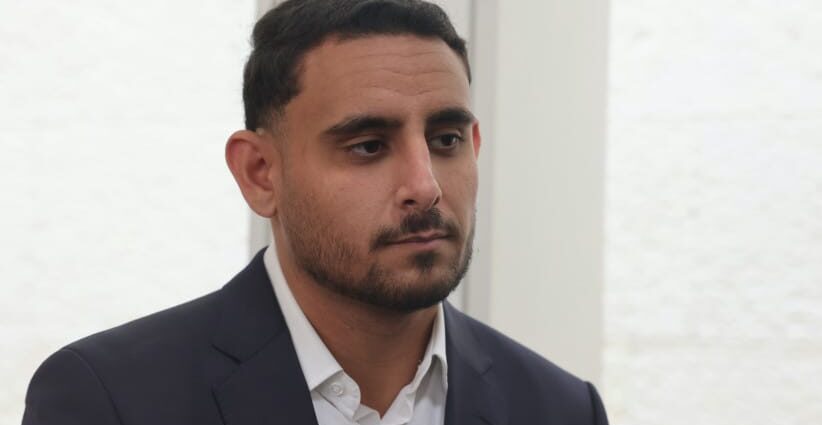
IDF Maj.-Gen. Roman Gofman sharply rejected on Friday the Attorney-General’s latest classified update to the High Court of Justice, accusing Gali Baharav-Miara’s office of trying to cast doubt on his integrity in the petitions against his appointment as Mossad chief.
In a response submitted to the court, Gofman’s lawyer, Ohad Shalem, wrote that the Attorney-General’s conduct was “very severe,” arguing that her office had repeatedly claimed to hold classified documents, while, according to Gofman, those materials contained “no secret,” no integrity flaw, and nothing relevant to the petitions.
The filing comes as the High Court considers petitions challenging Prime Minister Benjamin Netanyahu’s decision to appoint Gofman, currently his military secretary, as the next head of the Mossad. Gofman was approved by the Senior Appointments Advisory Committee and is scheduled to enter the post on June 2 for a five-year term.
The petitions center on the Ori Elmakayes affair, in which Elmakayes, then a minor, was allegedly used in an unauthorized IDF-linked influence operation connected to the 210th Division while Gofman commanded it. Elmakayes was detained and indicted, but the case against him later collapsed.
The latest dispute concerns a brigadier-general identified only as “G,” who is expected to submit an affidavit in the case, regarding a May 2022 inquiry connected to the Elmakayes affair, including an alleged clarification G held with Gofman on the eve of Elmakayes’s arrest.
Gofman allegedly acted to keep G in role
According to Channel 13, the Attorney-General’s classified update concerned claims that Gofman acted to keep G in his Mossad role during Gofman’s handover period, despite a previous decision by outgoing Mossad chief David Barnea that the officer would end his service this summer.
Channel 13 reported that the Mossad’s legal adviser passed information to the Justice Ministry that raised suspicion of improper conduct by Gofman during his handover process. According to Channel 13, the events began on April 15, when Gofman met with the head of the division in which G serves, and the question of G’s continued tenure was raised.
Channel 13 further reported that on May 12, while the High Court was hearing the petitions, Gofman visited the same division and later told the division head that he had checked the matter and that, from his perspective, there was no impediment to G remaining in his role and that he would consider it. According to Channel 13, the Attorney-General viewed the matter as a reporting failure and believed Gofman was obligated to bring the meetings and their contents to the court’s attention because of their possible effect on the pending legal proceeding.
Gofman rejected that framing in his court response. According to his filing, the issue arose as part of a pre-set Mossad handover schedule and a broader personnel discussion, not as an improper approach to G. Gofman said the head of the relevant division raised G’s request to remain in his position, and that he replied that he could make decisions on personnel matters only after formally entering office, as he would with other personnel issues raised during the handover.
Gofman further claimed that once he understood G might be asked to submit an affidavit in the High Court proceedings, he asked that no one contact G about decisions concerning his future until after the petitions were decided. According to Gofman, this was done to preserve the integrity of the proceeding and avoid contaminating it. He also said he did not meet G alone, did not speak with him privately, and did not discuss the petitions with him.
The response also argued that Gofman could not have been expected to update the court about the issue during the May 12 hearing, because the agreement to allow G’s affidavit into the case arose only during that hearing. Gofman’s lawyer added that, from their perspective, the relevant material concerning G had already been before the appointments committee for months.
Gofman also claimed that the speed with which the Attorney-General’s classified update leaked to the media raised questions about her office’s conduct and concern that it was an attempt to indirectly influence G’s affidavit.
The High Court later said that the classified update did not, at that stage, change the decisions already given regarding the appointment, but allowed Gofman to submit a short response nonetheless.
In previous filings, the Attorney-General argued that Netanyahu’s decision to appoint Gofman could not stand, saying the committee process that cleared him was flawed and based on an incomplete factual picture. Gofman and the committee have rejected that position, with the committee arguing that there was no basis for judicial intervention in its approval of the appointment.
Gofman asked the High Court to dismiss the petitions as soon as possible after G’s affidavit is submitted.