By Julia Parker — JBizNews Desk
The first public clash between New Jersey Gov. Mikie Sherrill and FIFA did not center on security, stadium rights, or international politics. It centered on a train ticket.
NJ Transit’s standard round-trip fare between Manhattan’s Penn Station and the Meadowlands normally costs $12.90. For 2026 FIFA World Cup match days at MetLife Stadium, the agency initially proposed charging fans $150. Sherrill, sworn into office in January, publicly challenged the plan and argued that New Jersey taxpayers were effectively subsidizing one of the richest sporting organizations in the world while FIFA collected billions in tournament revenue.
Within days, the fare was reduced first to $105 and then to $98. The cuts did not come because FIFA agreed to contribute additional funding. Instead, a group of corporations — including DoorDash, Audible, FanDuel, DraftKings, PSE&G, South Jersey Industries, and American Water — quietly stepped in to offset part of the transportation burden.
The episode exposed the increasingly uncomfortable economics surrounding the 2026 World Cup, which FIFA expects to become the most commercially successful tournament in the organization’s history.
FIFA confirmed in March that all 16 of its top-tier global sponsorship slots for the tournament had been fully sold, the first time in the organization’s history that every major sponsorship position was locked in ahead of kickoff. Yet while the governing body prepares for what officials expect to be roughly $11 billion in tournament-related revenue, local officials in New Jersey say the state has been left carrying a disproportionate share of the logistical and infrastructure costs associated with hosting the event’s centerpiece matches.
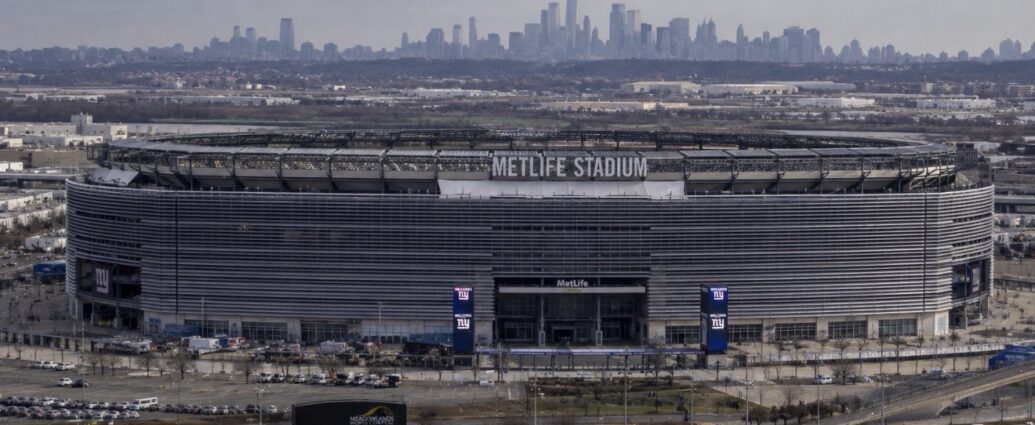
MetLife Stadium — temporarily rebranded by FIFA as “New York New Jersey Stadium” for the tournament — will host eight World Cup matches, including the July 19 final. The venue sits in East Rutherford, New Jersey, a borough with a population of roughly 10,000 residents.
The branding itself has already generated irritation among New Jersey officials, many of whom note privately and publicly that no World Cup matches are actually being played inside New York State despite the prominence of “New York” in FIFA’s marketing language.
The larger dispute, however, revolves around money.
According to public records compiled by NorthJersey.com, New Jersey taxpayers have already absorbed at least $307 million in projected World Cup-related expenses. State officials say FIFA contributed nothing toward the cost of transporting spectators to the stadium, leaving NJ Transit responsible for accommodating as many as 40,000 fans per match under an unusually restrictive operational framework.
NJ Transit CEO Kris Kolluri has defended the security and crowd-management requirements attached to the event but acknowledged that the transportation costs had to be recovered somewhere. Under pressure from Sherrill, the burden shifted primarily toward event ticket holders rather than ordinary commuters.
The dispute quickly evolved into a broader political issue. Senate Minority Leader Chuck Schumer publicly sided with New Jersey’s position despite representing neighboring New York, underscoring the unusual interstate tensions developing around the tournament.
Those tensions escalated further after New York Gov. Kathy Hochul declared in late April that “New York isn’t just hosting the World Cup, New York is the World Cup,” prompting widespread backlash online and a community note on X pointing out that every match assigned to the region will actually take place in New Jersey.
U.S. Rep. Nellie Pou, whose district includes the Meadowlands complex, has been among the most vocal critics of FIFA’s branding and financial structure surrounding the event.
Meanwhile, local officials inside East Rutherford have been quietly preparing for what may become the largest logistical operation in the borough’s history. The town has ordered its full police department onto duty during match days. The state approved a $100,000 grant to assist with additional security costs, though borough officials estimate the true expense will likely exceed three times that amount.
Hotels near the Meadowlands have reportedly been instructed to advise guests against walking to the stadium because of FIFA-imposed security perimeters. Independent shuttle operators and private transportation companies that traditionally service stadium events have also complained they will be restricted from dropping passengers near the venue, creating additional frustrations for local businesses that expected to benefit economically from the tournament.
The friction contrasts sharply with the enormous commercial scale FIFA is projecting globally.
FIFA President Gianni Infantino, speaking at CNBC’s Invest in America Forum in Washington last month, said the organization expects approximately $11 billion in revenue tied to the 2026 tournament and pledged that proceeds would be reinvested across FIFA’s 211 member associations.
A joint FIFA–World Trade Organization economic study projects roughly $80 billion in gross economic output across the United States, Canada, and Mexico during the tournament cycle, including approximately $30.5 billion tied directly to U.S. activity.
Tournament prize money has also climbed sharply. FIFA approved a new structure at its April council meeting in Vancouver that raises total tournament prize payouts to roughly $871 million. Demand for tickets has exploded alongside the event’s commercial growth. At one point, premium final tickets listed on FIFA’s official resale platform reportedly reached seven-figure asking prices, with one package briefly appearing at approximately $11.5 million.
The commercial machine surrounding the 2026 World Cup is therefore operating at unprecedented scale. The unresolved question is who ultimately pays for the infrastructure, transportation, policing, and operational burden required to stage it.
Sherrill has already said her administration intends to seek a full accounting of New Jersey’s costs, federal reimbursements, and any financial participation by New York before supporting future joint-hosting arrangements for major international sporting events.
The broader message coming from Trenton is becoming increasingly direct: if New Jersey continues serving as the physical host for globally televised events, the state no longer intends to quietly absorb the financial obligations while others capture the branding and revenue upside.
For FIFA, which has spent years positioning the 2026 tournament as the most commercially advanced World Cup ever staged, the lingering fight on the Jersey side of the Hudson may now represent the tournament’s most politically awkward unresolved issue before kickoff arrives on June 11.
The matches have not started yet. The financial battle already has.
JBizNews Desk
© JBizNews.com. All rights reserved. This article is original reporting by JBizNews Desk. Unauthorized reproduction or redistribution is strictly prohibited.