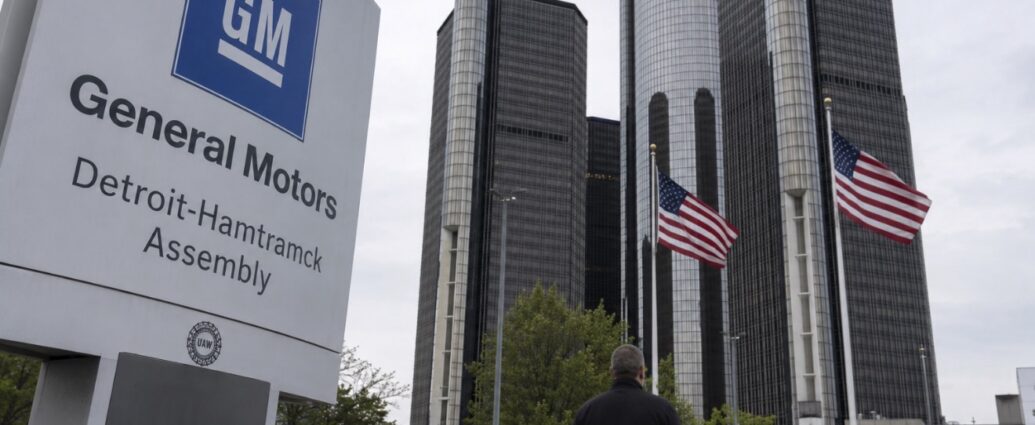
Detroit’s three largest automakers have collectively eliminated more than 20,000 U.S. salaried positions over the past four years, a roughly 19% reduction in their combined white-collar workforce that has accelerated sharply as artificial intelligence begins reshaping the way American car companies operate. The combined salaried headcount at General Motors Co., Ford Motor Co., and Stellantis NV peaked at approximately 102,000 workers in 2022 before falling to roughly 88,700 by the end of last year, according to public filings and employment data analyzed by CNBC. The pace has only quickened in recent months: GM notified between 500 and 600 information-technology workers in Austin, Texas, and Warren, Michigan, of layoffs on May 11, with the cuts tied directly to a strategic pivot toward AI-related capabilities.
The contraction marks a sharp reversal from the early-decade hiring surge that swept across the Big Three as the industry geared up for an electric-vehicle transition and a wave of software-defined platforms. GM has accounted for the largest share of the reductions, cutting roughly 11,000 salaried positions since 2022 after expanding from 48,000 white-collar workers in 2020 to 58,000 just two years later. Much of the drawdown reflects the wind-down of the company’s Cruise robotaxi unit, repeated rounds of global restructuring, and engineering and software reductions executed under Chief Executive Mary Barra. Ford has cut roughly 5,300 salaried positions from its 2020 peak, leaving the company with about 30,700 white-collar employees last year. Stellantis has fallen from 15,000 U.S. salaried workers in 2020 to roughly 11,000, with multiple rounds of voluntary buyouts targeting engineering and tech roles.
Executives at the three companies have grown increasingly direct about the role artificial intelligence is playing in the cuts. Ford Chief Executive Jim Farley told an audience at the Aspen Ideas Festival in July that AI is on track to replace roughly half of all white-collar workers in the United States and warned that the technology would leave many office workers behind. Statements from Stellantis Chief Executive Antonio Filosa, who is leading a global turnaround, have offered a more measured counterpoint: the company plans to add more than 2,000 white-collar positions in North America as part of its restructuring, though those roles are heavily weighted toward AI, software engineering, and autonomous-systems work. Combined, the three automakers currently list more than 2,000 open U.S. positions, with nearly 400 tied specifically to AI. GM alone is recruiting for more than 250 AI-related roles even as it continues trimming legacy IT, finance, and clerical staff.
The data underscores a widening divergence between the Big Three and the broader U.S. auto manufacturing sector. Bureau of Labor Statistics figures show that overall motor vehicle manufacturing employment — which includes both hourly and salaried workers — declined just 0.2% from 2022 through last year to 285,800. Toyota Motor Corp., by contrast, has expanded its U.S. white-collar headcount by roughly 31% since 2020, reaching approximately 47,500 workers. That contrast suggests Detroit’s cuts are being driven less by industry-wide demand weakness than by company-specific exposure to legacy cost structures, electric-vehicle transition losses, and mounting competition from Asian and European manufacturers building software-defined vehicles without comparable workforce overhang.
For the broader U.S. labor market, the reductions may foreshadow a wider AI-driven displacement of office workers across industries that depend heavily on repeatable cognitive labor. A recent Boston Consulting Group report projected that 10% to 15% of U.S. jobs could ultimately be eliminated as AI scales, with roughly half of all American jobs reshaped within the next two to three years. Gregory Emerson, managing director at BCG, has cautioned that companies cutting workforce faster than AI can actually replace it risk losing institutional knowledge and watching productivity deteriorate. Lenny LaRocca, who leads KPMG’s automotive practice in the Americas, argues that the focus inside the Big Three is shifting from pure headcount reduction toward using AI to make remaining workers materially more productive. Gad Levanon at the Burning Glass Institute has flagged clerical, finance, IT, and coding roles among the most exposed to AI automation, while noting that some losses could eventually be offset by growth in cybersecurity, robotics, and autonomous-systems engineering.
The economic implications for Michigan and the broader industrial Midwest are substantial. Detroit’s salaried workforce has historically anchored the region’s middle-class economy, supporting suburban housing markets, local service industries, and pension systems. The Big Three are still hiring in select areas, particularly AI and advanced manufacturing, but the broader trajectory is becoming increasingly clear. GM, Ford, and Stellantis are quietly eliminating many of the corporate and engineering roles that built modern Detroit while recruiting a smaller, more technical workforce for an industry that increasingly resembles Silicon Valley as much as the traditional assembly line.
The shift also arrives as investors intensify pressure on automakers to improve margins after years of heavy spending on electric vehicles, autonomous driving, and software initiatives that have yet to consistently deliver expected returns. AI offers Detroit executives a rare opportunity to simultaneously reduce labor costs, automate back-office operations, streamline vehicle development, and accelerate factory productivity at a moment when pricing power across the industry is weakening. Wall Street has largely rewarded those efforts. Shares of GM and Ford have both outperformed several broader industrial indexes over the past year as analysts increasingly focus on cost discipline and operational efficiency rather than aggressive EV expansion alone.
For displaced workers, however, the transition may prove far more disruptive than corporate earnings models suggest. Many of the eliminated positions involve experienced mid-career employees whose institutional knowledge took decades to build. While new AI-focused jobs continue emerging, they often require highly specialized software, data-science, or machine-learning expertise that many traditional automotive employees do not possess. The result could be a prolonged restructuring of Detroit’s professional workforce, with fewer total jobs but higher technical barriers for entry.
Industry observers increasingly believe the transformation underway inside Detroit’s automakers may ultimately serve as an early blueprint for white-collar restructuring across corporate America. As AI systems become capable of handling larger portions of coding, finance, logistics, customer service, engineering support, and administrative work, executives across multiple sectors are beginning to reassess how many office employees they truly need. The central question facing Detroit now is whether the Big Three can use AI to reduce costs and remain globally competitive without hollowing out the engineering depth, operational experience, and middle-class workforce that defined America’s auto industry for more than a century.
JBizNews Desk
© JBizNews.com. All rights reserved. This article is original reporting by JBizNews Desk. Unauthorized reproduction or redistribution is strictly prohibited.