Borrowing costs for home buyers across North America and Europe climbed sharply Monday as investors continued digesting the global bond-market selloff that intensified late last week, with rising oil prices, the ongoing Iran war, and a leadership transition at the Federal Reserve combining to push sovereign yields to their highest levels in more than a year. The benchmark 10-year U.S. Treasury yield touched 4.601% Monday, its highest level in roughly 15 months, while the 30-year Treasury bond yield settled near 5.13%, approaching levels last seen during the 2007 financial era. At the same time, energy markets continued climbing as the Strait of Hormuz remained disrupted. West Texas Intermediate crude closed up more than 3% at $108.66 per barrel, while Brent crude rose to $112.10. U.S. gasoline prices are now averaging above $4.50 per gallon nationwide, up roughly 51% since the Iran conflict escalated.
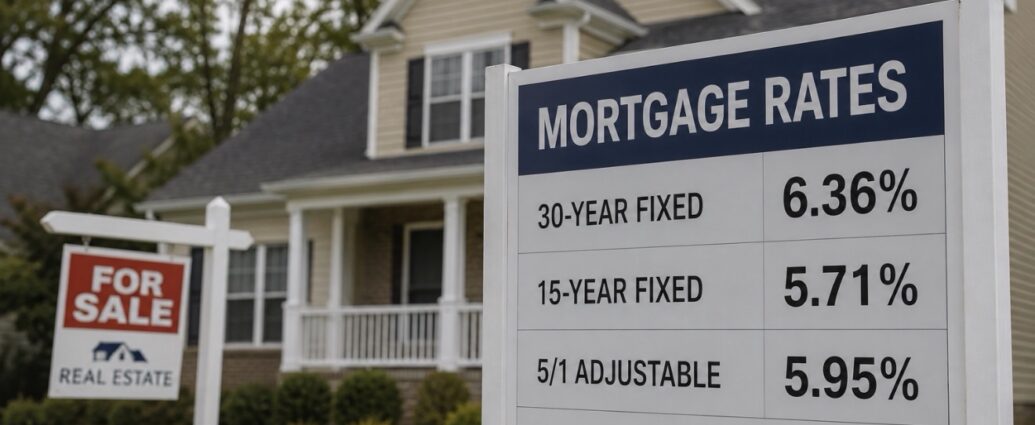
The pressure is now feeding directly into global mortgage markets because home-loan pricing closely tracks long-term government bond yields rather than short-term central-bank rates. Freddie Mac reported in its latest Primary Mortgage Market Survey that the average 30-year fixed-rate mortgage stood at 6.36% as of May 14, while the 15-year fixed mortgage averaged 5.71%. Sam Khater, Freddie Mac’s chief economist, said purchase demand had softened but remained modestly stronger than the same period last year. However, that survey closed before Friday’s violent bond-market repricing, meaning the next official Freddie Mac release due Thursday is widely expected to show materially higher borrowing costs. Daily lender pricing already reflects the move upward.
The macro backdrop shifted dramatically over the past 72 hours. Jerome Powell’s term as Federal Reserve chair formally ended Friday after the Senate confirmed Kevin Warsh as the next Fed chair on May 13. Powell is serving briefly as chair pro tempore until Warsh is formally sworn in, creating an additional layer of uncertainty for bond investors already navigating war-driven inflation fears and growing concerns over global fiscal deficits. Rates strategists say the market reaction has become increasingly disorderly. Subadra Rajappa, head of U.S. rates strategy at Société Générale, warned last week that Treasury yields were “getting a bit unhinged” as investors demanded higher compensation for inflation and geopolitical risk.
The mortgage market’s sensitivity to bond yields explains why borrowing costs can jump even without immediate central-bank action. In Canada, fixed mortgage rates have begun moving higher alongside Government of Canada bond yields despite expectations that the Bank of Canada, led by Governor Tiff Macklem, could still begin easing later this year if inflation stabilizes. Across Europe, sovereign yields and swap rates have also surged, putting pressure on mortgage markets that rely heavily on wholesale funding costs. European Central Bank President Christine Lagarde recently reiterated that the disinflation process remains intact, but officials continue emphasizing a data-dependent path forward. German bund yields are now hovering near their highest levels since 2011, while European natural-gas prices have surged more than 90% year-to-date.
The United Kingdom may be among the most exposed major housing markets because British homeowners typically refinance every two to five years, leaving households highly vulnerable when wholesale borrowing costs rise. Bank of England Governor Andrew Bailey has repeatedly warned that policymakers need clearer evidence that services inflation is cooling before delivering sustained rate cuts. Major U.K. lenders have already begun repricing mortgage products upward in response to recent bond-market volatility.
The broader market logic has become increasingly straightforward: if the conflict in the Persian Gulf keeps oil prices elevated, central banks may lose flexibility to aggressively cut rates, forcing bond investors to demand higher yields for longer-term debt. Mohamed El-Erian, chief economic adviser at Allianz, has argued that geopolitical shocks feed rapidly into inflation expectations and risk premia simultaneously, pressuring both sovereign debt markets and household borrowing costs. Lawrence Yun, chief economist at the National Association of Realtors, has warned that elevated mortgage rates continue freezing much of the U.S. housing market by locking existing homeowners into lower-rate mortgages while sidelining first-time buyers.
Builders, brokers, and consumer lenders are now watching inflation data and energy markets more closely than central-bank speeches. If crude prices retreat and Treasury yields stabilize, mortgage lenders could reverse part of the recent increase relatively quickly. But if oil remains above $100 per barrel and global shipping disruptions continue, housing finance markets may remain under pressure well into the summer, even as central banks continue signaling eventual easing cycles.
For investors and home buyers alike, the most important indicators are no longer simply Fed policy statements. The variables driving housing affordability now sit in global energy markets, the Treasury market, and the geopolitical trajectory of the Middle East conflict itself.
JBizNews Desk
© JBizNews.com. All rights reserved. This article is original reporting by JBizNews Desk. Unauthorized reproduction or redistribution is strictly prohibited.