Internal revolt over a controversial Nicholas Kristof column is triggering a deeper business question Wall Street increasingly cannot ignore: what happens when a media company loses trust inside its own newsroom?
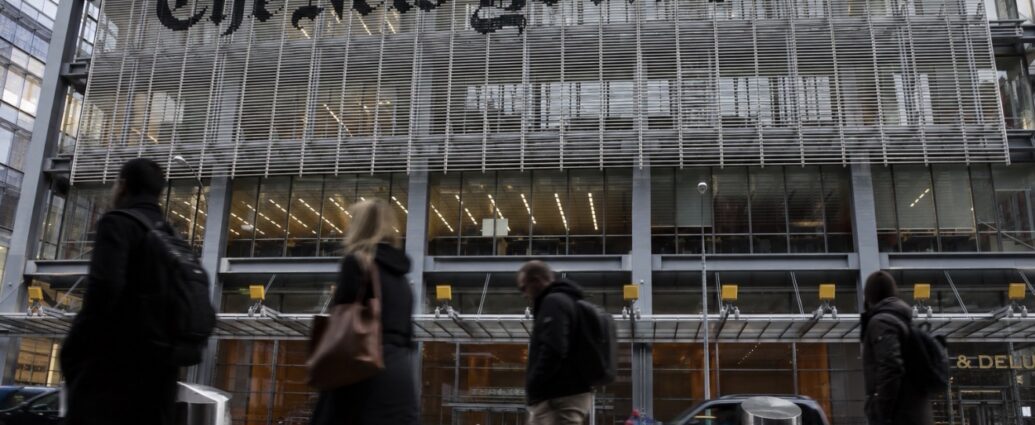
NEW YORK — A widening internal backlash has erupted inside The New York Times over a controversial May 11 opinion column by longtime columnist Nicholas Kristof, exposing deep tensions between the paper’s newsroom and opinion division and raising broader concerns about the future business model of legacy media at a moment when public trust in major news institutions continues eroding.
According to reporting published by Puck News media correspondent Dylan Byers and later amplified by multiple outlets including the New York Post and Israel’s Ynet News, several Times journalists privately expressed outrage over Kristof’s column alleging systematic sexual abuse of Palestinian detainees by Israeli prison guards. At least one staff member reportedly told Puck: “I am sick of being embarrassed by the Opinion section.”
For years, President Donald Trump publicly branded The New York Times “fake news.”
Now the paper is confronting a more dangerous problem for its business: some of its own journalists are openly questioning whether parts of its opinion operation are damaging the credibility of the institution itself.
The Kristof column, titled “The Silence That Meets the Rape of Palestinians,” contained highly graphic allegations involving alleged abuse inside Israeli detention facilities, including disputed claims involving sexual violence and abuse carried out by prison guards. Critics immediately challenged the sourcing, verification standards and reliance on advocacy organizations tied to the reporting.
Inside the Times newsroom, according to multiple reports, frustration quickly spread beyond politics and into professional standards.
Newsroom reporters — who operate under stricter verification and sourcing requirements — reportedly questioned whether allegations of such magnitude would have ever cleared the paper’s traditional reporting standards if handled through the news division instead of the opinion section.
The internal criticism matters because the Times’ modern business model depends almost entirely on trust.
Unlike older newspaper economics built primarily on print advertising, the modern New York Times is fundamentally a subscription company. The paper now generates billions annually from digital subscriptions across news, cooking, games and premium content products. That business works only if readers continue believing the institution itself remains authoritative and credible.
And increasingly, credibility has become the central battlefield in American media.
The mainstream news industry has already endured years of declining public trust, falling cable ratings, newsroom layoffs and collapsing advertising economics. CNN, CBS News, ABC News, NBC News and The Washington Post have all faced varying combinations of restructuring, subscriber pressure, layoffs or advertiser weakness over the past several years as consumers increasingly fragment across alternative media, podcasts, social platforms and politically aligned outlets.
Until recently, The New York Times largely appeared insulated from the worst of that collapse.
Its digital subscription engine became the envy of the industry. Its stock price and valuation significantly outperformed most legacy competitors. Its affluent subscriber base remained unusually loyal.
But the Kristof controversy is now striking directly at the company’s most valuable asset: institutional trust.
Times leadership has publicly defended the column.
Spokesman Charlie Stadtlander said the piece relied on on-the-record testimony and documented allegations involving abuse and sexual violence. Executive Editor Joseph Kahn and Opinion Editor Kathleen Kingsbury have also defended the column’s editorial review process.
But internally, according to multiple reports, many newsroom staffers remain deeply uncomfortable with the sourcing standards surrounding some of the column’s most explosive allegations.
The controversy has already triggered growing external fallout.
Israeli Prime Minister Benjamin Netanyahu and Foreign Minister Gideon Sa’ar condemned the piece and threatened legal action against both the Times and Kristof personally. Pro-Israel organizations and advocacy groups began publicly encouraging subscription cancellations, while criticism spread rapidly across social media and competing publications.
Analysts say the financial risk is not necessarily one article itself.
It is the broader perception that the institution’s standards may be slipping.
Duvi Honig, founder and chief executive of the Orthodox Jewish Chamber of Commerce, Newsmax contributor and economic policy analyst, said the Times is now confronting the same credibility crisis that has already damaged much of legacy media.
“When a newspaper loses its own newsroom’s confidence, credibility collapses — and the business model collapses with it,” Honig said. “Subscribers cancel. Advertisers walk. The bill always comes due.”
That concern is becoming increasingly relevant across the broader media industry.
Digital advertising rates across journalism have weakened for years as Google, Meta, TikTok and streaming platforms absorbed increasing shares of advertising dollars. Subscription growth across media has also slowed as consumers hit “subscription fatigue” after years of paying for multiple streaming, news and digital services simultaneously.
That means credibility itself increasingly functions as the core product major news organizations are selling.
And once readers begin questioning whether reporting standards remain politically or ideologically consistent, the damage can spread quickly beyond a single controversy.
The Times has faced newsroom-versus-opinion tensions before.
In 2020, then-Opinion Editor James Bennet resigned following an internal revolt over publication of an opinion essay by Republican Senator Tom Cotton advocating military deployment during nationwide unrest. But media analysts note the current controversy is different because the criticism is not coming from ideological opponents outside the company.
It is coming from inside the building itself.
That distinction may matter enormously for advertisers, investors and subscribers evaluating the long-term stability of the Times brand.
The modern media economy no longer survives on prestige alone.
It survives on recurring subscription renewals, advertiser confidence and public trust that what appears under a publication’s banner meets consistent editorial standards regardless of politics.
The Times says it stands behind the column.
Some of its own journalists reportedly say they are embarrassed by it.
Now the company’s subscribers — and eventually Wall Street — may decide which judgment carries more weight.
Because for legacy media companies already battling shrinking trust across much of the country, the greatest threat may no longer be political attacks from the outside.
It may be credibility fractures emerging from within.
© JBizNews.com. All rights reserved. This article is original reporting by JBizNews Desk. Unauthorized reproduction or redistribution is strictly prohibited.