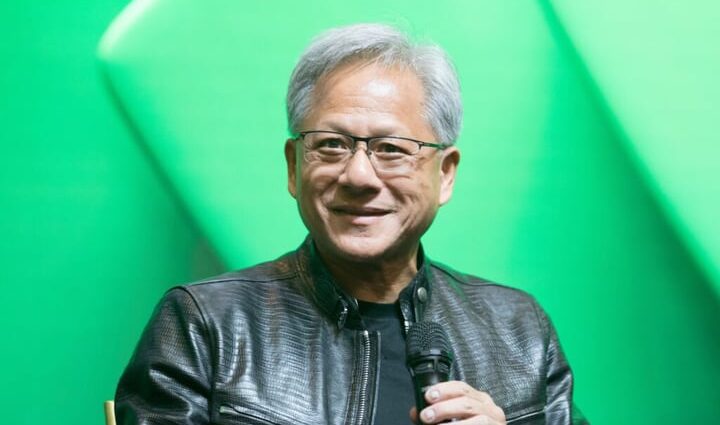
Workers are more likely to be replaced by people who know how to use artificial intelligence than by the technology itself, according to Nvidia (NASDAQ:NVDA) CEO Jensen Huang.
“It is unlikely most people will lose a job to AI,” Huang said last month during a Stanford Graduate School of Business panel discussion alongside Rep. Ro Khanna (D-CA). “It is most likely that most people will lose their job to somebody who uses AI.”
His remarks focused on AI adoption, changing workplace demands and how companies are using the technology inside existing jobs.
Don’t Miss:
- NVIDIA & Tesla Steal the Spotlight — RAD Intel Emerges as an AI Stock Worth Watching
- 1.5M+ Users. $29M Raised. Pre-IPO Shares Still at $0.72 — Learn How to Invest Before the Deadline
Why Huang Says AI Has Made Him ‘Busier Than Ever’
Huang said during the discussion that AI can automate specific tasks while allowing companies to do more work. Using himself as an example, he pointed to typing and talking, two functions AI can already perform. Even so, he said he remains “busier than ever.”
“The purpose of your job and the tasks that you do in your job are related but not the same,” Huang said. In his view, automating tasks does not necessarily eliminate the job itself.
The Engineers Huang Says Are Winning In The AI Era
Huang said at the panel that AI agents are already becoming part of Nvidia’s software engineering workflow.
“The software engineers who know how to use AI, know how to use agentic systems, are the most popular and the most successful,” he said.
Trending: Demand for Faster Diagnostics Is Surging — NASA- and NIH-Supported Space-Tested System Targets At-Home Lab-Quality Blood Testing
Before AI, engineers would come up with an idea and then spend time coding it, according to Huang. He said AI now helps shorten that process, allowing teams to move more quickly to the next idea.
Huang said the agents continuously prompt engineers for instructions and next steps during development work.
The Career AI Was Supposed To Kill
Radiology was one example of how AI changed a profession without eliminating it, Huang told the Stanford panel.
“At the beginning of the AI revolution, one of the smartest and most influential computer scientists, and one of the fathers of AI, modern AI, said that in 10 years’ time, the one job you don’t want is radiology,” Huang said.
He said AI later became widely used in radiology departments and helped automate scan analysis. Huang said hospitals also hired more radiologists as departments handled higher scan volumes, treated more patients and generated more revenue.
See Also: Small differences in withdrawal and tax strategy can significantly impact long-term retirement income — see where you stand today.
Khanna, whose district includes much of Silicon Valley, said even if AI creates more jobs over time, …





This post was originally published here