AbbVie and Regeneron Remain Among Final Major Holdouts as Administration Pushes Drugmakers Toward Lower U.S. Prices and Domestic Manufacturing
WASHINGTON — President Donald Trump’s new 100% tariff framework on patented pharmaceutical imports is intensifying pressure on the remaining holdouts in the drug industry, with AbbVie Inc. and Regeneron Pharmaceuticals Inc. now among the final major manufacturers that have not yet agreed to pricing and manufacturing terms sought by the administration.
The tariff structure, established through an executive order signed earlier this year, ties tariff relief directly to whether pharmaceutical companies agree to two major conditions: participation in a “most-favored-nation” drug pricing arrangement tied to U.S. prices and commitments to expand pharmaceutical manufacturing capacity inside the United States.
Under the administration’s framework, companies agreeing to both conditions can avoid tariffs entirely, while firms expanding domestic manufacturing without pricing agreements face escalating tariff exposure over several years. Companies declining both conditions face the full 100% tariff on covered patented pharmaceutical imports.
The strategy has rapidly reshaped negotiations across the pharmaceutical industry.
Major manufacturers including Pfizer Inc., AstraZeneca Plc, Eli Lilly & Co., Novo Nordisk, Johnson & Johnson, Merck & Co., GSK Plc, Novartis AG, Sanofi SA, Amgen Inc., Bristol Myers Squibb Co., Gilead Sciences Inc., and others have already entered agreements with the administration tied to pricing concessions, domestic manufacturing expansion, or both.
That leaves AbbVie and Regeneron increasingly isolated as negotiations continue.
The administration argues the policy is intended to lower prescription drug costs for American consumers while simultaneously rebuilding domestic pharmaceutical manufacturing capacity after decades of overseas dependence.
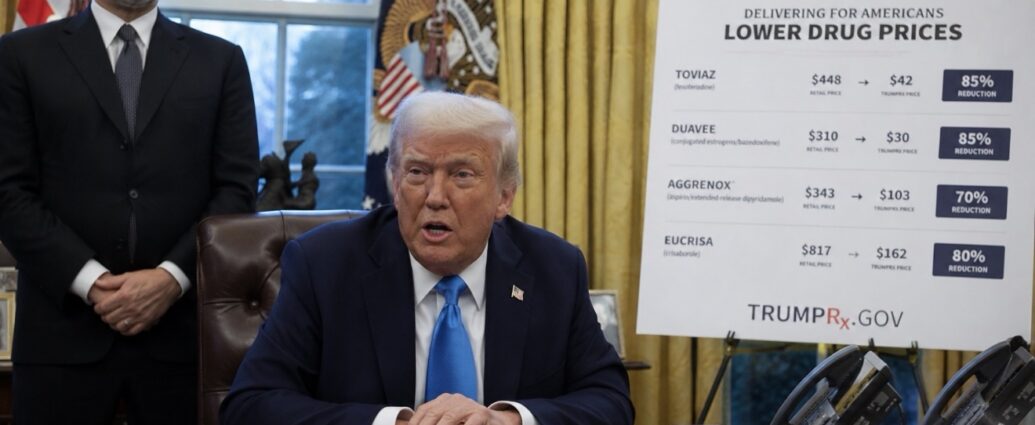
The pricing agreements are tied in part to the administration’s new TrumpRx.gov platform, which is designed to help consumers access discounted medications directly through participating pharmaceutical manufacturers.
Officials say certain medications under the agreements could eventually see discounts ranging from roughly 50% to as high as 85% depending on the product and purchasing structure.
The administration has framed the broader tariff threat as leverage rather than purely punitive trade policy.
Commerce Secretary Howard Lutnick has indicated the White House remains engaged in ongoing negotiations with companies that have not yet signed agreements, suggesting the tariff structure is intended primarily to force concessions around pricing and domestic production.
For the pharmaceutical industry, however, the financial implications are enormous.
The United States remains by far the world’s most profitable pharmaceutical market, with Americans paying substantially higher prices for many branded medications than consumers in other developed countries.
Industry groups including PhRMA have strongly criticized the administration’s approach, arguing tariffs and pricing controls could ultimately increase costs, disrupt supply chains, reduce innovation incentives, and complicate long-term research and development investment.
Stephen J. Ubl, Chief Executive Officer of PhRMA, warned that tariffs on advanced medicines could threaten billions of dollars in existing and future U.S. investment tied to pharmaceutical development and manufacturing.
Investors are now closely watching AbbVie and Regeneron to determine whether the companies ultimately agree to pricing terms, expand U.S. manufacturing commitments, or attempt to challenge portions of the framework politically or legally.
AbbVie, headquartered in North Chicago, manufactures major blockbuster drugs including Humira, Skyrizi, and Rinvoq, while Regeneron, based in Tarrytown, New York, is known for products including Eylea and its partnership with Sanofi on the asthma treatment Dupixent.
Because portions of their manufacturing and supply chains remain tied to facilities outside the continental United States, prolonged tariff exposure could create pressure on pricing, margins, manufacturing strategy, or future investment decisions.
The broader business implications extend far beyond pharmaceutical companies themselves.
Domestic manufacturing firms, construction contractors, logistics providers, chemical suppliers, packaging companies, and industrial real-estate developers all stand to benefit if more drugmakers accelerate U.S.-based production expansion in response to tariff pressure.
At the same time, pharmacy chains including CVS Health, Walgreens Boots Alliance, and Walmart could see changes in prescription purchasing behavior if discounted direct-purchase drug programs gain traction among consumers.
Pharmacy benefit managers including CVS Caremark, Express Scripts, and OptumRx may also face pressure as the pricing landscape evolves under the administration’s framework.
For consumers, the potential outcome remains mixed.
Some Americans paying cash for medications could see immediate savings through direct-discount programs tied to participating manufacturers.
Others, however, may still face higher prices elsewhere if companies attempt to offset lower prices on certain drugs by raising prices on products outside the agreements or passing along supply-chain costs tied to tariffs.
The legal foundation of the pharmaceutical tariffs also differs from several of Trump’s earlier trade actions.
Administration officials have argued the pharmaceutical measures fall under Section 232 national-security authority, which historically gives the executive branch broader power to impose tariffs tied to national security concerns surrounding supply-chain dependence and industrial capacity.
That distinction may make the pharmaceutical tariffs more legally durable than some previous tariff actions challenged in court.
For now, Wall Street and the broader health-care industry are watching one central question:
Whether the remaining holdouts ultimately negotiate agreements with the administration — or whether the White House moves forward with fully imposing one of the most aggressive pharmaceutical tariff regimes in modern U.S. history.
JBizNews Desk
© JBizNews.com. All rights reserved. This article is original reporting by JBizNews Desk. Unauthorized reproduction or redistribution is strictly prohibited.