Touring a ghost kitchen may not sound glamorous – until you step inside and realize you’re looking at cutting-edge food delivery infrastructure.
During I.CON East this week in Jersey City, New Jersey, attendees were able to tour CloudKitchen’s 17,000-square-foot Union City, New Jersey, facility. CloudKitchens provides commercial kitchen space for delivery-only restaurants, ranging from household names like Starbucks to local mom-and-pop shops looking to expand their business. More than 500 facilities worldwide are part of a portfolio that also includes food production facilities operated by ProFood Properties, which focus on single tenants and large-format food production.
According to Statista, revenue in the U.S. online food delivery market is projected to reach $473.49 billion in 2026. An estimated 60% of U.S. adults order takeout or food delivery at least once a week, with the COVID-19 pandemic accelerating growth in the use of food delivery services.
CloudKitchen aims to create a plug-and-play setup for restaurants; the company provides space, onboarding services, on-site technicians for mechanical support, basic equipment, proprietary technology platforms and access to local markets that might not otherwise be available. The company’s staff includes a large component of architects and engineers able to customize kitchens to meet tenant needs. The company’s goal is to take care of the real estate side of the equation so that their tenants can focus on the food side.
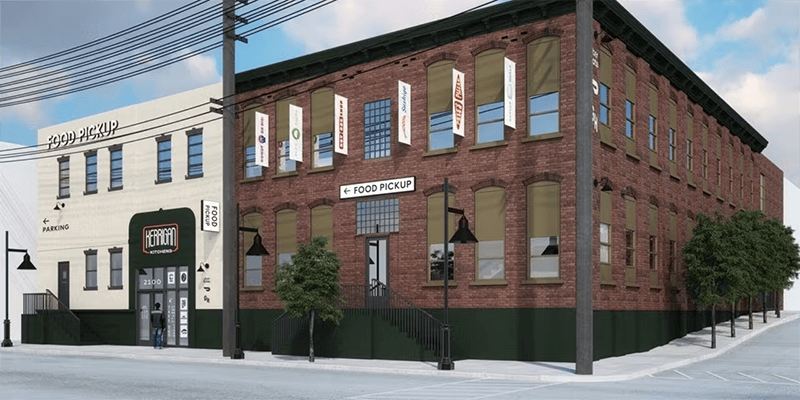
CloudKitchen combined three former electrical supply/wholesaler buildings for their Union City location, which opened for production in 2024. The facility hosts 32 tenants, with some operating at all hours of the day, serving a wide range of cuisines. The location of the facility enables a tenant restaurant to reach 206,000 residents and 90,000 workers within a 15-minute delivery radius.
The process is deceptively simple: A consumer places their order through their favorite delivery app; the order gets routed to the delivery person and CloudKitchen restaurant, and the race is on. When the delivery person arrives at the CloudKitchen lobby, they simply display the order information on their phone to CloudKitchen’s camera, and the corresponding locker holding that order opens. In and out – simple as that.
Behind the scenes, CloudKitchen leverages software to closely track and analyze their operators’ habits and needs, adjusting as necessary. BMS (Battery Management System) sensors track each kitchen’s temperature, moisture level and even patterns of activity, such as typical hours of operation. That data is then charted daily to maximize the optimal use of the facility’s power and air flow. CloudKitchen tries to anticipate their operators’ challenges and help them be successful.
Air flow is top of mind for the CloudKitchen engineers; they closely track and modify the air going in and out of the building, and in and out of each kitchen. Whether it’s a noodle company or a char-grilled chicken sandwich restaurant, the facility needs to carefully calibrate the temperatures, moisture and air flow to match the individual needs of each operator.
Each location of a CloudKitchen facility offers unique opportunities and challenges – ones that the team relishes solving. Adapting a former industrial building for the Union City facility provided built-in advantages such as a roof that could support heavy-duty ventilation systems but also required updates to electrical systems and duct work.
As food delivery continues to reshape consumer behavior, facilities like these may become as essential to cities as warehouses, office towers and apartment buildings.

This post is brought to you by JLL, the social media and conference blog sponsor of NAIOP’s I.CON East 2026. Learn more about JLL at www.us.jll.com or www.jll.ca.