JBizNews Desk
PARIS — Sunday, May 24, 2026
A Paris appeals court on Thursday found Airbus and Air France guilty of involuntary manslaughter over the 2009 crash of a Rio-to-Paris flight that killed 228 people, overturning a lower-court acquittal that had stood for nearly three years and reopening one of the most contested corporate-liability cases in European aviation.
The Paris Court of Appeal ruled that the French flag carrier and Europe’s largest aerospace manufacturer were “solely and entirely responsible,” ordering each company to pay 225,000 euros — roughly $261,000 — the maximum criminal fine allowed under French law for corporate manslaughter.
The financial penalties are relatively minor for companies of that scale, but the criminal convictions themselves are highly consequential: a rare instance of both an airline and an aircraft manufacturer being held criminally liable for a commercial aviation disaster.
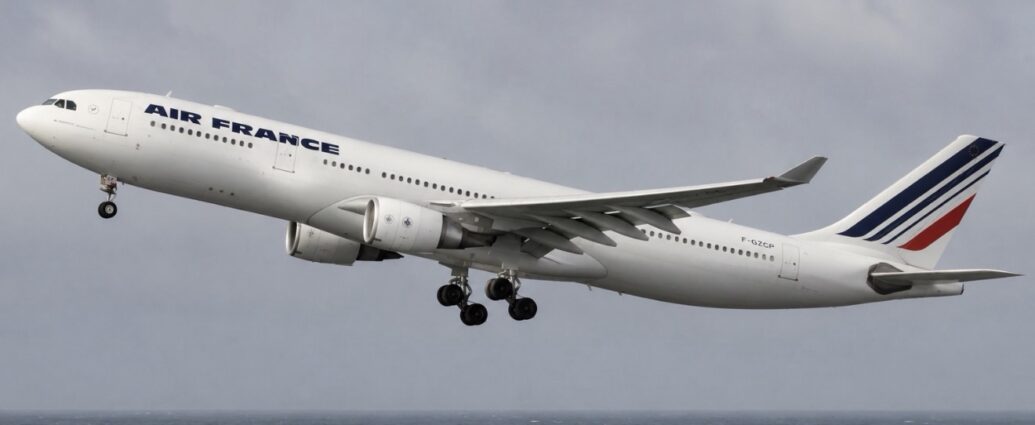
Flight AF447, an Airbus A330 operating between Rio de Janeiro and Paris, crashed into the Atlantic Ocean on June 1, 2009, killing all 216 passengers and 12 crew members aboard. The victims included 72 French citizens and 58 Brazilians. The aircraft’s black boxes were not recovered until 2011 following a deep-ocean search operation costing tens of millions of dollars.
Investigators later determined that the chain of events began when ice crystals blocked the aircraft’s pitot tubes — external sensors used to measure airspeed — causing unreliable speed readings during severe turbulence at high altitude.
The aircraft’s autopilot disconnected automatically when the data became inconsistent, forcing the pilots to fly manually under deteriorating conditions. Investigators concluded that the crew inadvertently placed the aircraft into an aerodynamic stall after pulling the nose upward, causing the wings to lose lift before the aircraft descended into the ocean.
The technical sequence itself has long been established. Thursday’s ruling instead focused on whether Airbus and Air France failed to adequately address the risks associated with the system failure.
The appeals court concluded that Airbus underestimated the dangers linked to pitot tube malfunctions and failed to provide sufficient warnings to airlines regarding the severity of the risk. Air France was separately found to have inadequately trained pilots to respond to high-altitude instrument failures and emergency manual-flight conditions.
The verdict marks a sharp reversal from the companies’ acquittal in 2023, when a lower French court ruled there was insufficient evidence proving a direct causal link between corporate decisions and the crash itself. While civil liability had already been established previously, criminal responsibility had been rejected.
Families of the victims, led by the association Entraide et Solidarité AF447 and its president Danièle Lamy, appealed the acquittal and secured the retrial that ultimately produced Thursday’s ruling.
Airbus moved quickly Thursday to signal that the legal battle is far from over.
In a statement issued from Toulouse, the company acknowledged the ruling while emphasizing that the appeals court’s decision contradicted both the earlier acquittal and prior conclusions reached by French investigating magistrates and prosecutors.
Airbus said it would immediately appeal to the Court of Cassation, France’s highest court for criminal and civil matters. Air France is widely expected to pursue the same course.
Any further proceedings will focus less on the facts of the crash itself and more on the legal standards and reasoning used by the appeals court in assigning criminal responsibility.
For investors, the market reaction reflected the broader reputational implications more than the direct financial cost. Airbus shares fell roughly 4.3% in Paris trading Thursday, while Air France-KLM shares declined nearly 1%.
The AF447 disaster already reshaped global aviation standards years ago. Regulators and airlines revised pitot tube specifications, expanded pilot training for unreliable airspeed events and increased emphasis on manual handling of aircraft during automation failures.
The crash became one of the most heavily studied incidents in modern pilot training programs, particularly around how crews respond when automated systems unexpectedly transfer control back to humans during high-stress emergencies.
What changed Thursday was not aviation procedure but the legal record.
After 17 years, multiple investigations, two major trials and a sustained campaign by victims’ families, a French court has now placed criminal responsibility directly on both the aircraft manufacturer and the airline operator.
Whether those convictions ultimately survive the next round of appeals will determine whether AF447 is remembered primarily as a tragedy that transformed aviation safety — or as one of the rare cases where Europe’s aviation establishment was criminally held to account.
© 2026 JBizNews. All Rights Reserved. Reproduction or distribution without written permission is prohibited.