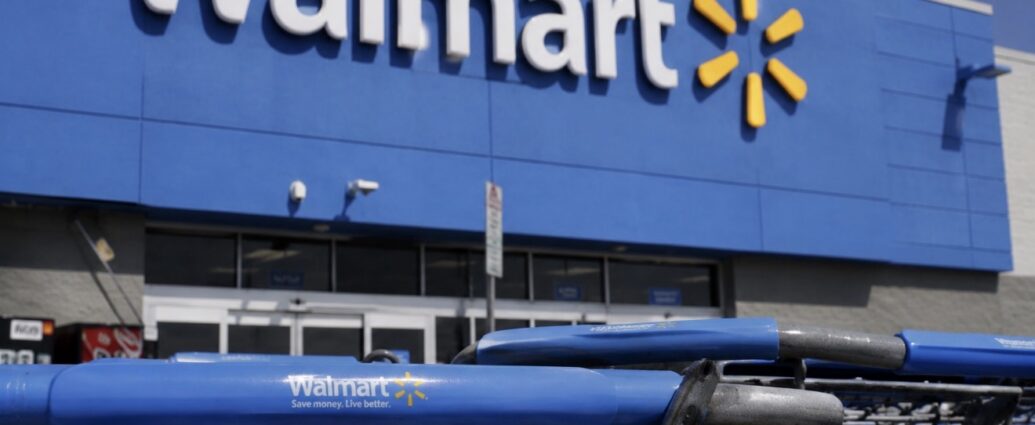
Walmart Inc. confirmed in internal memos circulated to staff on Friday, May 22, 2026, that two of its senior executives are departing the company. Tom Ward, chief operating officer of warehouse-club arm Sam’s Club, is retiring, and Cedric Clark, executive vice president of U.S. store operations, is leaving the business altogether. The memos, distributed from Walmart’s Bentonville, Arkansas headquarters, mark the first major leadership turnover under new chief executive John Furner, who succeeded Doug McMillon in February as Walmart’s sixth chief executive in company history.
The internal communications said a replacement for Clark will be named in the “coming weeks.” The timing of Ward’s succession at Sam’s Club has not been disclosed. Both departures come roughly four months into Furner’s tenure and follow the four senior executive elevations he announced in January when he took the top job.
The leadership turnover arrives during a period of sustained operational strength at Walmart. The company reported fiscal first-quarter earnings on Thursday, May 21, with mixed results, telling investors its business remains strong despite consumer pressures from elevated gas prices and the lingering economic strain of the U.S.-Iran war. Walmart’s e-commerce and delivery network now reaches 95% of U.S. households in under three hours, a capability the company has built through aggressive investment in supply chain technology and fulfillment automation.
Furner, a 32-year Walmart veteran who previously ran Walmart U.S. and Sam’s Club U.S., has signaled from the outset that his agenda centers on consolidating decision-making and harnessing artificial intelligence across retail operations. In a January statement, Furner said: “As AI rapidly reshapes retail, we are centralizing our platforms to accelerate shared capabilities, freeing up our operating segments to be more focused on and closer to our customers and members.”
That centralization push is the strategic context for the latest departures. Walmart has invested heavily in generative AI shopping tools, automated fulfillment, and a platform consolidation strategy that pulls historically separate operating units — Walmart U.S., Sam’s Club, and Walmart International — onto shared digital infrastructure. The reorganization has elevated technologists and platform leaders while compressing the traditional store-operations hierarchy that Clark oversaw.
Furner’s January reshuffle installed Daniel Guggina as the new chief operating officer of Walmart U.S., replacing Furner himself in that role. Chris Nicholas, formerly chief executive of Sam’s Club U.S., was promoted to president and chief executive of Walmart International, succeeding Kathryn McLay, who departed the company on April 30, 2026, after a decade of service. Latriece Watkins stepped up to lead Sam’s Club U.S. The company also added Shishir Mehrotra, chief executive of Superhuman and former leader at Grammarly, to its board of directors in January, deepening the technology bench at the governance level.
The board has telegraphed strong support for the transition. Lead independent director Randall Stephenson noted in Walmart’s 2026 proxy statement that the succession has been “seamless” and that the board “remains highly engaged in talent development and succession planning.” Chairman Greg Penner, a member of the Walton family that founded the company, has publicly endorsed the centralization strategy.
The financial backdrop is robust. Walmart returned $15.6 billion to shareholders through dividends and share repurchases in fiscal 2026 and authorized a new $30 billion share repurchase program. The company posted $483 billion in U.S. net sales and more than $713 billion in total revenue. Its market capitalization places it among the most valuable U.S. companies by enterprise scale, behind only the largest Magnificent 7 technology names.
The departing executives leave substantial legacies. Tom Ward, a longtime Walmart veteran, was central to building out Sam’s Club’s member experience and supply chain capabilities during a period of intensifying rivalry with Costco. Cedric Clark oversaw store operations across Walmart’s roughly 4,600 U.S. stores, responsible for execution at the physical heart of the business — the in-store experience that still generates the majority of company revenue despite the rapid growth of e-commerce.
The pattern of senior departures and internal promotions suggests Furner is consolidating authority around a smaller, more technology-focused leadership group. That mirrors the playbook used by other large-cap retailers — including Target under chief executive Brian Cornell and Amazon under chief executive Andy Jassy — as they reorganize around AI-enabled supply chain, merchandising, and customer-service capabilities.
For investors, the leadership churn at Walmart is being read as confirmation that Furner intends to move quickly. The company has long been seen as a deliberate, slow-changing institution under Doug McMillon’s 11-year tenure. Furner’s willingness to reshape his executive bench within four months marks a notable shift in pace. Whether that velocity translates into accelerated earnings growth, faster e-commerce gains against Amazon, and stronger differentiation against Costco and Target will be the central question heading into the company’s fiscal second-quarter results later this summer.
For Walmart’s more than two million U.S. associates and its global workforce, the message from the top is clear. The company that has dominated American retail for two decades is preparing for a different kind of next decade, and the leadership team being assembled in Bentonville reflects that bet.
— JBizNews Desk
© 2026 JBizNews. All Rights Reserved. Reproduction or distribution without written permission is prohibited.