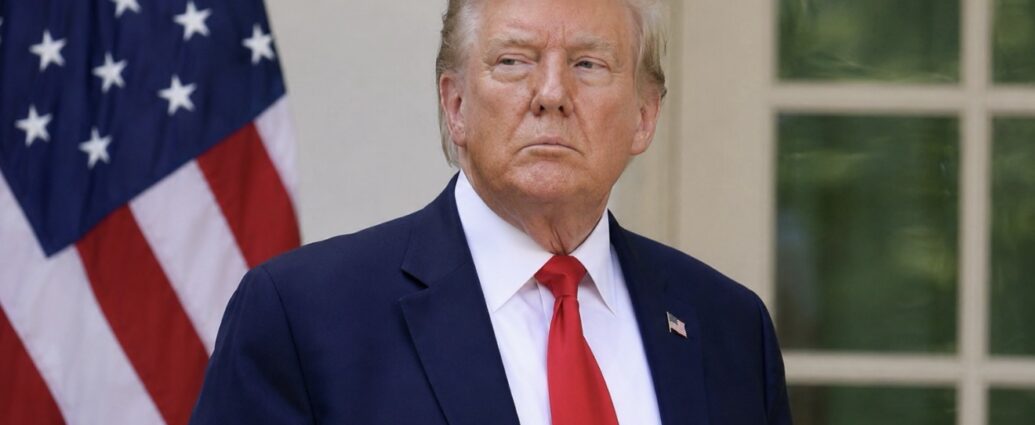
May 24, 2026 — President Donald Trump slowed momentum toward a potential Iran agreement Sunday, warning negotiators not to rush into a deal as oil markets, inflation fears and mounting Republican backlash collided with White House efforts to stabilize the global economy before the 2026 midterms.
“The negotiations are proceeding in an orderly and constructive manner, and I have informed my representatives not to rush into a deal — time is on our side,” Trump wrote Sunday morning on Truth Social, a sharp change in tone from Saturday’s declaration that an agreement with Tehran had been “largely negotiated, subject to finalization.”
Trump also confirmed that the U.S. naval blockade on Iranian ports, imposed April 13 after Iran threatened commercial shipping lanes, “will remain in full force and effect until an agreement is reached, certified, and signed.”
“Both sides must take their time and get it right,” the president wrote. “There can be no mistakes!”
The reversal immediately eased concerns among Republican national-security hawks who feared the administration was moving too quickly toward an agreement that would leave Iran financially and militarily intact in exchange for temporary market stability and lower oil prices heading into the election season.
According to Axios, the proposed framework under discussion would include a 60-day ceasefire extension, the reopening of the Strait of Hormuz, renewed Iranian oil exports, sanctions relief and the release of tens of billions of dollars in frozen Iranian assets. Iranian outlet Tasnim reported the U.S. naval blockade itself could be dismantled within 30 days under the first phase of the agreement.
Trump moved Sunday to distance the negotiations from former President Barack Obama’s 2015 nuclear deal, calling the JCPOA “one of the worst deals ever made by our Country” and “a direct path to Iran developing a Nuclear weapon.” The current negotiations, he said, are “THE EXACT OPPOSITE.”
The Strait of Hormuz — the narrow passageway connecting the Persian Gulf to global shipping lanes — handles roughly 20% of the world’s seaborne oil supply, making the negotiations one of the most consequential economic flashpoints in the world economy. Since the war intensified this spring, energy traders, manufacturers, shipping companies and central banks have been bracing for a prolonged disruption capable of pushing inflation sharply higher worldwide.
Iran’s Revolutionary Guard told Fars News Agency on Sunday that only 33 vessels passed through Hormuz during the prior 24 hours, far below the prewar daily average of roughly 140 ships. Fars also reported that approximately 240 vessels remain queued awaiting Iranian authorization to transit the waterway, underscoring Tehran’s continuing leverage over one of the world’s most important energy chokepoints despite the American blockade on Iranian ports.
Brent crude has already fallen nearly 5% over the past week while West Texas Intermediate has dropped more than 7%, with traders rapidly unwinding wartime risk premiums that had built up earlier this month. Brent settled Friday near $103.82 per barrel while WTI closed near $97 as markets increasingly priced in a possible de-escalation scenario.
The pullback has already started easing pressure on American consumers after gasoline prices surged to wartime highs of roughly $4.48 per gallon earlier this month. But the inflation shock from the conflict continues rippling through supply chains, transportation costs and manufacturing inputs, keeping pressure on the Federal Reserve as headline inflation climbed to 3.3% in March, its highest reading since May 2024.
With midterm elections now just months away, the administration is balancing military leverage against growing voter anxiety over energy costs, inflation and recession fears. Goldman Sachs recently raised its recession probability outlook to 30%, while JPMorgan placed the odds even higher at 35%.
Secretary of State Marco Rubio acknowledged Thursday there were “good signs” negotiations were progressing but warned any arrangement would become “unfeasible” if Iran seeks permanent control over shipping through Hormuz, including the possibility of imposing transit tolls on commercial traffic.
The unresolved disputes over Hormuz transit authority, sanctions relief and Iran’s enriched uranium stockpile remain the largest obstacles to any final agreement.
Pressure inside Washington intensified dramatically over the weekend as Republican national-security hawks openly warned that Tehran could emerge from the conflict strategically stronger despite months of military strikes.
Sen. Ted Cruz called the reported framework a “disastrous mistake” in an X post that generated more than 6.3 million views within seventeen hours, warning that the administration risked allowing a regime still chanting “death to America” to emerge from the war with renewed oil revenue, sanctions relief and continued nuclear capability.
Sen. Lindsey Graham warned that any agreement leaving Iran effectively controlling the Strait of Hormuz would result in Tehran being viewed globally as “a dominate force.” Senate Armed Services Committee Chairman Roger Wicker called the proposed ceasefire structure “a disaster” that would render the gains of the U.S.-Israeli military campaign “for naught,” while Senate Intelligence Chairman Tom Cotton amplified Graham’s warning through official Senate Republican channels.
The criticism reflects growing fears among conservative national-security voices that Tehran is pursuing the same strategy it has relied on for decades: absorb military punishment, survive politically, regain access to capital markets and rebuild over time.
Iran’s missile infrastructure remains largely intact despite months of strikes, and Western intelligence officials continue monitoring reports that Tehran is rebuilding portions of its ballistic missile arsenal while deepening military coordination with China, including discussions involving anti-ship missile systems and advanced satellite-guidance technology.
For now, Trump appears determined to avoid rushing into an agreement that could fracture his political coalition while giving Tehran economic breathing room without permanently dismantling its nuclear and missile capabilities.
Whether Iran is willing to negotiate under a slower timetable — particularly with the naval blockade still fully operational — now becomes the central question heading into the week ahead.
For global markets, the stakes extend far beyond diplomacy. The outcome of the negotiations will shape oil prices, inflation trends, shipping flows, central-bank policy and the broader direction of the world economy through the second half of 2026.
For now, the blockade remains in place. Oil continues moving cautiously through Hormuz. And traders, businesses and governments worldwide remain suspended between the possibility of stabilization and the risk of another major escalation.
JBizNews Desk
© 2026 JBizNews. All Rights Reserved. Reproduction or distribution without written permission is prohibited.