By JBizNews Desk
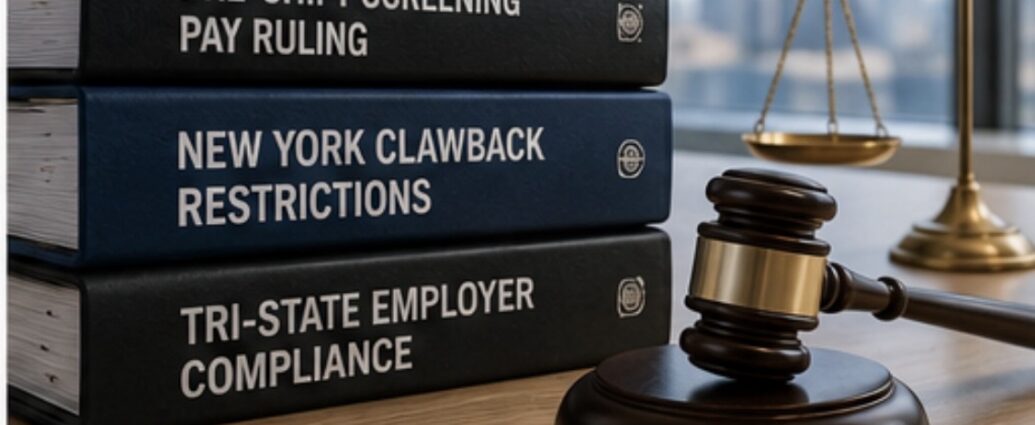
Hartford, Conn. — May 26, 2026 — Employers across New York, New Jersey and Connecticut are entering one of the most aggressive labor-compliance expansions in years as new warehouse regulations, wage-and-hour rulings, clawback restrictions and worker-protection laws begin reshaping payroll exposure and employment practices throughout the tri-state economy.
The changes span multiple states and industries simultaneously, forcing companies to rework employment agreements, scheduling systems, productivity metrics and compensation policies heading into the second half of 2026.
Connecticut has emerged as one of the latest states targeting warehouse productivity systems tied to algorithmic performance monitoring.
A new law approved by the Connecticut General Assembly and taking effect July 1 regulates productivity quotas used by warehouse and logistics operators, joining similar frameworks already enacted in California, New York and Minnesota.
The statute requires employers to disclose productivity quotas in writing, prohibits quota structures that interfere with legally required meal or bathroom breaks and creates new legal pathways for workers disciplined under undisclosed performance systems.
The law directly affects distribution operations tied to companies including Amazon, FedEx, UPS and a rapidly expanding network of third-party logistics firms operating across the Bridgeport, Hartford and New Haven corridors.
At the same time, the Connecticut Supreme Court unanimously ruled in February that employees must be compensated for time spent undergoing mandatory pre-shift security screenings conducted on employer property.
The ruling immediately expanded wage-and-hour exposure for casinos, warehouse operators, retailers and distribution employers across the state.
Operators including Foxwoods Resort Casino, Mohegan Sun and major retail centers are now facing both prospective payroll increases and potential retroactive litigation tied to uncompensated screening time.
Plaintiffs’ attorneys reportedly began filing test cases within weeks of the ruling.
New York employers are confronting a separate but equally significant regulatory shift.
The state recently enacted new restrictions limiting the use of employer clawback clauses tied to signing bonuses, training expenses and relocation packages.
The law narrows employers’ ability to demand repayment from workers who voluntarily resign under ordinary circumstances, while still preserving more limited clawback authority tied to misconduct or cause-based termination.
The changes are already forcing reviews of standard employment agreements across Wall Street, private equity, technology and biotech sectors.
Major firms including JPMorgan Chase, Goldman Sachs, Morgan Stanley, Citigroup, Pfizer and Regeneron Pharmaceuticals are reportedly reassessing portions of existing compensation and retention structures in response to the new framework.
The broader labor-regulation map across the tri-state region is also continuing to expand.
New York City has broadened paid sick and safe leave rules, added new paid prenatal leave requirements and tightened restrictions surrounding employer use of consumer credit history in hiring decisions.
Meanwhile, the New York City Council continues debating a proposal supported by Mayor Zohran Mamdani that would raise the city’s minimum wage to $30 per hour — potentially the highest municipal wage floor in the United States.
New Jersey is simultaneously expanding transparency rules, anti-discrimination standards and pay-data reporting obligations through the state Department of Labor and Workforce Development.
Governor Mikie Sherrill’s administration has also signaled support for additional worker-protection legislation during the 2026 session.
At the federal level, the National Labor Relations Board recently reinstated the narrower pre-Biden joint-employer standard first adopted in 2020, modestly easing employer exposure tied to staffing agencies, contractors and franchise relationships.
But for most companies, state-level regulation is increasingly driving the larger compliance burden.
Insurance and risk-management firms say the complexity is accelerating quickly.
Acrisure warned in a recent 2026 compliance briefing that even a single remote employee working from another jurisdiction can expose an employer to an entirely different state’s labor requirements and litigation standards.
For businesses operating across New York, New Jersey, Connecticut and Pennsylvania, the practical implications are becoming unavoidable.
Employment contracts, leave policies, productivity systems, payroll practices, screening procedures and wage forecasting models all increasingly require state-by-state restructuring.
The cost of compliance is rising rapidly.
The cost of getting it wrong is rising even faster.
JBizNews Desk
© 2026 JBizNews. All Rights Reserved. Reproduction or distribution without written permission is prohibited.