By JBizNews Desk
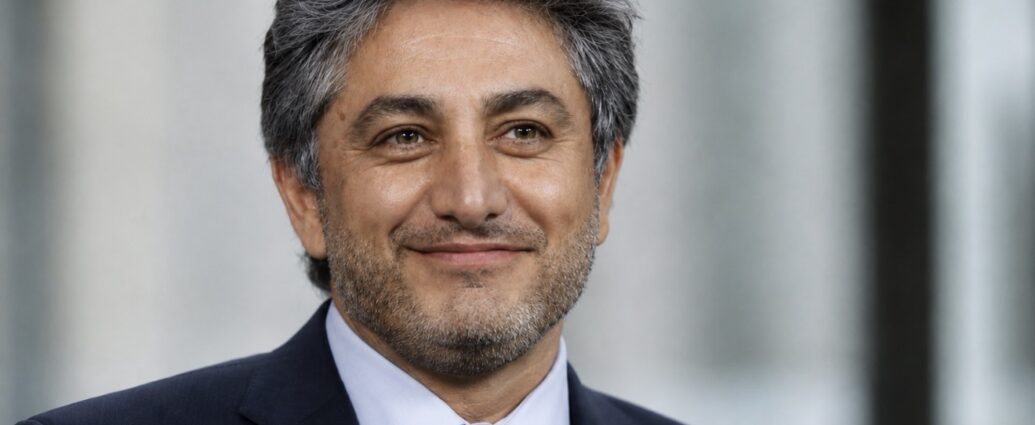
NEW YORK — A newly disclosed SpaceX S-1 filing, surfaced this week ahead of what is shaping up to be the largest initial public offering in history, shows that Antonio Gracias, the founder of Valor Equity Partners and one of Elon Musk’s closest longtime associates, is positioned to capture a fortune estimated between $90 billion and $140 billion from the deal, while his firm is simultaneously owed nearly $20 billion by SpaceX under a series of related-party equipment lease agreements that have already triggered scrutiny from auditors and corporate governance specialists.
According to the filing, dated Monday, May 25, 2026, Valor-affiliated entities collectively control more than 500 million shares of SpaceX Class A stock, representing roughly 7.3% of the company. The disclosure effectively makes Gracias the second-largest individual shareholder in SpaceX behind Musk himself. At the roughly $1.75 trillion valuation reported by Bloomberg and Reuters, the stake would be worth approximately $90 billion. At a $2 trillion valuation — a figure floated by some early investors — the holdings would exceed $140 billion, instantly placing Gracias among the wealthiest individuals in the world.
Gracias, 55, founded Valor Equity Partners in Chicago and has spent more than two decades inside Musk’s business orbit. He reportedly lent Musk approximately $1 million during Tesla’s earliest days, later served eight years as Tesla’s lead independent director, and held board positions across several Musk-controlled companies, including SpaceX, SolarCity, Neuralink, and The Boring Company. Valor also became one of the earliest institutional investors across Musk’s expanding corporate network.
But the new filing reveals a second and far more controversial layer to the relationship.
According to the S-1, an xAI subsidiary called CTC entered into a series of equipment lease agreements with Valor beginning in October 2025 for high-performance Nvidia GPU infrastructure used in artificial intelligence data centers. Additional agreements followed in January and April 2026. Together, the three transactions obligate SpaceX to make nearly $20 billion in payments to Valor-linked entities over the life of the agreements.
At the time the first lease was executed, xAI remained a separate Musk-controlled company before later being folded into SpaceX earlier this year. The filing states that SpaceX has now guaranteed the obligations tied to the agreements.
The structure quickly attracted accounting scrutiny from PricewaterhouseCoopers, SpaceX’s outside auditor. According to the filing, PwC determined the agreements function economically more like financing arrangements or loans than traditional sale-leaseback transactions because CTC retained operational control over the GPU infrastructure while Valor effectively acted as a secured lender.
As a result, PwC required SpaceX to classify approximately $9 billion of the obligations as related-party debt directly on the company’s balance sheet rather than allowing the transactions to remain off-balance-sheet lease structures.
The disclosure also revealed that xAI separately carried secured senior notes priced at an unusually high 12.5% interest rate — a level corporate finance analysts typically associate with distressed or high-risk borrowers. Analysts say the aggressive financing terms help explain why SpaceX guarantees were necessary to complete the Valor transactions.
Once SpaceX becomes publicly traded, those obligations effectively transfer to incoming retail and institutional shareholders, who would inherit billions in liabilities negotiated while the company operated privately and outside standard public-market disclosure requirements.
The pace of payments has already accelerated rapidly. SpaceX reported approximately $885 million in payments to Valor-linked entities during 2025 and an additional $857 million during just the first two months of 2026, according to the filing. The figures illustrate how central Valor has become to Musk’s AI infrastructure expansion strategy.
Neither Valor Equity Partners nor SpaceX publicly responded Monday to questions regarding the structure of the transactions. Governance experts reviewing the filing raised concerns about the concentration of influence surrounding Gracias, who simultaneously serves as a major shareholder, board-level insider, and one of the company’s largest related-party creditors.
Institutional investors are expected to press management heavily on the issue during the eventual IPO roadshow, particularly as public-market scrutiny intensifies around related-party transactions, governance safeguards, and Musk’s increasingly interconnected corporate empire.
The Valor disclosures also arrive amid a broader financing push tied to AI infrastructure demand. The filing references efforts to secure up to $20 billion in additional GPU-related financing involving Apollo Global Management, Nvidia, and other lenders connected to large-scale data-center buildouts. Apollo separately announced a $3.5 billion financing arrangement for Valor Compute Infrastructure supporting a $5.4 billion hardware acquisition and leaseback strategy.
Gracias briefly followed Musk into government service last year through a role connected to the Department of Government Efficiency, before later stepping down amid scrutiny tied to his simultaneous oversight of public pension assets.
For Gracias, the SpaceX IPO could convert decades of loyalty to Musk into one of the largest fortunes ever created by a venture investor. For incoming shareholders, however, the filing raises a more immediate question: whether the web of insider financing relationships exposed in the S-1 can withstand the discipline and transparency demanded by public markets.
© 2026 JBizNews. All Rights Reserved. Reproduction or distribution without written permission is prohibited.