By JBizNews Desk
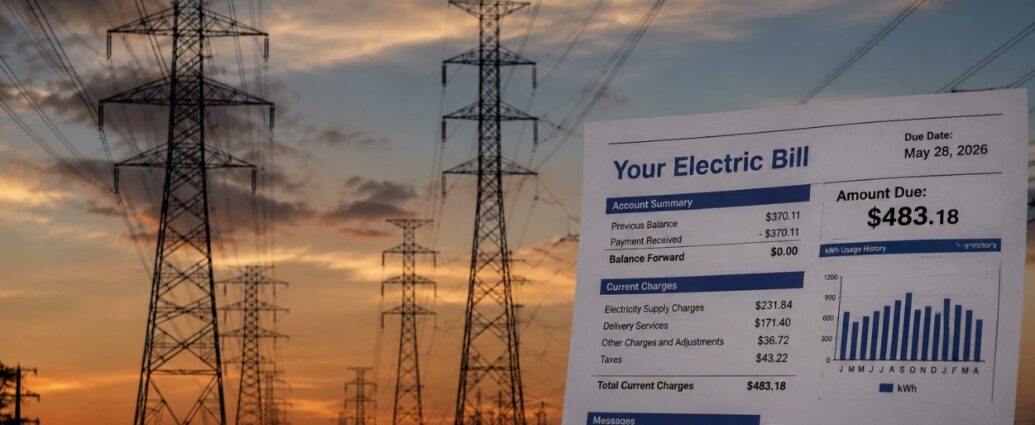
WASHINGTON — Fresh data published Monday, May 25, 2026, by the U.S. Energy Information Administration, alongside polling from the Kaiser Family Foundation and Climate Power, confirms that surging household electricity bills have moved to the center of the 2026 midterm election landscape, with affordability now eclipsing immigration, foreign policy, and even gasoline prices as the defining kitchen-table concern for voters across battleground states.
According to the EIA, average U.S. residential electricity rates rose nearly 13% nationwide between April 2020 and April 2025, and another 6% since President Donald Trump returned to office in January 2025. The agency projects rates could climb another 6% in 2026 and as much as 40% by 2030 if current trends in demand growth, infrastructure spending, and capacity constraints continue.
The increases are landing hardest in regions where voters had gone years without major utility hikes, transforming electric bills from a background expense into a central political issue heading into November.
The political consequences are already emerging. Climate Power, a Democratic-aligned advocacy organization, surveyed 2,710 voters nationwide in January and found that 84% cited rising electricity bills as a major economic concern. A separate Kaiser Family Foundation survey of 1,426 voters found 80% identified affordability as the most important issue heading into the election cycle, with electricity costs ranking just behind groceries and gasoline among the sharpest household pressures.
The epicenter of the crisis sits within PJM Interconnection, the regional grid operator serving 65 million Americans across 13 states and Washington, D.C. Capacity prices in PJM’s latest base residual auction reached $329.17 per megawatt-day, compared with just $28.92 two years earlier — a more than tenfold increase now flowing directly into residential utility bills.
Independent market monitor Monitoring Analytics attributed roughly 63% of the 2025–2026 auction price surge to soaring electricity demand from AI-focused data centers, translating into approximately $9.3 billion in additional annual costs for ratepayers.
The Natural Resources Defense Council estimates that without major regulatory intervention, cumulative costs tied to data-center-driven infrastructure expansion could reach between $100 billion and $163 billion for PJM customers through 2033. Tom Rutigliano, a senior advocate at NRDC, said the imbalance between exploding AI electricity demand and declining reliability from aging power generation is now driving capacity markets into crisis territory.
Pennsylvania Governor Josh Shapiro has emerged as one of the most aggressive political figures confronting the issue. Shapiro sued PJM over its pricing methodology in 2024 and later secured a settlement his office says saved consumers roughly $18 billion. At the same time, the governor has continued supporting selective data center investment projects, including public appearances with executives from PPL Corporation and Blackstone Inc. tied to new gas-fired generation projects intended to support AI infrastructure.
That balancing act increasingly reflects the broader national political dilemma: state leaders want the jobs and investment associated with hyperscale AI infrastructure while simultaneously trying to shield voters from rapidly rising utility bills.
The electoral warning signs are already visible. In Georgia’s 2025 off-year elections, Democratic challengers defeated two Republican incumbents on the Georgia Public Service Commission after campaigning heavily against repeated utility-rate increases approved for Georgia Power customers. Typical residential bills there have climbed to roughly $175 per month after multiple hikes over the past two years.
Georgia Power has since proposed another $15 billion in new generation investment, much of it designed to serve growing data center demand around Atlanta and rural Georgia counties aggressively courting AI infrastructure projects.
The pressure extends well beyond PJM territory. In Virginia, Dominion Energy customers are expected to absorb roughly $11 per month in additional charges this year and another increase in 2027. The Virginia State Corporation Commission approved a dedicated rate structure in late 2025 requiring large-scale customers, including AI data centers, to absorb a greater portion of transmission and generation costs beginning in 2027 — an effort regulators explicitly framed as protecting ordinary households from subsidizing hyperscale computing facilities.
A February report from Morgan Stanley Wealth Management, led by strategist Monica Guerra, described the situation as “the American energy paradox,” noting that the United States is simultaneously producing record oil and exporting record natural gas while household electricity affordability deteriorates across multiple swing states.
Republicans, who currently control the White House, Senate, and House of Representatives, enter the election cycle particularly exposed. Democrats are increasingly attempting to tie electricity costs to federal permitting policy, grid reliability concerns, and energy investment decisions made under the Trump administration, while Republicans argue that aggressive electrification policies and grid-transition mandates imposed over recent years accelerated the imbalance between supply and demand.
Several congressional battlegrounds in Pennsylvania, Michigan, Georgia, Virginia, Texas, Ohio, and California now overlap directly with regions experiencing both aggressive AI data center expansion and rising residential utility rates.
Consumer advocates warn the political pressure may intensify further because many approved utility increases have not yet fully appeared on household statements. Charles Hua, executive director of advocacy group PowerLines, said rate increases approved during the past 18 months are only beginning to flow through into customer bills and are likely to become more visible during the peak summer cooling season.
For millions of Americans opening utility bills while watching AI campuses rise across suburban and rural communities, the political question heading into November is becoming increasingly straightforward: who is paying for the infrastructure boom, and who is benefiting from it.
© 2026 JBizNews. All Rights Reserved. Reproduction or distribution without written permission is prohibited.