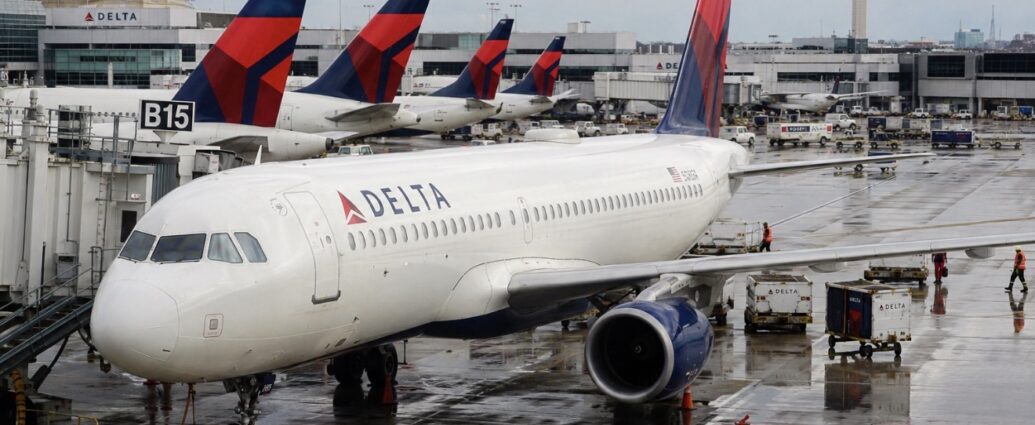
Delta Air Lines is hiring more pilots and rebuilding the teams that schedule its flight crews after internal staffing-system breakdowns pushed cancellations sharply above much of the U.S. airline industry, according to company memos and comments from senior executives this month.
The operational strain comes at a critical moment for the carrier as the summer travel season begins ramping up.
“Our challenges, while not systemic, highlight where we must sharpen our operational edge,” Dan Janki, Delta’s chief operating officer, wrote in an internal employee memo addressing the situation.
At the center of the problem is Delta’s ability to quickly locate replacement pilots when original crew assignments become unavailable.
In an April 24 memo first reported by USA Today, Ryan Gumm, Delta’s senior vice president of flight operations, told employees that cancellations tied directly to pilot availability are running more than ten times historical norms and now account for approximately 35% of Delta mainline cancellations, up sharply from roughly 7% in 2024.
For certain aircraft types, Gumm said, it can now take Delta as long as 12 hours to secure a pilot replacement for a single flight.
A major factor behind the breakdown is that pilots are increasingly refusing additional trip assignments.
According to Gumm’s memo, pilot acceptance rates for uncovered flights have collapsed to roughly 2% this year, compared with approximately 37% a year ago. With fewer pilots volunteering to cover open trips, Delta has increasingly relied on an emergency contract mechanism known internally as “23.M.7” to fill last-minute scheduling gaps.
The system was originally designed for isolated operational emergencies — not daily usage across a large airline network.
Gumm acknowledged in the memo that Delta is now using the emergency scheduling tool between 10 and 15 times more frequently than last year, often creating cascading disruptions as reassigned pilots leave later flights short-staffed.
The operational weakness became highly visible during the first weekend of May when Delta canceled hundreds of flights despite relatively modest weather disruptions across parts of the country.
Competing airlines including American Airlines, United Airlines, and Southwest Airlines largely maintained stable operations during the same period.
According to aviation analytics firm Cirium, Delta’s domestic cancellation rate has remained above the overall U.S. airline average for much of 2026, with notable spikes in January and March before modest improvement during April and May.
The problems represent a rare stumble for an airline long viewed as the operational benchmark of the U.S. industry.
Delta’s reputation for reliability has supported premium pricing, strong customer loyalty, and some of the strongest profit margins in the airline sector for years.
Chief Executive Ed Bastian acknowledged during Delta’s recent first-quarter earnings call that changes to pilot-routing and scheduling systems under the current labor agreement contributed to recent operational stress.
Bastian said the company is devoting significant attention to restoring consistency and admitted recovery performance following weather disruptions had not always met Delta’s internal standards.
Pilot representatives have sharply criticized management’s handling of the situation.
The Air Line Pilots Association, which represents Delta pilots, told USA Today that the disruptions reflect “mismanagement of resources, lack of proper tools and training for crew schedulers, and numerous misguided attempts to pinch pennies.”
Pilots have also argued the company bypassed portions of the contractual trip-assignment process, contributing to frustration among senior pilots and reducing willingness to voluntarily pick up additional flights.
The labor tension arrives ahead of upcoming contract negotiations, with Delta’s current pilot agreement becoming amendable at the end of this year.
Delta says it is now accelerating hiring, expanding reserve-pilot pools, and adding additional staffing to crew scheduling and tracking departments in an effort to stabilize operations before peak summer demand.
According to Gumm, Delta currently employs approximately 20% more pilots than it did before the pandemic in 2019, and pilot hiring has outpaced overall flight-hour growth.
The airline also accelerated application reviews for pilots formerly employed by Spirit Airlines, which ceased operations earlier this month, while offering free standby travel to displaced Spirit employees.
Despite the recent turbulence, Delta’s broader financial position remains strong.
The company reaffirmed its full-year guidance during its first-quarter earnings call, citing resilient premium-cabin demand and continued growth in its lucrative SkyMiles partnership with American Express.
Wall Street analysts continue monitoring operational metrics closely as summer travel volumes rise and thunderstorm season approaches.
This is also not Delta’s first major operational technology setback in recent years.
The carrier faced heavy criticism during the 2024 CrowdStrike outage, when faulty cybersecurity software disrupted millions of Microsoft Windows systems globally. Delta’s recovery lagged behind several competitors, sparking public disagreements between Delta, CrowdStrike, and Microsoft over responsibility for the prolonged disruptions.
Industry-wide pressures remain significant as airlines continue navigating strained air-traffic-control staffing, weather volatility, and elevated operating costs.
But analysts note that Delta’s current problems appear driven primarily by internal scheduling systems and labor-management issues rather than broader external disruptions.
For investors and travelers alike, the key question now is whether Delta can stabilize operations before the busiest travel stretch of the year intensifies pressure across the network.
With peak summer travel approaching rapidly, Delta’s performance will likely be judged less by internal memos and more by what passengers ultimately see on airport departure boards.
JBizNews Desk — Atlanta
© 2026 JBizNews. All Rights Reserved. Reproduction or distribution without written permission is prohibited.