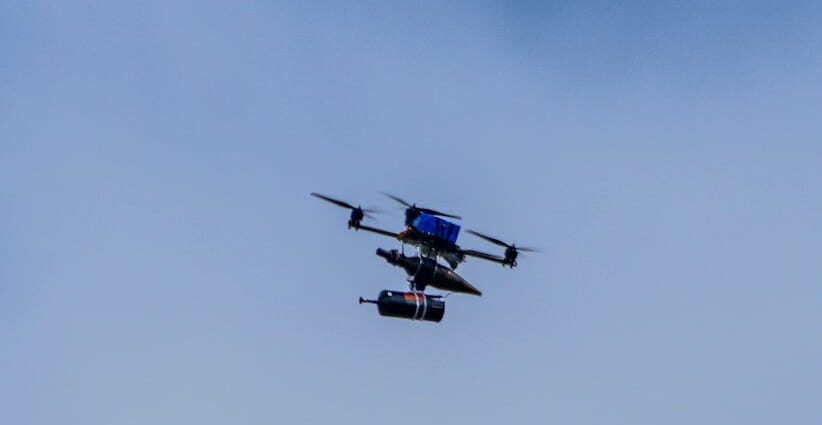
Two weeks ago, I went up to the Lebanese border in northern Israel. It was a beautiful spring day as Israel moved into summer, and the heat was beginning to rise. I knew there was an increased threat from Hezbollah FPV fiber optic drones, but I also knew that the northern border had been changed from a closed military zone back in 2023-2024 to an area people could return to.
Rosh Hanikra was one place where people had slowly returned. There were visitors to the border site, which overlooks the Mediterranean. Some people had come for the views. One couple cracked open beers and sat on lawn chairs next to a small caravan. One might almost imagine there was no war – but there were soldiers nearby.
Days after the visit, a Hezbollah drone impacted the area, just meters from where I had been. Hezbollah drones have also been fired in other areas I have visited, such as near Arab al-Aramshe.
Now these border areas are once again a war zone. The sense of a slight opening for peace and quiet is gone. The April ceasefire did not bring a cease in fire. Hezbollah has increased its use of the drones, flown on a small cable that enables them to avoid jamming. Although Israel is racing to find a solution, the fact is that the drone threat has appeared to outsmart Israel momentarily.
Some of this may be due to hubris and not wanting to learn from Ukraine. While Israel’s defense industry does look to Ukraine to understand war, there is a quiet hostility toward the country at the higher political levels. This may have led Israel to resist learning and to assume that it is always right and always knows best.
Now Israel is going back into Lebanon with yet another offensive. There is big talk in Jerusalem about crushing Hezbollah and “hitting the gas” on the group, increasing the “pressure” again. But Hezbollah has seen this before. For 960 days of war, Israel has fought the terror group. In fact, it has been fighting Hezbollah since the 1980s.
Hezbollah emboldened every time Israel left Lebanon
Hezbollah sapped Israel’s strength in the 1980s and 1990s when the Jewish state controlled a security zone along the border. At the time, the IDF also worked with local fighters from what was called the SLA, a group of mostly Christian fighters who worked with Israel against Hezbollah. Israel left Lebanon in 2000, closing the gate and hoping the enemy would go away. Instead, Hezbollah was emboldened and continued its attacks.
After the Hamas attack that led to the kidnapping of Gilad Schalit to Gaza in 2006, Hezbollah plotted a new attack, kidnapping and killing IDF soldiers. This led to the 34-day 2006 war. Then there was relative quiet until around 2018, when the Syrian regime returned to the Golan border, Hezbollah deployed there alongside it, and increased its presence.
The terror group moved assets closer to the Golan and prepared a drone team to target Israel. Israel responded, and concerns about escalation grew. Hezbollah threatened Israel, and at the time, appeasement was the way forward. Hezbollah later carried out attacks near the border, and Israel launched an operation to find tunnels. In 2022, Hezbollah also issued threats in connection with a maritime deal and infiltrated near Mount Dov.
It was also behind an attack near Megiddo and rocket fire on Passover 2023. On October 8, 2023, it joined Hamas in its attacks. In September 2024, the IDF began to respond more strongly to Hezbollah, and the group took a beating. However, despite a ceasefire in November 2024 and losing its Assad regime ally in December 2024, Hezbollah has continued to be a threat.
A year of precision strikes in 2025 didn’t destroy the group. Neither did the March 2026 offensive.
Now Israel is back to fighting. The question is how to stop the enemy this time. Israelis in the north continue to live under threat, their lives disrupted for years. The situation is intolerable. They want a solution, but they also know that despite all the work being done along the border – with a new fence and also razing many Shi’ite villages on the other side – the military goals are tough to achieve.
The IDF these days prefers slow operations, narrowly tailored. Although it achieves impressive tactical results, the overall political strategy is unclear. Lebanon’s president, prime minister, and army chief are unwilling to fully confront Hezbollah. As such, the terror group continues its war on Israel and hopes that an Iran deal might help it secure yet another ceasefire in Lebanon.
The current escalation is a new round. Without a new concept of what will work this time, more talk of crushing Hezbollah may end with more videos of its “terrorist infrastructure” being destroyed – but the group may once again redeploy from place to place, hiding out in Beirut or the Bekaa Valley or other locales. Hezbollah has proven that it can do this and even rearm despite losing out on smuggling from Syria and possibly losing some financial support from Iran.