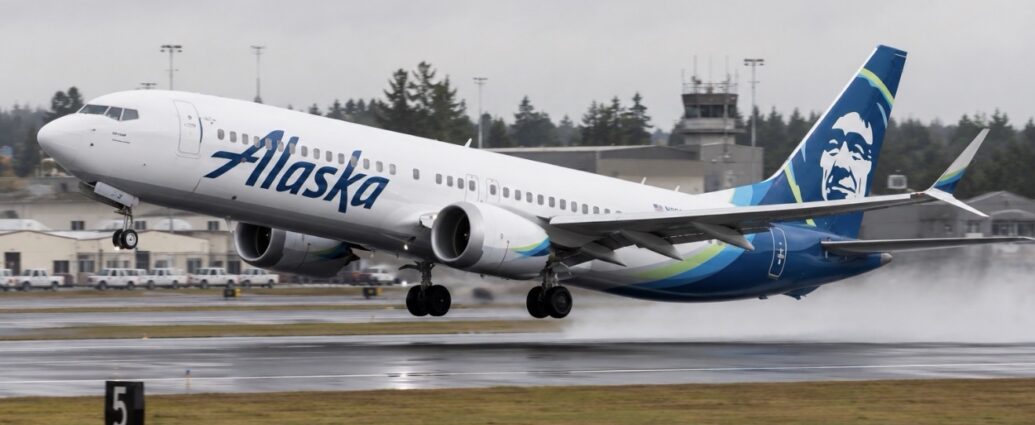
WASHINGTON — The Federal Aviation Administration (FAA) said Tuesday, May 26, 2026, that it is proposing a $165,000 civil fine against Alaska Airlines for allegedly allowing visibly intoxicated passengers to board 11 separate flights between February 2024 and February 2025, part of a broader federal crackdown on impairment and airline safety compliance.
In a statement released Tuesday, the FAA said federal aviation regulations prohibit airlines from allowing passengers who appear intoxicated to board commercial aircraft. The rule applies both to gate agents and flight attendants, who are expected to stop impaired travelers before they enter the aircraft cabin.
The agency did not identify the specific routes involved or disclose the conduct of the passengers at issue, but regulators said the violations occurred across multiple flights over a one-year period.
Alaska Airlines spokesperson Tim Thompson confirmed the carrier cooperated with the FAA’s review.
“We take seriously our responsibility to provide a safe and secure environment for our guests and employees,” Thompson said. “We participated fully with the FAA’s audit of our policies and practices as it relates to intoxicated guests on board our aircraft.”
He added that the airline has already implemented operational changes in response to concerns raised by regulators.
“Since the FAA shared these concerns with us over a year ago, we made meaningful changes to ensure compliance with the FAA’s expectations, including enhanced training for all flight attendants and customer service agents,” Thompson said. “We respect the results of the FAA’s audit and are confident in the changes that have been in place for the last year to ensure our shared standards are being met.”
The enforcement action highlights growing federal concern about intoxicated and disruptive passenger behavior aboard commercial aircraft, an issue that intensified nationwide after the pandemic and has remained a persistent challenge for airlines and flight crews.
Federal regulations under 14 CFR 121.575 prohibit airlines from both serving alcohol to visibly intoxicated passengers and allowing them to board aircraft in the first place. Once onboard, intoxicated travelers can create serious operational and safety risks ranging from medical emergencies and crew interference to violent confrontations and attempted breaches of aircraft systems.
One incident involving Alaska Airlines drew national attention last year. In December 2025, a passenger reportedly intoxicated after several days of drinking opened a cabin door midair during a flight between Deadhorse and Anchorage, Alaska. That event is not among the 11 flights cited in the FAA’s proposed penalty, but it underscored the dangers regulators associate with impaired passengers onboard aircraft.
The FAA’s action against Alaska Airlines is civil rather than criminal. The airline now has 30 days after receiving the enforcement notice to either pay the fine, negotiate a settlement with regulators or formally challenge the penalty before an administrative law judge.
The proposed fine is relatively small financially for the airline. Alaska Air Group, which trades on the New York Stock Exchange under the ticker symbol ALK, generates roughly $11 billion in annual revenue, meaning the penalty itself is unlikely to materially affect earnings.
The reputational impact, however, may matter more.
Alaska Airlines has spent much of the past two years rebuilding public confidence following the highly publicized January 2024 Boeing 737 MAX 9 door-plug blowout, when a fuselage panel detached during an Alaska Airlines flight shortly after takeoff, forcing an emergency landing and triggering a temporary nationwide grounding of that aircraft type.
The carrier also completed its $1.9 billion acquisition of Hawaiian Airlines in September 2024, creating a significantly larger combined airline operation spanning more than 1,200 daily flights and approximately 120 destinations across North America.
The FAA’s move against Alaska Airlines is not happening in isolation.
In April 2026, regulators proposed a separate $255,000 civil penalty against American Airlines after alleging the carrier allowed 12 flight attendants to return to safety-sensitive duties after testing positive for drugs or alcohol without completing required follow-up testing procedures.
According to the FAA, substances identified in that investigation included alcohol, cocaine, marijuana, methamphetamine and amphetamines.
Taken together, the two enforcement actions suggest the FAA is intensifying scrutiny not only of passenger behavior but also of how airlines manage impairment risks among employees and customers alike.
For travelers, the rules remain straightforward. Airlines can legally deny boarding to anyone appearing visibly impaired in the terminal or at the gate, and passengers who become disruptive onboard can face FAA fines of up to $37,000 per violation, in addition to possible federal criminal charges.
So far, investors have shown little reaction to Tuesday’s announcement. Shares of Alaska Air Group were relatively unchanged following the FAA statement.
For Alaska Airlines, however, the issue extends beyond the dollar amount. After years spent working to restore operational credibility following high-profile safety incidents, another FAA enforcement action tied to passenger management is precisely the kind of headline the carrier has been trying to avoid.
For now, the penalty remains only a proposal. The next step belongs to Alaska Airlines.
Washington — JBizNews Desk
© JBizNews.com All Rights Reserved. Reproduction or distribution without written permission is prohibited.