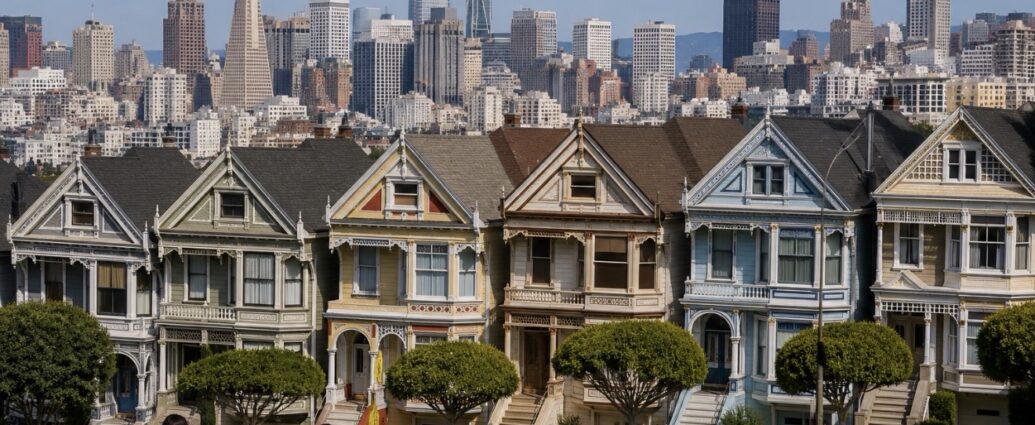
Just a few years ago, San Francisco was widely portrayed as the symbol of America’s urban decline.
Downtown office towers sat nearly empty after the pandemic. Major employers were cutting space. Residents were leaving. Headlines warned of a “doom loop” fueled by crime concerns, collapsing foot traffic, falling tax revenue, and a city that appeared to be losing its grip on both workers and businesses.
Now the picture has completely reversed.
San Francisco rents have surged roughly 22% year-over-year, making the city the fastest-rising major rental market in the United States. Median home prices have climbed back above previous peaks. Luxury bidding wars have returned. One-bedroom apartment rents are averaging roughly $3,415 per month, while two-bedroom apartments are approaching $4,800 per month.
The city everyone said was dying has suddenly become one of the hottest housing markets in America again.
The reason can largely be summarized in two letters: AI.
The artificial intelligence boom has transformed San Francisco from a struggling post-pandemic downtown into the operational center of one of the fastest wealth-creation cycles the technology industry has ever seen.
OpenAI, Anthropic, Scale AI, and dozens of rapidly growing artificial-intelligence startups are headquartered inside San Francisco neighborhoods that only recently were struggling with vacancies and declining office activity.
According to PitchBook data, the San Francisco Bay Area has attracted roughly 70% of all U.S. venture-capital funding tied to AI companies since 2019.
That money is now reshaping the city in real time.
The AI sector’s hiring surge has flooded San Francisco with highly paid engineers, researchers, executives, and startup founders competing for a housing supply that was already severely constrained long before the current boom began.
Compensation packages for senior AI talent routinely range from $500,000 to well over $1 million annually, especially when stock awards are included. Employees at companies such as OpenAI and Anthropic are increasingly viewed inside Silicon Valley as potential future IPO millionaires.
The result is an extraordinary wave of housing demand concentrated inside a city that historically builds far less housing than its workforce growth requires.
According to CBRE, roughly one out of every four square feet of newly leased office space in San Francisco over the past two years has gone to AI-related companies.
Unlike previous tech booms centered around suburban Silicon Valley campuses, the AI industry has concentrated itself directly inside San Francisco neighborhoods such as SoMa, Mission Bay, and Hayes Valley, where younger founders and employees increasingly prefer dense urban living close to offices.
That concentration is rapidly changing rental economics.
Real-estate brokerage data shows luxury home sales climbing sharply, while inventory remains limited. Bidding wars have returned across desirable neighborhoods. One recent Pacific Heights apartment reportedly received 14 offers and sold roughly $400,000 above asking price.
The market is also changing in another important way: AI companies themselves are now directly subsidizing housing for employees.
Several startup founders have publicly described leasing apartments near company offices specifically to recruit and retain workers. Some firms are offering monthly housing stipends for employees who live within walking distance of the office.
That creates an entirely different pricing dynamic than a traditional housing market.
Instead of individual renters competing solely against each other, venture-capital-funded AI companies are effectively bidding for nearby housing on behalf of employees using investor money. That raises the ceiling for what neighborhoods near AI offices can command in rent.
The political backdrop also shifted.
In late 2024, San Francisco elected Mayor Daniel Lurie, who campaigned heavily on restoring downtown activity, improving public safety, and rebuilding business confidence in the city. His first year coincided with the explosive acceleration of AI investment and a broader corporate push back toward office activity.
The combined effect has produced one of the sharpest urban economic reversals in the country.
But the rebound also carries major consequences for ordinary residents.
San Francisco’s widening economic divide is becoming increasingly visible as teachers, service workers, healthcare staff, retail employees, and middle-income families struggle to compete with the purchasing power of AI-sector salaries and stock wealth.
A worker earning a typical middle-class income cannot realistically compete for housing against AI employees earning several hundred thousand dollars annually while receiving additional housing assistance from employers.
As a result, many workers who keep the city functioning are increasingly being pushed farther away from San Francisco itself.
The irony is that the same AI boom reviving the city economically is simultaneously intensifying affordability pressures that were already among the worst in the nation.
Analysts say the broader significance goes beyond California.
San Francisco is becoming the first major real-world test of what happens when artificial-intelligence wealth concentrates rapidly inside a geographically constrained urban economy.
The answer so far is clear: office markets recover quickly, luxury housing explodes higher, venture capital floods in, and affordability pressures intensify across nearly every other layer of the city.
The “doom loop” narrative that dominated San Francisco headlines from 2021 through 2023 has now largely been replaced by something very different — an AI-driven boom cycle powerful enough to overwhelm broader economic pressures such as higher interest rates, geopolitical uncertainty, and slower national housing activity.
For now, the city that Americans were fleeing only a few years ago has become one of the places the technology industry most aggressively wants to be.
The question no longer seems to be whether San Francisco survives.
It is who will still be able to afford living there if the AI boom continues at its current pace.
San Francisco — JBizNews Desk
© JBizNews.com All Rights Reserved. Reproduction or distribution without written permission is prohibited.