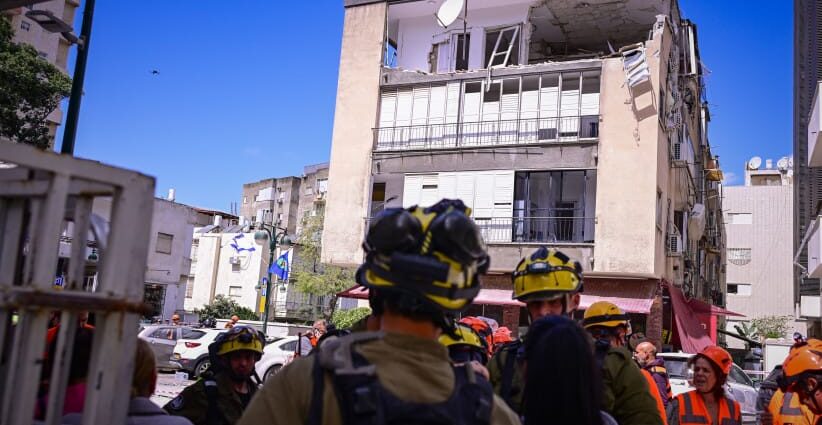
The IDF Home Front Command on Thursday said that its assumption is that after each war, Iran learns new tactics and will pose an even greater threat to Israel’s home front whenever the sides engage in another war.
While there is no date set for a future war, the IDF is worried about the home front being harmed because it is also concerned by the parameters of the current likely Iran deal, which the Trump administration is negotiating.
To date, the greatest threat to Israel’s home front has been Iran’s large, fast, precise, and powerful ballistic missiles.
All indications are that the Trump Iran deal will largely or completely ignore the ballistic missile issue.
In the current moment, this has left the IDF in general, and the Home Front Command in particular, stuck in an extended period of uncertainty about how ready it needs to be for potentially immediately returning to a war footing or if it can start to release more of its emergency reserve staff back to their regular lives.
The IDF Home Front said that it had originally prepared for between 30 and 60 days of war, but that the US, not Israel, has not been in control of when this war would start, when it would escalate, when it would pause, and when it would be considered fully concluded.
Israel fears Iran will adapt weapons after 2026 war
This has imposed significant uncertainty and challenges for crisis and home-front planning.
To that extent, the IDF has said that even US policy has fluctuated wildly, with US President Donald Trump at one point putting a four-week cap on the war and then extending it to six weeks, without even getting into the many imminent threats of returning to war since the April 7 ceasefire.
Despite these problems, the IDF Home Front said that the damage to Israel during the 2026 war had been less than that during the June 2025 war.
Some of this has been because of improved Israelis defenses, but some has been broader factors not specifically connected to Israel, such as that the US was much more involved in the 2026 war and that Iran decided to fire more missiles at the UAE and another 11 Arab and Muslim countries than it did at Israel.
In other words, America’s military striking Iran simultaneously to Israel’s striking it reduced how many missiles the Islamic Republic could fire, and even when it did fire, it launched more than 60% (and according to some, far more) of its missiles at countries other than Israel.