JBizNews Desk
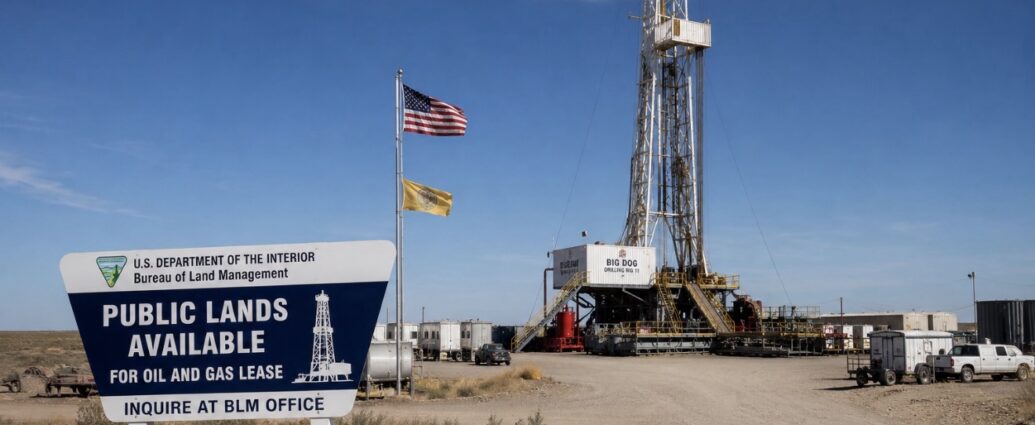
A federal auction of oil and gas drilling rights across public lands in New Mexico and Texas generated more than $4 billion in winning bids and rental payments, according to the U.S. Department of the Interior, shattering the previous record for an onshore federal lease sale as the Iran war drives energy companies into a scramble for American oil acreage.
The scale of the sale was historic.
The Bureau of Land Management leased 74 parcels covering roughly 33,530 acres during its quarterly auction, producing approximately $4.008 billion in bonus bids and rental commitments. The figure demolished the prior record of roughly $972 million set during a 2018 lease sale and instantly became the largest onshore federal oil and gas lease auction in U.S. history.
Most of the acreage sits inside the Permian Basin, the country’s most productive oil field and one of the most valuable drilling regions globally.
The single highest winning bid reached approximately $357,129 per acre for a 640-acre parcel — an extraordinary number for undeveloped federal land and one that reflects how aggressively producers now expect future oil prices and production economics to remain elevated.
A federal lease sale is the first step before drilling begins.
Companies bid for the rights to explore and produce oil and gas on public land, paying upfront “bonus bids” per acre, ongoing rent, and eventually royalties on whatever energy they extract. The leases generally run for 10 years and remain active as long as production continues.
When producers are willing to spend hundreds of thousands of dollars per acre before a single well is drilled, it signals deep confidence that long-term oil prices, production demand, and drilling profitability will stay strong.
Two major forces fueled the bidding frenzy.
The first is geopolitics.
The ongoing conflict involving the United States and Iran has disrupted portions of global oil supply chains and intensified fears surrounding the Strait of Hormuz, one of the world’s most critical energy shipping chokepoints. Those disruptions have pushed crude prices sharply higher and increased the strategic value of domestic U.S. production.
The second driver is policy.
The auction was conducted under the newly enacted Working Families Tax Cuts Act, which reduced the federal royalty rate on new onshore oil production to 12.5%, rolling back the higher 16.67% royalty rate imposed under the Inflation Reduction Act. Lower royalties significantly improve drilling economics for producers and reduce long-term production costs across federal acreage.
One company emerged as a dominant force during the sale.
Devon Energy reportedly committed roughly $2.6 billion during the auction, underscoring how aggressively large operators continue competing for premium Permian Basin inventory even after years of industry consolidation. Federal officials did not publicly disclose the full list of winning bidders.
The financial impact extends far beyond Washington.
Under federal law, states receive approximately 50% of bonus payments generated from federal lease sales inside their borders. That means New Mexico alone is expected to receive roughly $2 billion immediately from the sale — a staggering windfall equivalent to nearly one-fifth of the state’s annual general fund budget.
Those funds are expected to flow heavily into education, healthcare, and other state-level public programs, while New Mexico will also continue receiving half of future royalty revenues generated from production on the leased acreage.
For the Trump administration, the result immediately became a political showcase for its energy agenda.
Interior Secretary Doug Burgum called the sale proof that President Trump’s “American Energy Dominance Agenda” is delivering results, while Texas regulators described the auction as the largest federal onshore oil and gas lease sale ever recorded.
The deeper market message may matter even more than the politics.
Oil producers do not spend record-breaking sums on undeveloped acreage unless they believe strong prices, reliable demand, and profitable drilling conditions will persist for years. The bids effectively represent a multi-billion-dollar private-sector bet that global energy markets are entering a prolonged period of tighter supply and structurally higher prices.
For the U.S. oil industry, the sale was more than a government auction.
It was a signal that energy companies increasingly believe America’s domestic fields may become one of the world’s most important strategic oil supplies in an era shaped by war, geopolitical instability, and tightening global energy markets.
Houston — JBizNews Desk
© JBizNews.com All Rights Reserved. Reproduction or distribution without written permission is prohibited.