JBizNews Desk — May 31, 2026
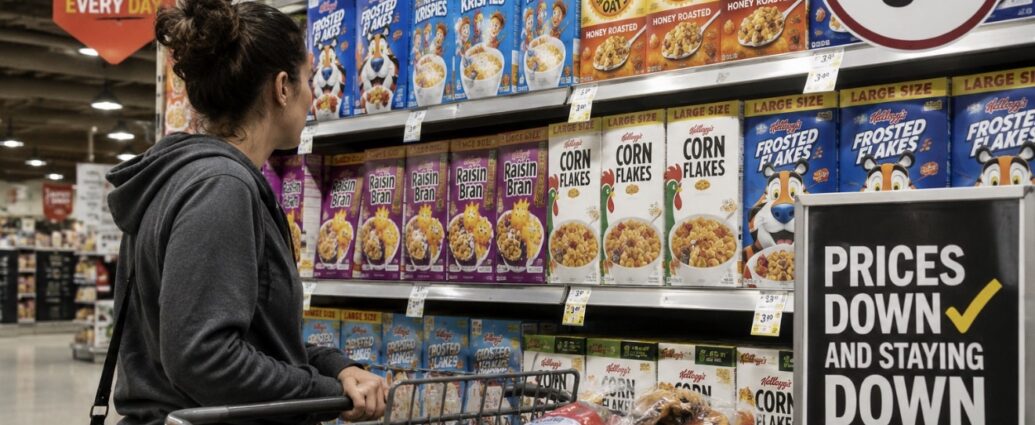
American consumers are sending a message that food companies and restaurant chains can no longer ignore: prices have gone too far, and shoppers are pushing back.
After several years of aggressive price increases, major food manufacturers and restaurant operators are increasingly rolling out smaller package sizes, value-focused products, and discounted meal deals in an effort to win back customers who have reduced spending or shifted to cheaper alternatives.
The financial pressure is becoming visible across the industry.
PepsiCo reported that North American snack-food volumes declined 4%, while beverage volumes fell 3%, reflecting a growing reluctance among consumers to absorb repeated price hikes. Similar volume declines have also been reported by major food companies including Conagra Brands, Kraft Heinz, and J.M. Smucker, signaling that higher prices are no longer offsetting weaker demand.
When consumers buy fewer products, even strong pricing power eventually hits a limit.
That reality is forcing many companies to rethink their strategy.
General Mills reduced prices on nearly two-thirds of its North American grocery products last year and subsequently reported improving sales volumes. PepsiCo has gone even further, announcing plans to cut prices by as much as 15% across portions of its snack portfolio.
PepsiCo Chairman and CEO Ramon Laguarta recently described the effort as a major “reset of affordability,” acknowledging that consumers across the United States and other developed markets are increasingly struggling with everyday expenses.
Some companies are pursuing a different approach.
Rather than directly cutting prices, they are introducing smaller package sizes designed to lower the amount shoppers pay at checkout. PepsiCo and J.M. Smucker have both streamlined product offerings, eliminating slower-selling items while focusing on products that consumers continue buying regularly.
The strategy allows shoppers to spend less upfront, even if they receive slightly less product.
However, that approach comes with risks.
Consumer advocates and economists continue warning about shrinkflation — the practice of reducing package sizes while keeping prices unchanged. Research released earlier this year found that shrinking package sizes have quietly contributed to food inflation, often without consumers immediately noticing.
For shoppers, experts increasingly recommend comparing unit prices rather than package prices alone to determine whether products actually represent better value.
Food manufacturers also recognize that lower prices alone may not be enough.
Conagra executives have argued that consumers, particularly younger shoppers, increasingly want innovation alongside affordability. The company has responded by introducing higher-protein offerings and expanding newer product lines aimed at health-conscious consumers.
General Mills CEO Jeff Harmening recently acknowledged that housing costs, inflation, and broader cost-of-living pressures have fundamentally changed consumer behavior.
“Value,” Harmening said, “is a core expectation that is here to stay.”
Early results suggest the affordability push may be working.
PepsiCo reported first-quarter 2026 revenue growth of 8.5% and a 9% increase in core earnings per share, attributing part of the improvement to affordability initiatives and stronger food volumes.
Restaurants are fighting the same battle.
Many national chains have continued extending value-meal promotions that were originally introduced as temporary inflation-era offerings. Executives increasingly view low-cost bundled meals as one of the most effective ways to bring budget-conscious customers back through the door.
Across grocery stores, convenience outlets, and fast-food chains, the lesson appears increasingly clear.
Consumers spent years absorbing higher prices. Now many are refusing to do so.
As shoppers become more selective about where and how they spend, companies are discovering that customers ultimately retain the strongest negotiating tool of all: the ability to simply walk away.
New York — JBizNews Desk
© JBizNews.com All Rights Reserved. Reproduction or distribution without written permission is prohibited.