By JBizNews Desk
Friday, May 29, 2026
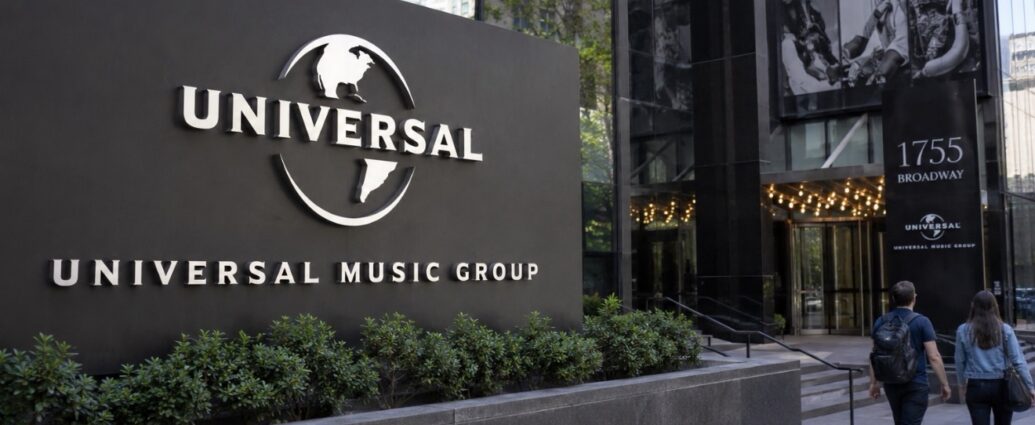
Universal Music Group has rejected a $64 billion takeover proposal from billionaire investor Bill Ackman and his Pershing Square Capital Management, setting up one of the most closely watched corporate battles of the year and underscoring growing tensions over how global media companies are valued on different sides of the Atlantic.
In a statement released Friday, Universal Music Group’s Board of Directors said it had unanimously rejected the unsolicited proposal after determining that it “fundamentally and materially undervalues UMG” and would not deliver superior value for shareholders, artists, employees, songwriters, and other stakeholders.
The decision came just one day after Vincent Bolloré, the French billionaire whose holding company remains Universal’s largest shareholder, publicly urged the company to reject the offer.
The board’s rejection effectively ends Ackman’s current pursuit of the world’s largest music company, although the issues he raised about valuation and shareholder returns are likely to remain central to Universal’s future strategy.
At the heart of Ackman’s argument was not dissatisfaction with Universal’s business performance, but frustration with its stock market valuation.
Under Sir Lucian Grainge, Universal’s Chairman and Chief Executive Officer, the company has continued to dominate the global music industry. Universal reported revenue and adjusted earnings growth of nearly 9% in 2025, while maintaining a roster that includes many of the world’s most commercially successful artists, including Taylor Swift, Drake, Bad Bunny, and numerous legendary catalog assets.
Ackman openly praised Universal’s management team, describing the company as exceptionally well-run.
His concern was that investors were not rewarding that success.
Since Universal began trading independently on Euronext Amsterdam in 2021, its shares have significantly underperformed expectations despite continued growth in the global music market. Ackman argued that the valuation discount reflected factors unrelated to the company’s operating performance, including uncertainty surrounding Bolloré’s ownership position, delays in pursuing a U.S. stock-market listing, and what he characterized as insufficient communication with investors.
His solution was ambitious.
Pershing Square proposed combining Universal with its acquisition vehicle, SPARC Holdings, and relocating the company to the New York Stock Exchange, where Ackman believes investors would assign a substantially higher valuation to the same underlying business.
The proposal valued Universal at approximately €30.40 per share, representing a premium of roughly 78% to the company’s unaffected share price before the offer became public.
Investors initially reacted positively.
Universal shares surged after details of the proposal emerged, reflecting Wall Street’s long-standing view that American markets often award higher earnings multiples to media, entertainment, and intellectual-property businesses than European exchanges.
Ackman also attempted to ease concerns among artists and management.
His proposal envisioned retaining Sir Lucian Grainge as Chief Executive Officer under a new employment agreement and appointing former Disney President Michael Ovitz as Chairman. The plan additionally included dedicating approximately €750 million from any future sale of Universal’s stake in Spotify toward artist-focused initiatives, a move designed to reassure performers and songwriters that a change in ownership would not come at their expense.
For Ackman, the transaction fit into a much broader strategic vision.
The hedge fund manager has repeatedly discussed his desire to transform Pershing Square into a diversified holding company modeled after Warren Buffett’s Berkshire Hathaway, owning durable, cash-generating businesses with powerful brands and long-term growth potential.
Universal’s extensive music catalog, recurring royalty streams, and global market leadership made it an attractive candidate for that strategy.
Ultimately, however, the deal depended on one critical factor: support from Vincent Bolloré.
Ackman himself acknowledged that reality when unveiling the proposal, noting that a transaction would be virtually impossible without Bolloré’s backing.
With Bolloré publicly opposing the bid, Universal’s board faced little pressure to engage further. The unanimous rejection that followed effectively closed the door on negotiations before they could meaningfully begin.
Yet the broader questions raised by the proposal remain unresolved.
Universal continues to operate one of the strongest businesses in global entertainment, controlling a vast library of music rights that generate recurring revenue across streaming platforms, radio, social media, licensing agreements, and live-performance ecosystems.
At the same time, investors continue debating whether the company’s current market valuation accurately reflects the strength of those assets.
That debate is unlikely to disappear simply because the board rejected Ackman’s offer.
In fact, some analysts believe the proposal may ultimately accelerate discussions around a future U.S. listing—one of the very changes Ackman argued could unlock substantial shareholder value.
For now, Universal Music Group remains independent, Sir Lucian Grainge remains in control, and Bolloré remains the company’s most influential shareholder.
But the confrontation has highlighted a growing divide between what some investors believe Universal is worth and what the market currently says it is worth—a gap that could continue attracting attention from activists, strategic buyers, and shareholders alike.
Whether Universal eventually pursues a U.S. listing on its own terms may ultimately become the lasting legacy of Ackman’s failed bid.
London — JBizNews Desk
© JBizNews.com All Rights Reserved. Reproduction or distribution without written permission is prohibited.