JBizNews Desk
President Donald Trump is once again raising questions about America’s gold reserves after a former CIA official was arrested in a case involving millions of dollars in gold bars.
In a May 31 post on Truth Social, Trump shared a message calling for a physical audit of the gold stored at Fort Knox, writing that it was “Time to Physically Audit Fort Knox.” The post linked to reports about the arrest of a former senior CIA official accused of stealing government assets and allegedly storing approximately $40 million worth of gold bars at his residence.
The arrest has reignited a long-running debate over transparency surrounding one of America’s most closely guarded assets: the gold held inside the U.S. Bullion Depository at Fort Knox, Kentucky.
The Arrest That Sparked the Debate
According to federal court filings reported by multiple news organizations, former CIA official David Rush was arrested after investigators allegedly discovered approximately 300 gold bars valued at more than $40 million, roughly $2 million in cash, and dozens of luxury watches during a search of his home.
Federal prosecutors allege Rush improperly obtained government assets intended for official purposes and diverted some of them for personal use. The allegations remain pending in court.
The case drew national attention because of the sheer amount of gold involved and because Rush reportedly held a senior position with access to sensitive government programs.
For Trump and others calling for greater oversight, the case raised a broader question: if one government official could allegedly accumulate that much gold, should Americans receive additional assurance regarding the nation’s largest gold stockpile?
What Is Fort Knox?
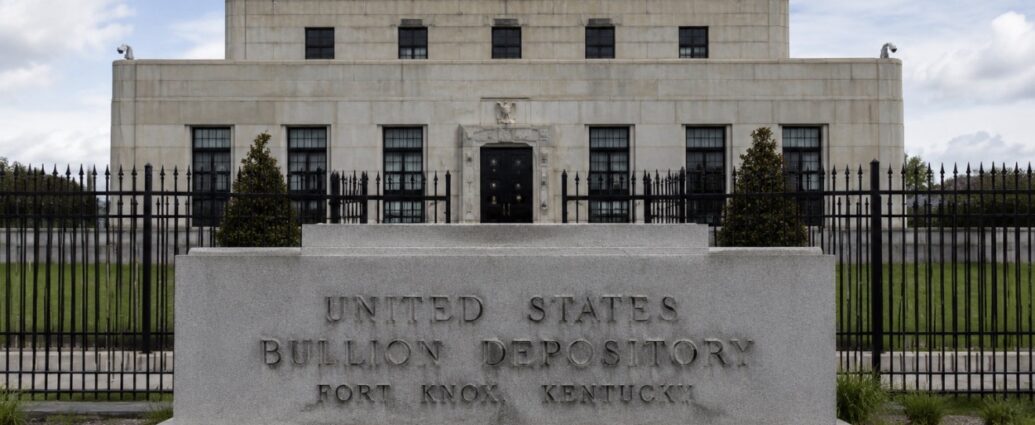
Officially known as the United States Bullion Depository, Fort Knox is one of the most secure facilities in the world.
Located in Kentucky next to the Army installation that shares its name, the depository was completed in 1936 and began receiving gold shipments in 1937.
Today, Fort Knox reportedly holds approximately 147.3 million ounces of gold, representing roughly half of the gold owned by the U.S. Treasury.
The facility’s security measures are legendary. Its massive vault door weighs more than 20 tons, and no single individual is said to possess the complete combination needed to access the vault.
During World War II, Fort Knox also safeguarded some of America’s most important national treasures, including the original Declaration of Independence and the Constitution.
Why the Gold Matters
While many Americans rarely think about Fort Knox, the value of its holdings is enormous.
On the federal government’s books, the gold is still valued at the official statutory price of $42.22 per ounce, a figure dating back decades.
Using that accounting method, the government’s gold reserves are valued at roughly $6 billion.
At today’s market prices, however, the gold would be worth closer to $590 billion.
That difference creates one of the largest valuation gaps anywhere on the federal balance sheet.
With the national debt exceeding $39 trillion, some economists and lawmakers have argued that the government’s gold holdings deserve greater transparency and more accurate accounting.
The Audit Question
The Treasury Department maintains that its gold reserves are regularly accounted for and monitored.
However, critics argue there has not been a truly independent physical verification of all U.S. gold reserves in decades.
While government officials and members of Congress have toured portions of the facility over the years, advocates of a full audit say public confidence would be strengthened through a comprehensive independent review.
The issue has gained attention from lawmakers supporting the Gold Reserve Transparency Act, proposed legislation that would require periodic independent audits and verification of U.S. gold holdings.
Supporters argue that regular audits would improve transparency and public trust.
Critics counter that existing controls are sufficient and that there is no evidence suggesting any significant discrepancy in the nation’s gold reserves.
Why Americans Are Paying Attention
For most households, Fort Knox may seem far removed from daily life.
Yet the broader issue resonates because it touches on government accountability, public trust, and the nation’s financial position.
Questions about federal assets, debt levels, transparency, and oversight have become increasingly important as Americans pay closer attention to government finances.
Trump’s latest comments have brought those questions back into the spotlight.
As of May 31, no new independent audit of Fort Knox has been announced. Whether the president’s call leads to formal action remains unclear.
But one thing is certain: a vault that many Americans rarely think about is once again at the center of a national conversation.
JBizNews Desk
© JBizNews.com All Rights Reserved. Reproduction or distribution without written permission is prohibited.