By JBizNews Desk
WASHINGTON — June 1, 2026
The U.S. Department of Commerce has moved to close a loophole that officials say may have allowed some of America’s most advanced artificial-intelligence chips to reach Chinese companies through overseas subsidiaries, escalating Washington’s ongoing battle to limit China’s access to cutting-edge AI technology.
In guidance issued Sunday, the department’s Bureau of Industry and Security (BIS) said advanced AI processors sold to companies headquartered in China will now require export licenses regardless of where those companies are physically located.
The move effectively extends U.S. export controls beyond China’s borders, targeting subsidiaries and affiliated entities operating in countries such as Malaysia, Singapore, and other international hubs that have become increasingly important in global semiconductor supply chains.
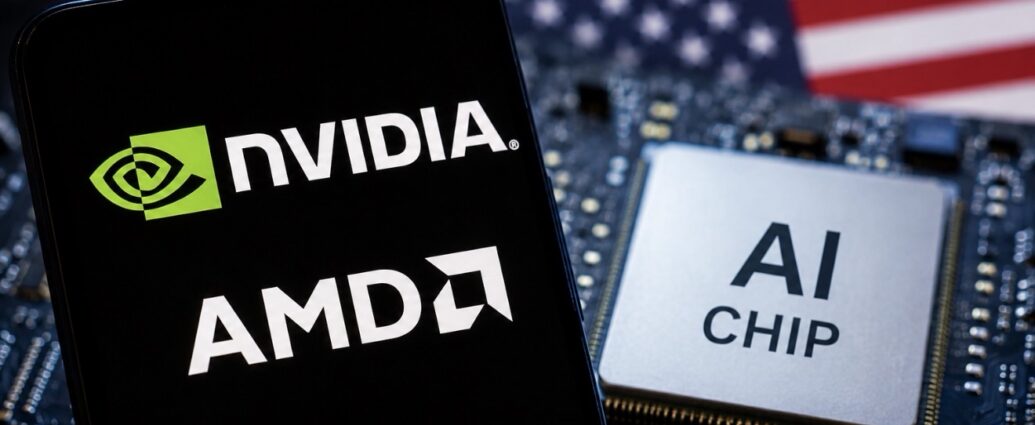
The policy focuses on some of the most powerful AI processors currently available, including Nvidia’s Blackwell and Rubin platforms and AMD’s MI350-series chips, which are used to train and operate large-scale artificial-intelligence systems.
These processors have become among the most strategically important technologies in the world, powering everything from advanced AI models and cloud computing platforms to military and national-security applications.
According to the Commerce Department, the new guidance is intended to ensure that existing export restrictions cannot be bypassed through foreign subsidiaries of Chinese firms.
The action addresses a gap that emerged after the U.S. government stopped enforcing the Biden-era AI Diffusion Rule in 2025. Once enforcement was paused, industry observers warned that Chinese companies could potentially acquire restricted chips through operations located outside mainland China.
In practice, a company prohibited from purchasing advanced processors directly in China could potentially seek access through an overseas subsidiary operating in another jurisdiction.
The Commerce Department’s latest guidance is designed to prevent that scenario.
Technology-policy experts have been warning about the issue for months.
Chris McGuire, a former U.S. State Department official and technology specialist, described the loophole as a major concern, arguing that overseas subsidiaries of Chinese firms may have been able to acquire advanced AI hardware without the same scrutiny applied to entities based within China itself.
Industry analysts say the exact number of chips that may have reached Chinese-linked entities through overseas channels remains unknown. However, given the intense global demand for AI processors, even relatively small volumes could represent significant computing capacity.
The new restrictions do not appear to require companies to surrender or deactivate chips already purchased under previous rules. Instead, the focus is on future transactions and licensing requirements.
For semiconductor manufacturers, the stakes are substantial.
Nvidia and AMD remain at the center of the global AI boom, with demand for advanced processors reaching unprecedented levels as corporations, governments, and cloud-computing providers race to build artificial-intelligence infrastructure.
China has historically represented one of the world’s largest markets for high-performance computing technology, making every new export restriction a significant commercial issue for chipmakers.
Nvidia Chief Executive Jensen Huang has repeatedly emphasized the importance of the Chinese market, even as Washington has steadily tightened restrictions on advanced semiconductor exports.
Investors are expected to closely monitor market reaction when trading resumes, as export-control announcements have frequently triggered volatility in semiconductor stocks. Previous rounds of restrictions have weighed on both Nvidia and AMD shares as investors assessed potential impacts on future revenue growth.
The broader conflict reflects a growing reality in global technology competition.
Artificial intelligence is increasingly viewed not merely as a commercial opportunity but as a strategic national asset. As a result, semiconductor policy has become one of the most important battlegrounds in the economic relationship between the United States and China.
Washington’s objective remains clear: limit China’s access to the most advanced AI hardware while preserving America’s technological advantage.
The challenge, however, is enforcement.
Closing a loophole may stop future shipments, but policymakers still face difficult questions about how much advanced computing power may have already reached Chinese-linked entities—and what that means for the next phase of the global AI race.
Washington — JBizNews Desk
© JBizNews.com All Rights Reserved. Reproduction or distribution without written permission is prohibited.