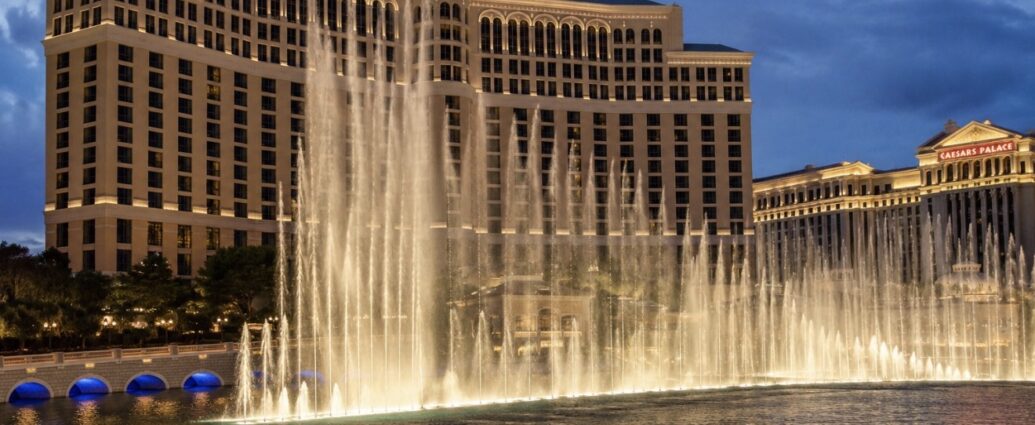
LAS VEGAS — Barry Diller’s People Incorporated has launched an $18 billion bid to take MGM Resorts International private, wagering that one of the world’s largest casino operators is worth significantly more than public markets currently recognize.
In a letter disclosed Monday to MGM Chairman Paul Salem and Chief Executive Officer William Hornbuckle, People proposed acquiring every MGM share it does not already own for $48.30 per share in cash, valuing the company at more than $18 billion and marking one of the largest gaming-industry transactions proposed this year.
Investors immediately embraced the offer. MGM shares jumped roughly 11% in early trading Monday, while People shares rose about 2%, reflecting confidence that the proposal could unlock value that shareholders have struggled to realize through the public markets.
People already holds a 26.1% stake in MGM, making it the casino operator’s largest shareholder. The proposal seeks to acquire the remaining 73.9% of outstanding shares, effectively removing MGM from public markets and placing control in Diller’s hands.
The company behind the bid may be familiar to consumers even if its new name is not. Formerly known as IAC, the business rebranded as People Incorporated earlier this year and owns more than 40 media brands, including People, Food & Wine, Travel + Leisure, Better Homes & Gardens, and Southern Living.
A significant governance issue accompanies the proposal. Diller currently sits on MGM’s board of directors and stated in the letter that he will recuse himself from any board deliberations or votes concerning the transaction, leaving independent directors to evaluate the offer.
Diller’s investment thesis has remained remarkably consistent since People first began accumulating MGM shares during the depths of the COVID-19 pandemic.
In the proposal, Diller argued that MGM represents a durable business built around physical experiences that remain difficult to replicate through technology. While artificial intelligence is reshaping media, information, and digital services, Diller believes destination resorts, gaming, entertainment, hospitality, and live experiences possess enduring value that technology cannot easily replace.
People’s original investment, he wrote, was based on the belief that MGM’s assets and businesses would continue growing over time while remaining resilient to technological disruption.
The central argument behind the buyout is straightforward: Diller believes the public market is materially undervaluing MGM.
In his letter, he said MGM’s assets and businesses are not realizing their full potential in public markets and suggested that meaningful value creation may be difficult under the pressures and expectations of quarterly reporting.
For shareholders, the attraction is clear.
The $48.30-per-share offer represents a 10.6% premium to MGM’s closing price on May 29, a 24.1% premium to the company’s average share price during the previous 30 trading days, and more than 30% above its average price over the preceding 90 trading days.
The offer allows investors to lock in a meaningful gain immediately rather than wait for the company’s valuation to improve organically.
Wall Street analysts had already become increasingly constructive on MGM before Monday’s announcement.
Stifel recently raised its target price on the company to $48 per share from $44, while Morgan Stanley analyst Stephen Grambling lifted his target to $38 from $37, maintaining an Equal Weight rating.
Diller’s proposal sits above most published analyst targets, suggesting the premium is meaningful while still remaining within a valuation range that many industry observers consider defensible.
The proposal also carries important implications for MGM’s workforce and business partners.
People indicated that it expects MGM’s current management team to remain in place following completion of the transaction, signaling continuity for day-to-day operations. Nevertheless, private ownership often brings a different operating environment.
Unlike public companies, private owners face fewer quarterly market pressures and can move more aggressively on capital allocation, operational efficiency initiatives, staffing decisions, and long-term strategic investments.
For now, the message to employees is continuity. However, MGM remains one of the largest private employers in Nevada, and any change in control is likely to be closely watched by workers, vendors, and local economic leaders throughout Las Vegas.
The financing structure is another notable feature of the proposal.
People stated that the transaction is not subject to any financing conditions, a provision designed to strengthen the credibility of the bid. The company expects to fund the acquisition through a combination of cash on hand at both People and MGM, together with additional debt financing and equity commitments.
Following completion, People expects to own approximately 50.1% of the post-closing equity, maintaining operational control while allowing co-investors and potentially existing MGM shareholders to retain minority interests.
The timing of the proposal comes as MGM navigates a mixed operating environment.
Las Vegas visitation and foot traffic have softened in recent quarters, creating challenges for operators across the Strip. At the same time, MGM has increasingly leaned on growth from its international operations, particularly in Macau, as well as its rapidly expanding digital gaming businesses.
One of the company’s brightest growth engines remains BetMGM, its online sportsbook and gaming venture, which has emerged as one of the leading players in the U.S. sports betting market. As more states embrace legalized wagering, analysts have viewed BetMGM as a potentially significant long-term growth driver.
The proposal also arrives amid a broader resurgence in gaming-sector deal activity.
Just days after reports of major consolidation activity involving Caesars Entertainment, Diller’s move places another iconic casino operator squarely in the center of takeover speculation. Together, the developments suggest investors are increasingly targeting gaming assets they believe remain undervalued despite years of industry recovery and growth.
Still, the path to completion remains lengthy.
The proposal is non-binding and subject to numerous conditions, including completion of confirmatory due diligence, negotiation of definitive agreements, financing arrangements, antitrust reviews, gaming regulatory approvals, and customary closing requirements.
Gaming-industry transactions often face particularly complex regulatory reviews because operators hold licenses across multiple states and international jurisdictions. Regulatory approval processes can take months and, in some cases, longer than a year.
For now, MGM’s board faces a consequential decision.
Diller controls the company’s largest shareholder position and has made clear that he sees substantial untapped value in MGM’s portfolio. Whether directors agree that $48.30 per share adequately reflects the worth of some of the most recognizable assets in global gaming and hospitality will determine whether one of Las Vegas’ most iconic operators remains public—or becomes the latest major company to disappear from Wall Street.
Las Vegas — JBizNews Desk
© JBizNews.com All Rights Reserved. Reproduction or distribution without written permission is prohibited.