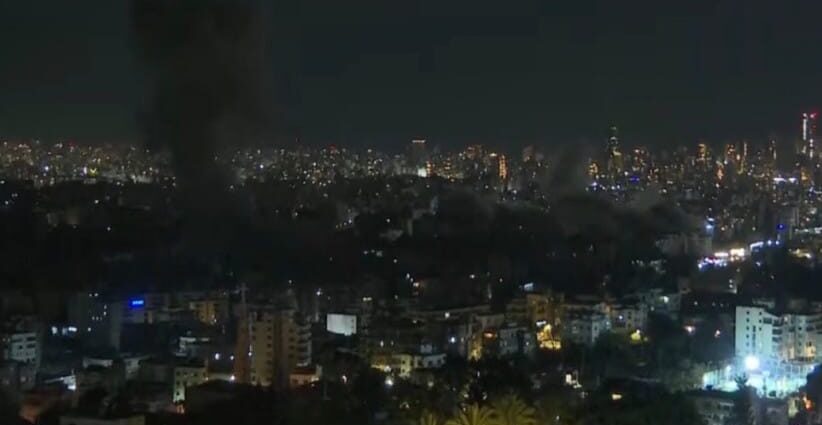
The facade of the Lebanon ceasefire is not merely cracking. It has shattered.
For weeks, the citizens of northern Israel have lived under the shadow of a truce that exists mainly in Washington’s diplomatic cables and in the hopeful rhetoric of international observers. On the ground, the reality is far harsher.
Hezbollah has used this diplomatic pause as a tactical opportunity, firing hundreds of projectiles at Israeli towns and military positions.
The recent directive from Prime Minister Benjamin Netanyahu and Defense Minister Israel Katz to renew strikes against Hezbollah strongholds in the Dahiyeh neighborhood of Beirut was not an escalation. It was a long-overdue recognition of reality.
Extending this ceasefire any further, or continuing to avoid Hezbollah’s nerve center in southern Beirut, amounts to active negligence. Time and again, history has shown that every pause Israel grants in the hope of calming Lebanon is used by Hezbollah to regroup, rearm, and improve its ability to target Israeli civilians.
On Monday, however, US President Donald Trump called Netanyahu and canceled all planned operations in Beirut, just as he unilaterally announced the ceasefire in mid-April.
A sovereign country under constant rocket and drone fire
Israel, a sovereign country under constant rocket and drone fire, has found itself in the humiliating position of having to seek American approval to defend its own citizens in the North. This absurd dynamic is the direct result of a ceasefire that prioritized a quick diplomatic achievement for Washington over the operational needs of Israeli security.
The United States is now actively restraining Israel from taking decisive military action. Trump made this clear on Truth Social, where he urged critics to “sit back and relax” and insisted that things would “all work out well in the end.”
In practice, Washington is tying Israel’s hands to preserve broader Lebanon negotiations and stalled diplomatic talks involving Iran.
Yet both of those diplomatic tracks are frozen. They are not moving toward a meaningful breakthrough, and they are certainly not worth the lives of Israeli citizens.
The Trump administration’s insistence on restraint in Dahiyeh has created, in effect, a sanctuary for Hezbollah’s leadership and its most advanced military assets. By treating Beirut as a no-go zone to salvage a failing diplomatic process, the international community has given Hezbollah a safe haven from which it can continue driving residents of northern Israel from their homes.
Hezbollah’s evasive responses to US-led mediation only reinforce the point. The group has no intention of genuinely ending hostilities. Its calls for a full ceasefire are a transparent attempt to force an IDF withdrawal from the southern buffer zone while preserving Hezbollah’s ability to strike whenever it chooses.
Trading Israeli lives for a few more days of quiet
Accepting another extension under these conditions would mean trading Israeli lives for a few more days of quiet, which is not truly quiet at all.
The collapse of the ceasefire extension was inevitable. Israel cannot maintain a truce with an organization whose purpose remains its destruction. The IDF’s recent maneuvers, including the capture of strategic high ground such as Beaufort Castle, reflect a clear military need to dismantle Hezbollah’s infrastructure in a lasting way.
Those hard-won gains must not be bargained away for another fragile agreement that Hezbollah will violate as soon as it suits its interests.
The airstrikes in Dahiyeh must be relentless and unrestricted. That is where decisions are made, where precision weapons are stored, and where Hezbollah’s Iranian-backed leadership feels most secure.
Israel does not need an extension of a failed policy. It needs the restoration of real deterrence. That deterrence will not come through gradual de-escalation, American-brokered road maps, or futile negotiations with Iran. It can only come through the systematic destruction of Hezbollah’s will and capacity to fight.
The time for begging for permission to defend Israel is over. The government must resist international pressure to preserve the ghost of a ceasefire and give the IDF the mandate to finish the job. Anything less would be a betrayal of the citizens still huddled in shelters, waiting for a government that values their lives more than its standing in Washington.
The ceasefire is dead. Israel should stop pretending otherwise before more Israelis pay the price for this diplomatic fiction.